2026-02-24 · American Association of Nurse Practitioners
Dr. Valerie Fuller on How Student Loan Rules Could Affect U.S. Healthcare
with Dr. Valerie Fuller, President — American Association of Nurse Practitioners
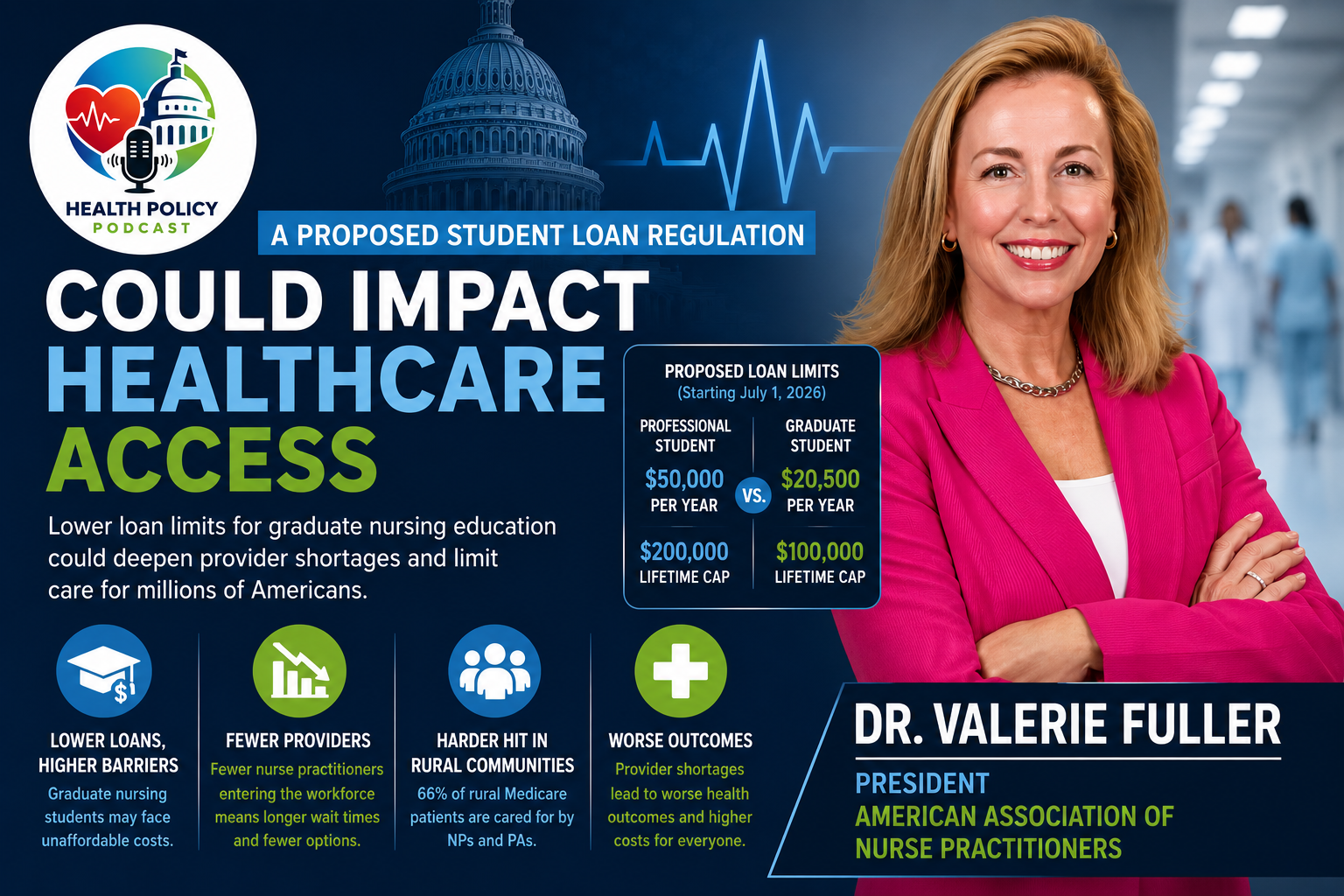
In Dr. Valerie Fuller, president of the American Association of Nurse Practitioners (AANP), joined the Health Policy Podcast to discuss a federal policy proposal that could have significant implications for the health care workforce and patient access to care across the country. AANP is the largest organization representing nurse practitioners in the United States. In January, the U.S. Department of Education released a proposed rule that would redefine which degree programs qualify as “professional” for the purposes of federal student loan limits. While this may sound technical, the decision could directly impact nurse practitioner students and, ultimately, the availability of care in communities nationwide. Dr. Fuller discussed what this proposal means and why it has drawn national attention.
Dr. Valerie Fuller: How a proposed federal student loan rule could impact availability of healthcare in the U.S.
Proposed Federal Student Loan Rule Could Impact Healthcare Workforce, Expert Says
In a recent episode of the Health Policy Podcast, Dr. Valerie Fuller, president of the American Association of Nurse Practitioners, discussed a proposed federal student loan rule that could significantly affect the availability of healthcare providers in the United States. The proposed changes, stemming from the HR1 bill, categorize graduate students into two groups: professional and graduate students, with differing loan limits. Dr. Fuller emphasized that nursing programs were not included in the professional category, which could hinder the education of future nurse practitioners.
Dr. Fuller, who has over 27 years of experience as a nurse practitioner, explained that the HR1 bill eliminated Grad PLUS loans, which previously helped cover additional educational costs for graduate students. The new limits set a $50,000 annual cap for professional students, while graduate students face a $20,500 annual cap and a lifetime limit of $100,000. This change could disproportionately affect nursing students, as advanced practice nursing programs often require more funding than the proposed limits allow.
"Nursing was not included in the professional category," Dr. Fuller stated. "This is concerning, particularly for all advanced practice registered nurses, including nurse practitioners."
Nurse practitioners are advanced practice nurses who can diagnose, prescribe, and treat patients across various age groups. They play a crucial role in the healthcare system, particularly in rural areas where access to primary care is limited. Dr. Fuller noted that nurse practitioners provided over a billion patient care visits last year and are essential to addressing the healthcare workforce shortage.
The proposed loan limits could deter potential nursing students from pursuing advanced degrees, exacerbating the existing shortage of nursing faculty. According to Dr. Fuller, more than 80,000 qualified nursing students were turned away from nursing programs last year due to a lack of faculty. She warned that if the proposed rule takes effect, the nursing faculty shortage will worsen, further limiting the number of new nurse practitioners entering the workforce.
"This will directly affect anyone seeking a graduate degree in nursing," Dr. Fuller said. "We need a robust pipeline of nurse practitioners ready to step into the roles of those who are retiring."
The implications of the proposed rule extend beyond nursing students. Dr. Fuller explained that fewer healthcare providers would lead to longer wait times for patients seeking care. In many cases, patients are already experiencing delays of months to see a primary care provider. The potential reduction in available healthcare services could worsen the mental health crisis in the United States, as nurse practitioners also provide essential mental health services.
Dr. Fuller urged individuals to participate in the public comment period for the proposed rule, which ends on March 2, 2024. She emphasized the importance of including post-baccalaureate nursing programs in the definition of professional degrees to ensure adequate funding for nursing education.
"By excluding nurse practitioner programs from the definition of professional degree, the Department of Education is out of step with modern healthcare," Dr. Fuller said. "Nurse practitioners are the backbone of healthcare in many communities, particularly in rural areas."
To voice their opinions, individuals can visit the American Association of Nurse Practitioners website at www.aamp.org, where they can find templates to submit comments to the Department of Education.
Dr. Fuller concluded by highlighting the critical role nurse practitioners play in the healthcare system, stating, "We need the educational funds to ensure that we can meet the healthcare needs of our communities."
Interview Q&A
Q&A: Dr. Valerie Fuller: How a proposed federal student loan rule could impact availability of healthcare in the U.S.
Dr. Valerie Fuller: How a Proposed Federal Student Loan Rule Could Impact Availability of Healthcare in the U.S.
Q: Can you tell us about your background and role?
A: I am Dr. Valerie Fuller, president of the American Association of Nurse Practitioners. I have dual certifications as a family nurse practitioner and an acute care nurse practitioner. I hold a Doctor of Nursing Practice and a PhD in nursing. I have worked for 27 years as a nurse practitioner and 32 years as a registered nurse.
Q: What is the proposed federal student loan rule and its implications?
A: The proposed rule stems from the HR 1 bill, which introduced new guidelines for federal loans for graduate students. It eliminated Grad Plus loans and created two categories: professional students and graduate students. Nursing was not included in the professional category, which limits loan amounts significantly for nursing students.
Q: How are nurse practitioners defined and what can they do?
A: Nurse practitioners are graduate-prepared advanced practice nurses. They can diagnose, prescribe, treat, and order diagnostic tests. We see patients across the lifespan, including pediatrics, family care, mental health, and neonatal care.
Q: How will the proposed loan rule affect those studying to become nurse practitioners?
A: If the rule is implemented, nurse practitioners would face a loan cap of $20,500 annually and a lifetime cap of $100,000. This amount may not cover the full cost of education for advanced practice nurses, worsening the existing nursing faculty shortage and limiting access to graduate education.
Q: What are the broader implications for patients and communities?
A: Fewer healthcare providers will lead to longer wait times for patients seeking primary care. This will also reduce access to specialty care and mental health services, which are already in high demand.
Q: Is there any positive aspect to the proposed rule?
A: The removal of Grad Plus loans and the creation of categories were intended to streamline the loan process. However, the negative implications, such as the potential shift to private loans with higher interest rates, outweigh any benefits.
Q: What changes would you recommend to the Department of Education?
A: We are urging the Department of Education to include post-baccalaureate nursing programs in the definition of professional degrees. This would ensure that nursing students have access to necessary federal loan funds.
Q: How can individuals make their voices heard regarding this proposal?
A: Individuals can visit the American Association of Nurse Practitioners website at www.aamp.org. There, they can find templates to submit comments to the Department of Education, emphasizing the need for inclusion of nursing programs in the professional degree category.
Q: Why is it surprising that the Department of Education is involved in this rule change?
A: It is surprising because one might expect medical-related changes to come from health-focused agencies. However, education is the foundation for training healthcare providers, which is why the Department of Education is involved.
Q: What is the time commitment and cost for becoming a nurse practitioner?
A: To become a nurse practitioner, one needs a bachelor's degree in nursing, followed by a nurse practitioner program that typically takes two years. Additional doctoral programs can take two to four more years, leading to significant educational costs.
Q: Why do people choose to become nurse practitioners?
A: Many choose this path because they want to provide comprehensive care and education to patients. Nurse practitioners often seek to do more than traditional nursing roles allow, motivated by a desire to improve patient outcomes.
Q: What is the current state of access to healthcare in the U.S.?
A: Currently, about 100 million Americans lack access to primary healthcare services. Nurse practitioners play a critical role in addressing this gap, particularly in rural areas.
Q: What is the average cost of a nurse practitioner program?
A: The average cost of a nurse practitioner program ranges from $100,000 to $129,000. This can be a challenge for students, especially with the proposed loan caps.
Q: Is the shortage of healthcare providers an issue in both rural and urban areas?
A: Yes, the shortage affects both rural and urban areas. Nurse practitioners provide essential primary and specialty care across the country, and their exclusion from federal loan support could exacerbate these shortages.
Key takeaways
- “Nursing was not included in the professional category.”
- “If the proposed rule goes through, your loan amount would be capped at 20,500 a year with a hundred thousand dollars cap.”
- “We already have a shortage of faculty, but add to that, now they're gonna have lower amounts available to them to go back to get graduate education.”
- “With fewer healthcare providers, you're gonna have longer wait times to see a primary care provider.”
- “By excluding nurse practitioner programs from the definition of professional degree, the department's really outta step with modern healthcare.”
About the guest
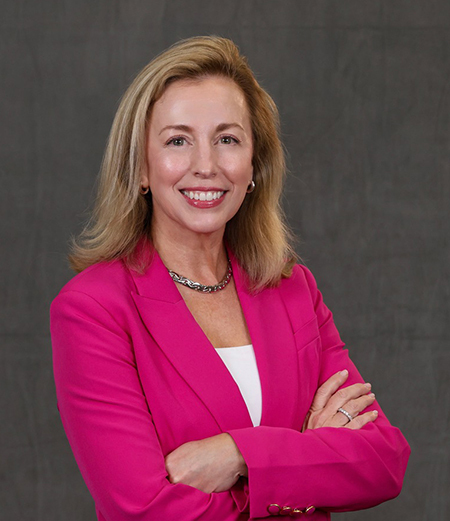
President — American Association of Nurse Practitioners
Dr. Valerie Fuller is the President of the American Association of Nurse Practitioners® (AANP) and a nationally recognized nurse leader with over three decades of experience in health care, including 27 years as a nurse practitioner (NP). She is dual certified as an Adult Gerontology Acute Care and Family Nurse Practitioner and holds both a PhD and a DNP in nursing. Clinically, she practices in the Department of Surgery at Maine Medical Center in Portland, Maine, and serves as an Assistant Professor of Surgery at Tufts University School of Medicine. Dr. Fuller brings extensive expertise in clinical practice, regulation and leadership, with a strong commitment to advancing NP roles and improving access to high-quality care. She is a past president of the Maine Nurse Practitioner Association (MNPA) and served more than 14 years on the Maine State Board of Nursing as the Chair and APRN board member. At the national level, she has held multiple leadership roles with the National Council of State Boards of Nursing (NCSBN), including service on their Board of Directors from 2017 to 2021. Prior to her role as President, she also served as the AANP Maine State Liaison, Region 1 Director and as a member of the AANP Fellows selection committee. She is the author of numerous peer-reviewed publications and an award-winning textbook for Acute Care Nurse Practitioners. She serves on the editorial board of The Journal for Nurse Practitioners and is the recipient of several honors, including the AANP Advocate State Award for Excellence and the NCSBN Elaine Ellibee Leadership Award. Dr. Fuller is a Fellow of the American Association of Nurse Practitioners (FAANP), the American Academy of Nursing (FAAN) and the National Academies of Practice (FNAP), reflecting her enduring contributions to the nursing profession.
Full transcript
Show full transcriptHide transcript
Filed under