· The Health Policy Podcast
Health Policy Podcast logo

Receive new episodes in your inbox.

← Health Policy Podcast

2026-10-27 · American Psychiatric Association

Breaking Barriers in Treatment-Resistant Depression with Dr. Michelle Cochran

with Michelle Cochran, MD, Distinguished Fellow of the American Psychiatric Association — American Psychiatric Association
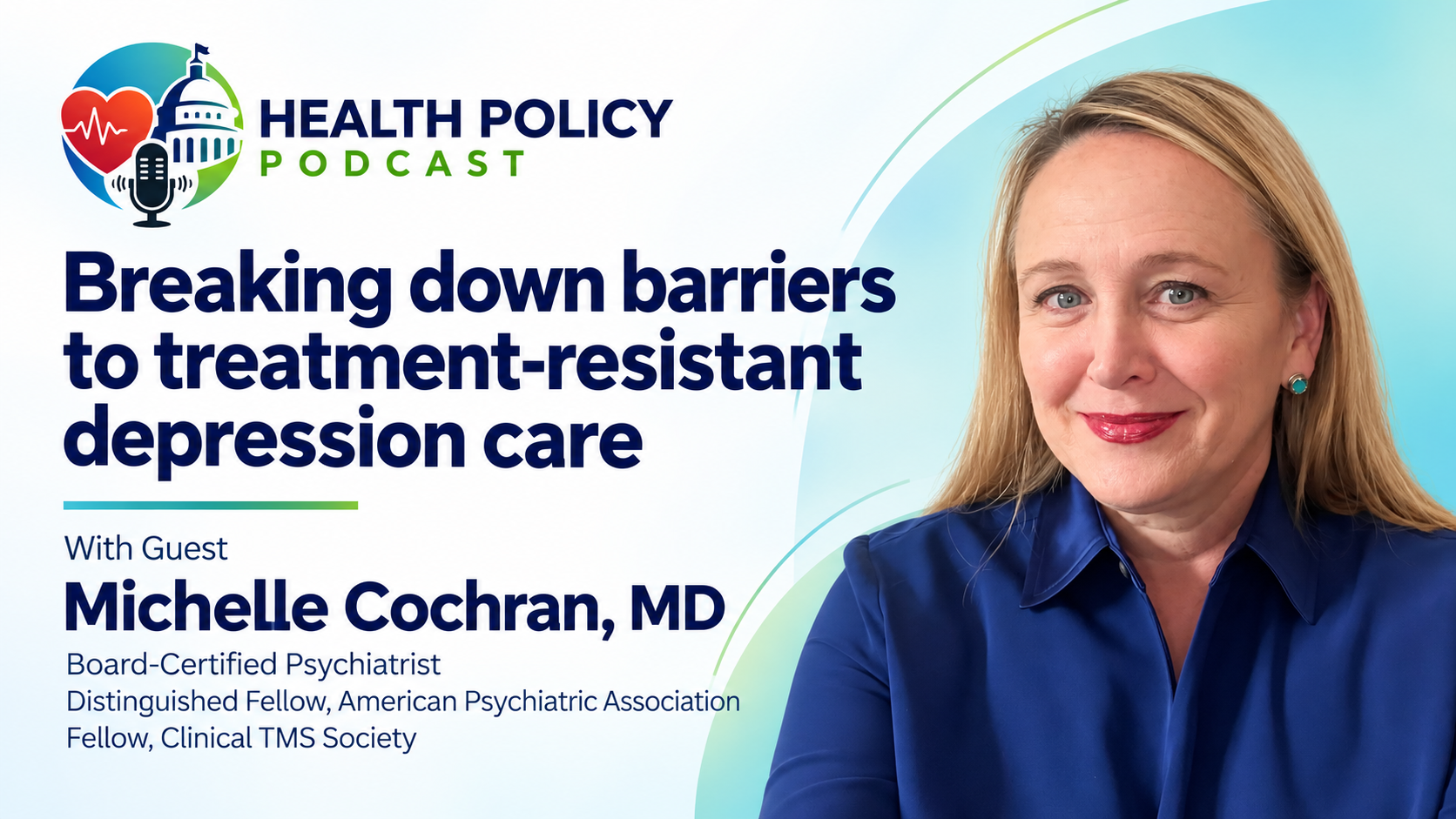
Health Policy Podcast episode featuring Michelle Cochran, MD discussing Breaking Barriers in Treatment-Resistant Depression with Dr. Michelle Cochran

For patients with treatment-resistant depression, finding a therapy that works is only half the battle. Insurance coverage, prior authorization and step therapy rules can keep evidence-based care out of reach.
 In this episode, we speak with Michelle Cochran, MD, a board-certified psychiatrist, Distinguished Fellow of the American Psychiatric Association, and Fellow of the Clinical TMS Society. She is an internationally recognized expert in Transcranial Magnetic Stimulation (TMS) and treatment-resistant depression (TRD). As former President of the Clinical TMS Society and former Chair of the American Psychiatric Association Caucus on Neuromodulation, she advocated for TMS access through payer negotiations, professional organizations, legislation, and patient legal action. She began her career providing electroconvulsive therapy (ECT), introduced TMS in her practices in 2011, added vagus nerve stimulation (VNS) in 2019, and developed a physician-led, multi-location psychiatric practice in Tennessee. Dr. Cochran serves as President and Chief Medical Officer of Synaptic PSYCH and lectures and consults internationally on advancing evidence-based care for TRD. 
 Dr. Cochran discusses why clinicians need multiple treatment options, how coverage barriers delay recovery for patients and their families, and what lawmakers and payers can do to expand access to mental health care.

Breaking down barriers to treatment-resistant depression care with Dr. Michelle Cochran

0:00 / 0:00

Breaking down barriers to treatment-resistant depression care with Dr. Michelle Cochran

Barriers to Treatment-Resistant Depression Care Explored by Dr. Michelle Cochran

In a recent episode of the Health Policy Podcast, Dr. Michelle Cochran, a board-certified psychiatrist and distinguished fellow at the American Psychiatric Association, discussed the challenges faced by patients with treatment-resistant depression (TRD). The episode, hosted by Bryan Hyde, highlighted the complexities of accessing effective care for individuals who do not respond to standard treatments.

Dr. Cochran has dedicated over 16 years to providing innovative treatments for depression and advocating for improved access to care. She has held leadership roles in various organizations, including the International Clinical TMS Society, and has focused on promoting transcranial magnetic stimulation (TMS) and other neuromodulation therapies.

Understanding Treatment-Resistant Depression

TRD is defined as severe depression that has not responded to two or more treatment attempts. Dr. Cochran emphasized the importance of reframing the conversation around treatment failure. "Patients with depression haven't failed the treatments," she said. "The treatments for the depression have failed the patient." This shift in language aims to alleviate the stigma associated with mental health conditions.

Dr. Cochran explained that depression is not a single disease but a cluster of symptoms influenced by various neurobiological mechanisms. Consequently, there is no one-size-fits-all treatment. "We look at all kinds of interventions," she noted, including medications, therapy, and neuromodulation techniques.

Barriers to Accessing Care

One of the major obstacles patients face in accessing effective treatment is insurance coverage. Dr. Cochran pointed out that insurance companies often impose rigid protocols that do not align with clinical guidelines. "They limit access and limit a physician's flexibility to find things that would help with a patient," she said.

These barriers can lead to significant delays in treatment, worsening symptoms, and even hospitalization for patients. Dr. Cochran shared that she has seen patients whose recovery was delayed due to insurance restrictions, resulting in severe consequences, including suicide attempts.

The impact of delayed care extends beyond the individual, affecting families and communities. "Depression is affecting their brain and, therefore, affects the whole body," Dr. Cochran explained. The emotional strain on families can lead to increased healthcare costs, including emergency room visits and disability claims.

The Role of Legislation and Policy

Dr. Cochran emphasized the need for legislative and policy changes to improve access to treatment for TRD. She highlighted the importance of enforcing parity laws that ensure mental health care is treated equally to physical health care. "If we had enforcement on the level of treating cancer, patients would be able to access the things they need," she said.

She suggested that policymakers should focus on the long-term economic benefits of investing in effective treatments. "If we invest here, we can reduce downstream effects," she noted. Dr. Cochran called for aligning commercial and Medicare payer policies to create a more cohesive approach to treatment guidelines.

Optimism for the Future

Despite the challenges, Dr. Cochran expressed cautious optimism about the future of treating TRD. She noted a growing public awareness of mental health issues and a reduction in stigma. Recent legislative efforts in Tennessee have led to reforms in prior authorization processes, indicating progress in addressing these barriers.

In closing, Dr. Cochran reiterated the importance of timely access to evidence-based options for individuals suffering from TRD. "Having the right treatment at the right time is not a luxury; it is just basic healthcare," she said.

The discussion underscores the critical need for continued advocacy and policy reform to ensure that patients with treatment-resistant depression receive the care they need.

Interview Q&A

Q&A: Breaking down barriers to treatment-resistant depression care with Dr. Michelle Cochran

Breaking Down Barriers to Treatment-Resistant Depression Care: A Q&A with Dr. Michelle Cochran

Q: What is treatment-resistant depression (TRD)?

A: Treatment-resistant depression (TRD) refers to severe depression disorders that have not responded to two or more treatments. Patients with TRD often face challenges in finding effective care.

Q: Can you share your background and experience in treating TRD?

A: I am a board-certified psychiatrist and a distinguished fellow of the American Psychiatric Association. I have spent over 16 years providing innovative treatments for depression and advocating for greater access to care, particularly transcranial magnetic stimulation (TMS).

Q: Why is it important for clinicians to have multiple evidence-based treatment options for TRD?

A: Language matters. Patients with depression have not failed the treatments; rather, the treatments have failed them. It is crucial to reframe this perspective to remove guilt and stigma associated with the illness.

Q: Why isn't there a one-size-fits-all treatment for depression?

A: Depression is not a single disease but a cluster of symptoms influenced by various neurobiological mechanisms. Each patient may respond differently to treatments, necessitating a personalized approach.

Q: How do you determine the right treatment for a patient with TRD?

A: A comprehensive evaluation is essential. We assess specific symptoms, severity, past treatment responses, urgency, and patient preferences to match the treatment to their needs.

Q: What are some common barriers patients face when accessing evidence-based treatment?

A: Insurance companies often impose rigid protocols that restrict clinicians' flexibility. These limitations can prevent patients from accessing appropriate treatments.

Q: Have you seen patients whose recovery was delayed due to access issues?

A: Yes, I have seen patients whose symptoms worsened while waiting for treatment. Some have even required hospitalization or faced severe consequences, including suicide attempts.

Q: How do delays in care impact the patient's family and social unit?

A: Delays can affect the entire social unit, leading to emotional strain and increased costs due to more emergency room visits and workplace absenteeism.

Q: What role does legislation and policy play in improving access to treatment?

A: Legislation can help align payer policies with evidence-based guidelines. Improved enforcement of parity laws could enhance access to necessary treatments.

Q: What single policy change would make the biggest difference?

A: Focusing on the long-term value of interventions and aligning payer policies could significantly improve access to effective treatments for patients.

Q: What message would you like policymakers to understand about limiting access to treatments?

A: Limiting access not only affects the patient but also their entire social circle. Delays can lead to severe consequences, including death, and ultimately increase long-term costs.

Q: Are you optimistic about the future of treating TRD?

A: I am cautiously optimistic. There is growing public awareness and some advancements in legislative parity, but much work remains to be done.

Q: What is your key takeaway regarding access to mental health care?

A: Depression is a treatable biological condition, not a personal failure. Patients with treatment-resistant depression deserve timely access to a full spectrum of evidence-based options.

Key takeaways

  • “Patients with depression haven't failed the treatments. We would never say to a patient receiving cancer treatment that you've failed chemotherapy.”
  • “If we take care of the brain, we take care of the whole body.”
  • “Limiting a patient's access to certain treatments doesn't just affect them, it affects their whole group.”
  • “The delay in care is what can lead to— it can lead to death.”
  • “Depression is a treatable biological condition. It's not a personal failure.”

About the guest
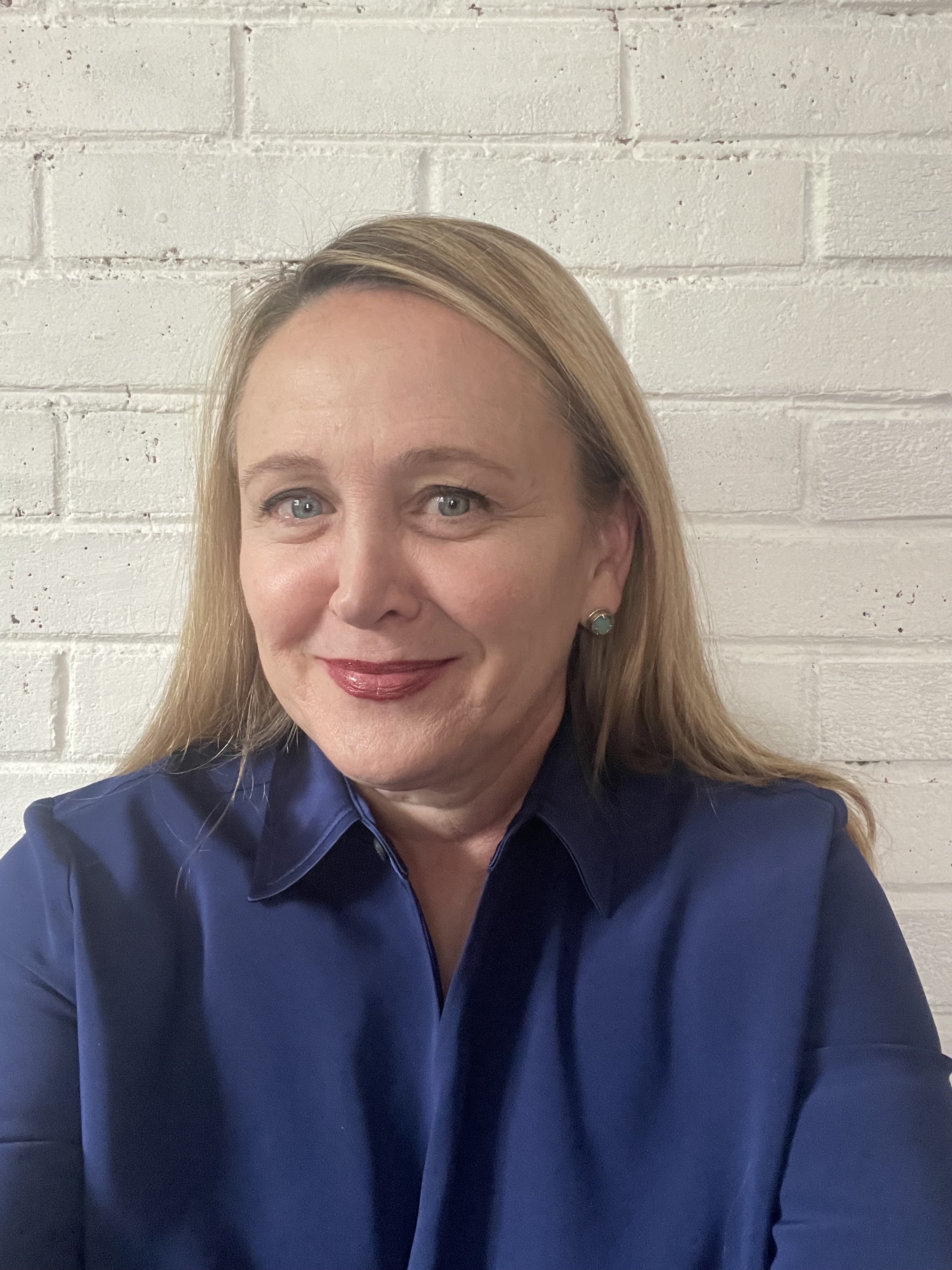
Headshot of Michelle Cochran, MD, Distinguished Fellow of the American Psychiatric Association at American Psychiatric Association

Michelle Cochran, MD

Distinguished Fellow of the American Psychiatric Association — American Psychiatric Association

Michelle Cochran, MD, a board-certified psychiatrist, Distinguished Fellow of the American Psychiatric Association, and Fellow of the Clinical TMS Society. She is an internationally recognized expert in Transcranial Magnetic Stimulation (TMS) and treatment-resistant depression (TRD). As former President of the Clinical TMS Society and former Chair of the American Psychiatric Association Caucus on Neuromodulation, she advocated for TMS access through payer negotiations, professional organizations, legislation, and patient legal action. She began her career providing electroconvulsive therapy (ECT), introduced TMS in her practices in 2011, added vagus nerve stimulation (VNS) in 2019, and developed a physician-led, multi-location psychiatric practice in Tennessee. Dr. Cochran serves as President and Chief Medical Officer of Synaptic PSYCH and lectures and consults internationally on advancing evidence-based care for TRD. 


Full transcript

Show full transcript
[00:00] Bryan Hyde: Welcome to the Health Policy Podcast. I'm Brian Hyde, and today we're going to be talking about severe depression disorders that have not responded to 2 or more treatments. Now, most psychiatrists refer to this kind of depression as treatment-resistant depression, or TRD. And for patients who suffer with TRD, finding an effective treatment is just part of the challenge for care. Even when evidence-based therapies are available, sometimes insurance coverage or prior authorization requirements or other policy barriers can prevent patients from accessing effective treatment. can make it difficult for patients to access the care that they need. And we're joined today by a psychiatrist who spent over 16 years providing innovative treatments for depression and also advocating for greater access to care. I want you to welcome Dr. Michelle Cochran, board-certified psychiatrist and distinguished fellow of the American Psychiatric Association. Dr. Cochran, wonderful to have you on the Health Policy Podcast. [00:51] Dr. Michelle Cochran: Thank you, Brian. Thank you. [00:54] Bryan Hyde: Could I ask, you know, just take a moment, if you would, to share a little bit about your background, and then let's dive into this topic of TRD. [01:01] Dr. Michelle Cochran: Sure, sure. So you introduced me as a board-certified psychiatrist, which I am, and I've been a very active member of the American Psychiatric Association. I've also done a lot nationally and internationally to recognize and provide access and to advocate for the treatment transcranial magnetic stimulation. I'm a former president for the International Clinical TMS Society and a former chair of the American Psychiatric Association's Caucus on Neuromodulation, which would include all neuromodulation, which are what I jokingly sometimes refer to as all the 3-letter acronyms. That would be ECT, TMS, VNS, those types of treatments which can be used for patients with TRD. In these roles, I've really advocated really to help patients get access and to help kind of at a payer level and a society level to push education. And I feel like we're finally hitting a stride where people actually know what these things are now, which is lovely. So. [02:10] Bryan Hyde: Dr. Cochran, patients with TRD will often hear that they've failed multiple treatments before they can access something new. Why is it important that clinicians have multiple evidence-based treatment options available to them? [02:24] Dr. Michelle Cochran: Well, so first, I think language matters. You know, patients with depression haven't failed the treatments. We would never say to a patient receiving cancer treatment that you've failed chemotherapy. We say chemotherapy has failed to treat the cancer. And for these patients, the treatments for the depression have failed the patient. So reframing this is really important to remove any kind of guilt or any stigma about the illness. So, [02:59] Bryan Hyde: and when it comes to depression, maybe if you could explain to us, why isn't there a one-size-fits-all treatment? [03:06] Dr. Michelle Cochran: Yeah, it'd be lovely, right? So just like cancer, depression is not one single entity or one single disease. It's a cluster of symptoms. And it is really an illness that has So there's lots of neurobiological mechanisms at play where basically the circuitry, the electrical wires, the neurons in the brain have difficulties or significant dysfunction. You've got neurochemical dysfunction where you basically have the electrical chemical system of the brain has imbalance either because of inflammatory processes or just pathology of some sort. And really, we want to look at all kinds of interventions, right? So we look at meds, we look at therapy, we look So [03:58] Bryan Hyde: when it comes to those treatment options, how do you determine what's the right one? [04:03] Dr. Michelle Cochran: Well, wouldn't that be wonderful to just kind of just— but maybe I can just start and, you know, pick one out of the blue. But really, that doesn't— it doesn't happen like that. Really, what we have to do is we start with a really comprehensive evaluation with a patient. We have to look to see what are the specific symptoms? What's the severity of symptoms? Like, how does it functionally impair them? What kind of past treatment responses they have had? What's the urgency for them? And what is— what's their preference? So we really match the treatment or the modality to their needs. So most of the time when patients come to see a psychiatrist like me, they've tried exercise, they've tried diet, they've tried therapy, they've tried medicines, and they may have even tried some at-home devices like external transdirect cranial stimulation. or an external combined occipital trigeminal nerve stimulator, which are available just this year. But in psychiatry, these people who haven't been helped by these type of treatments are going to be kind of open and exploring to the interventional treatments, which are the TMSs, the transcranial magnetic stimulation, the ECT, electroconvulsive therapy, vagus nerve stimulation, even things like ketamine infusions or esketamine nasal treatments. So we really have to match the treatment to the patient. Like, if you give an example, patients who— TMS can be an excellent outpatient treatment. It's noninvasive. It doesn't have— it has very minimal side effects and really isn't any systemic or body impact. But things like VNS would be better for like a long-term sustained neurostimulation option for people who, who need kind of maintenance treatment because they've done other things, but yet they get sick again or they, they can't stay well that long. And then there are, you know, other things we have. ECT is a fabulous treatment for psychotic depressions or for postpartum depressions. And then things like ketamine and esketamine, highly effective for rapid intervention, kind of acute life-saving treatments that can really get people well and out of, out of really crisis points. So we really need to pick which treatments consistently give success and, and And really just talk with the patient to find their preference of what they want to do. Because many of these patients are tired, you know, they're tired of taking meds, or they're tired of kind of the next thing, or they really have given up hope. So we really want to make sure we present all the options so that they have that. They have that. So [06:45] Bryan Hyde: when it comes to barriers to access, what are some of the bigger obstacles that your patients encounter when they're trying to access evidence-based treatment? [06:53] Dr. Michelle Cochran: Well, you probably know the answer to this question, Brian, right? So it's insurance companies. So the insurance companies or the organizations want to restrict clinicians like myself or their patients to these really rigid, very linear protocol limits. Right. So, and they're— and they don't fit the consensus guidelines. Right. They have uniformly made up rules or use some outside entity that's kind of hidden behind closed doors to limit access and limit a physician's flexibility to basically be able to pivot or find things that would help with a patient, particularly a patient who's declining rapidly or they're unresponsive or they just, they can't stay well. So really over the years, we've had lots of patients like this in our offices. In fact, all the docs in the clinic have their own stories about these people, patients that might respond to one treatment, but then the illness recurs, or they, you know, get with a treatment, they find a treatment works, but then they get tired of coming in the office all the time, and they can't stay well. And so they want to look for different options. So you really have to, you have to give them all the options upfront. And you have to kind of continually come back to all these things. And if we are limited by an outside entity, that really prevents patients having access, right? And, and you, you might be able to talk about something, but that is not something that is open or available to them. So. [08:28] Bryan Hyde: Have you seen patients whose recovery was delayed because they weren't able to access the treatment that was being recommended? [08:34] Dr. Michelle Cochran: Absolutely. I've seen people who their symptoms worsen. I've seen people have to go in the hospital while they're waiting on treatment. You've had people have to choose things they didn't want to do because maybe it was an option available to them because the particular payer, but it really wasn't the thing that we thought was the next best thing for them, or things that, you know, they delayed. And so the patient got so, so much more depressed that they then attempted suicide or ended up in the hospital. They might have lost work or been on medical leave. It is, it is really sad sometimes these hurdles and these, these delays that the payers have put in place can really impact the patient on such a significant level. [09:22] Bryan Hyde: So beyond the patient, those kinds of delays, I'm sure, have impact on family and others. Talk to me about some of the other effects besides just the patient when that care is delayed. [09:35] Dr. Michelle Cochran: Yeah, so you think about the illness just like another illness, just like cancer would affect a patient's physical body, depression is affecting their brain, and so therefore affects the whole body. And if we delay the care of that, we're affecting It can end up affecting not only the patient and their ability to work or to have a social life, but their entire social unit. So their family, their friends, it just basically creates an entire kind of dynamic where the whole household is unstable and there's emotional strain. And it can really drive up the cost because people don't know what to do. So often it will— not having access to these things will drive up the cost of emergency room visits. friends get very emotional when people are in acute distress. And sometimes, even if it's not needed, there's more emergency room visits, there's more medical admissions, there are tons more disability claims. And as I inferred before, a lot of workplace absenteeism. So really, it costs the whole system to delay giving access to these treatments. And so I think payers sometimes don't think in the big picture. They just see it short term. I'm going to save a little few dollars here or there and don't think about the long-term cost of having all these things happen and not just to the patient, but to everybody in their social circle. So [11:03] Bryan Hyde: in addressing these problems that you have just outlined, tell me about the role that legislation and policy play in improving access to treatment. [11:13] Dr. Michelle Cochran: Yeah, sure. So I say this to legislators a lot, you know, If we take care of the brain, we take care of the whole body. And we really have to kind of align the facts and have the payers, the legislative bodies really see the facts. And because there's value in these interventions, right? If we have long-term economic studies that demonstrate and kind of reinforce that investing upfront in things like TMS or VNS will really reduce the downstream cost. And payers, legislators can do things. We have these— we have wonderful parity laws. Unfortunately, we don't have any enforcement. And so if we had enforcement on the level of, say, treating cancer, patients then would be able to access the things they need, would be able to extend their cares when they need to instead of having to have such restriction. And that, that really could dramatically improve outcomes. And we're doing some of that, like in Tennessee, I'm optimistic we've had some changes that look like, but we've got a lot of, a lot of work to do. So. [12:38] Bryan Hyde: Is there a single policy change that would make the biggest difference in your opinion? [12:44] Dr. Michelle Cochran: So I do think if they focused on the cost, if they valued the intervention, They looked at the long-term studies and they see that if we invest here, we can reduce downstream effects. So I do think that would help. I also think aligning the commercial policies and Medicare payer policies, even Medicaid policies, instead of having these independent guidelines, if they actually stuck, you know, and stayed within their really research-driven consensus guidelines instead of capping the number of, you know, instead of kind of capping the number of treatments someone might get or capping the dollar amount, which is kind of often how they look at it, maybe think about capping the number of medicines a patient really has to try or use some common sense or use even, like I said earlier, the facts. There's evidence that after 2 meds, it doesn't make any sense to keep trying meds or adding atypical meds to treatment protocols add to long-term side effects and don't, don't have evidence to actually improve when interventional treatments do. So I, so I would really kind of push back on really just focusing on the facts and getting, getting there and seeing the value of the interventional treatments. So. [14:12] Bryan Hyde: And speaking specifically to policymakers, what kind of takeaway would you want them to understand? about the real-world consequences of limiting access to those evidence-based treatments? [14:25] Dr. Michelle Cochran: Yeah, so I kind of inferred it earlier that this— that affecting a changing— excuse me, limiting a patient's access to certain treatments doesn't just affect them, it affects their whole group. And it really— the delay in care is what can lead to— it can lead to death. We would no more tell a cancer patient that you can't get chemo for 6 weeks because your insurance has to jump through these hoops, right? Because that would lead to their death. Well, the same thing happens with limiting access in depression. Often it can lead to death by suicide, and then it could lead to death by progressive neurological changes. People, if we deny their care, delay their care, as I said earlier, we're looking at— we're going to save a quarter here, But we're going to directly impair this patient's ability to work, their human potential, their ultimate long-term outcome. We'll turn this patient into a treatment-resistant patient that has long-term more cost than had they paid for the short-term cost upfront. So I really do, I see it beginning to happen. I see legislators themselves have issues. And so it's, it's an interesting thing for them to advocate for themselves, but then to kind of hold, hold other, other policies for, for patients. So [15:58] Bryan Hyde: as awareness of this situation is growing, I'm curious about whether you feel optimistic, you know, about the future of treating TRD. [16:08] Dr. Michelle Cochran: Yeah, so I'm cautiously optimistic, I guess the best way to say it. There is growing public awareness, you can't go a day without seeing something on TikTok or Instagram about depression or about some psychiatric illness. And so we're beginning to get some reduced stigma and we're having some advancement in legislative parity. As I inferred earlier, Tennessee specifically, the TPA and the Tennessee Medical Association has worked with local legislators. We've gotten prior authorization reforms, but there really is a lot of work left to do. So I have hope, but I'm cautious. So, [16:49] Bryan Hyde: and one final question for you, and that is, if you could leave our listeners with one message or one takeaway about access to mental health care, what would that be? [16:57] Dr. Michelle Cochran: Okay. So I am hopeful because depression is a treatable biological condition. It's not a personal failure. individuals who are suffering from treatment-resistant depression really deserve timely access to the full spectrum of evidence-based options, because for them, having the right treatment at the right time is not a luxury. It is just basic healthcare. So, and I— yeah. [17:31] Bryan Hyde: Again, we're talking with Dr. Michelle Cochran. She's a board-certified psychiatrist and distinguished fellow of the American Psychiatric Association and Dr. Cochrane, thank you for joining us today on the Health Policy Podcast. [17:42] Dr. Michelle Cochran: Thank you, Brian.

Filed under