Show full transcriptHide transcript
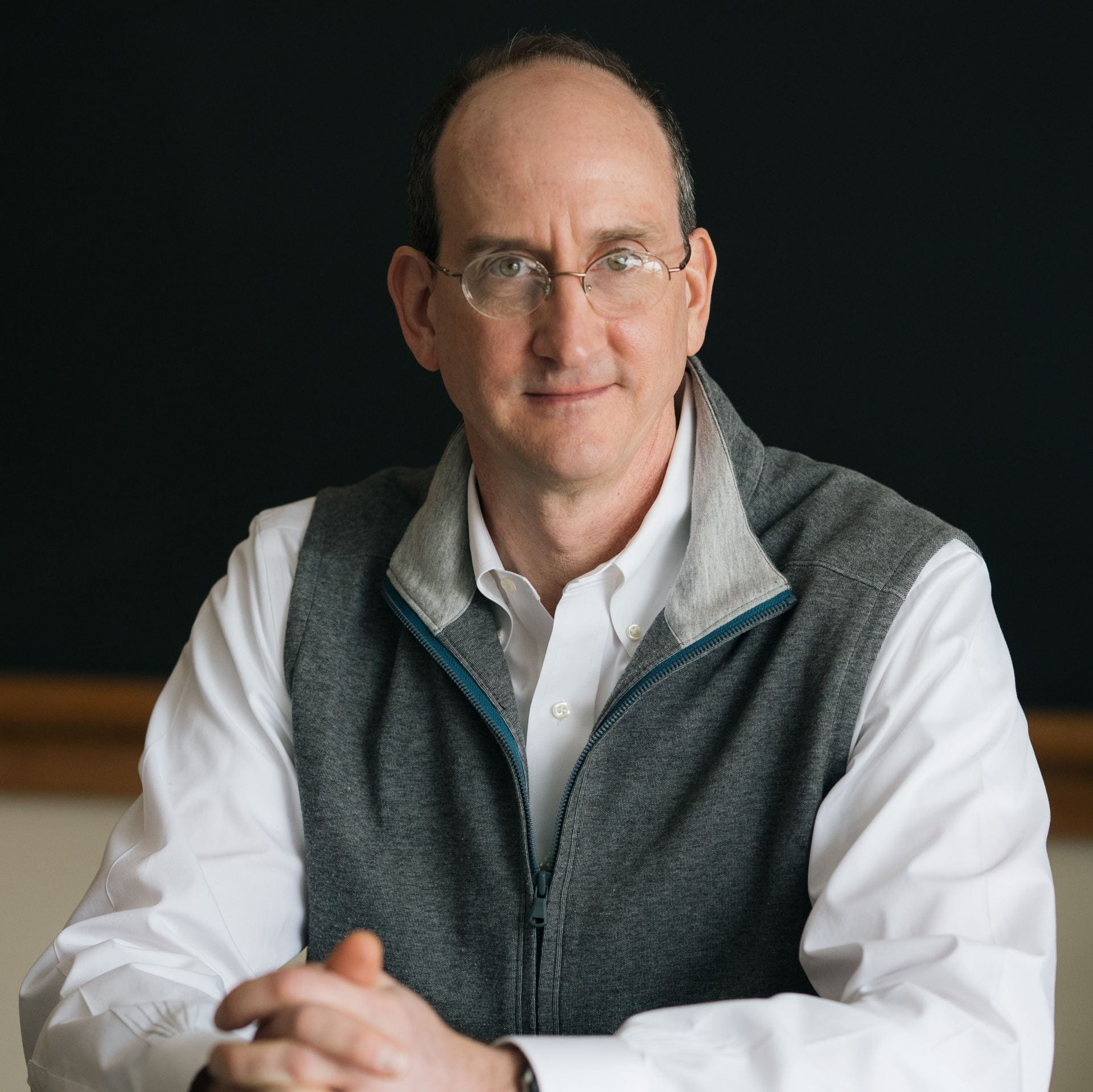
[00:00] Bryan Hyde: Welcome to the Health Policy Podcast. I'm Brian Hyde, and today I'm joined by Chris Snyder. He is a Hyatt Professor in the Economics Department at Dartmouth College, and you probably wear a few other hats too, Chris. Welcome to the program. Would you mind telling us just a little bit about who you are and what you do?
[00:16] Chris Snyder: Thanks, Brian. Thank you so much for the invitation to come to your show, and delighted to participate. So yes, I teach economics at Dartmouth College. Another hat I wear is I'm one of the faculty co-directors of the Market Shaping Accelerator. This is a policy organization that's a joint enterprise of Dartmouth College along with faculty at the University of Chicago and the Center for Global Development. And our headquarters are there in Washington, D.C.
[00:46] Bryan Hyde: And, you know, I would love to spend some time talking about that too, just because of the work that you're doing. Maybe at the end of the interview here, we'll take a moment to talk about that, 'cause the work you're doing there is fascinating as well. And today we have you here to talk about the FDA and repurposed uses for approved drugs. And I first of all just have to ask, when I hear the term repurposed uses, I'm not quite sure where to go. Can you break that down for me? What does that mean when the FDA is exploring this possibility?
[01:17] Chris Snyder: Sure. So the idea is that often a drug that was initially discovered for a one use or another actually has a second life as a different use. A great example is aspirin, which was initially discovered for its purposes in pain relief. It was discovered that this had actually— it promoted blood flow and actually maybe prevented blood clotting and was good for preventing second heart attacks. So there's clinical research done after that that discovered that it's actually part of the Treatment protocol for for second heart attacks now, but not the initial discovery. There's many other examples we could we could go into of you know say a diabetes drug that then looks like it has pretty good indications for for maybe cancer or multiple sclerosis and and other examples. There's a study that suggests that there might be hundreds as many as eight hundred missing. treatments of generics. We'll get into not just any drug, but our interest is actually in, are there generic drugs out there that might have secondary uses?
[02:30] Bryan Hyde: Now, you know, as you're, as you're listing off the 2 examples that you gave, ivermectin came to mind too, in that wasn't that like a deworming medicine, but has since, you know, popped up with some controversy as to, you know, whether it might be useful for some other things.
[02:46] Chris Snyder: Yeah, well, you know, we'll get into some proposals that we're pushing ahead with for the Market Shaping Accelerator where, you know, we're thinking about a broad-based program, not necessarily any specific, you know, sort of ad hoc use, but maybe a broad program that could encourage a lot more of this, you know, more uses in the tens or dozens or maybe even, you know, hundreds of possibilities.
[03:09] Bryan Hyde: So let's talk about first of all, why Why do these— why are there these missed opportunities when it comes to using it? Is it because someone hasn't considered using it? Are these things found by accident? I'm just— I'm curious. I'm happy when they find those uses, but curious why they're overlooked sometimes in the first place.
[03:29] Chris Snyder: So there might be some, you know, sort of deep economic principles why, you know, not necessarily for all drugs, but for generics particularly. So a branded drug that a pharmaceutical company comes up with a patent on, so it'll have some primary use. They actually have every incentive to find repurposed uses in it, and it does happen all the time. And the reason is that they have a current market for the one use, and if they find another use and it's still on patent, you know, that just creates a bigger market, a secondary market, and they get to profit off that as well. And it just provides, you know, that revenue and more incentive. The thing is that that incentive doesn't hold for generic drugs. Once, once a drug goes off patent, it turns out you can actually get a patent on second uses, but you can't monetize it as a, as either a company taking it through clinical trials or a manufacturer. And the reason is that the prescription that the doctors write is for the compound and the, the retail pharmaceutical company or the retail drugstore essentially provides the lowest cost supplier. So there's no way to tie it to the inventor of the second use. And so while you could, you know, try to, you can come up with a patent, potentially you don't get to really monetize it. And so there's a study, actually my colleague Heidi Williams and co-authors, that looks at generics and, or sorry, looks at the kind of path of repurposed uses and shows that actually there's quite a few initially early on in the patent life of a drug. But as they near patent expiration, it drops off. And as it hits patent expiration, it just drops off a cliff. And there's essentially no repurposing to, you know, to a first-order approximation after that. So that's where we're looking at as the area that needs some boosting of incentives there.
[05:31] Bryan Hyde: I love that you brought up incentives because this, this is prime for someone who speaks the language of economics. What kind of incentives or disincentives does this create for the drug companies? My understanding is the research and the approval process is extremely expensive when they're developing a new drug and getting it approved to go to market. Does this— once it's no longer— once the patent runs out, then does that take the financial incentive away from them to do that?
[06:01] Chris Snyder: Absolutely. And as you say, you know, the costs of— you have to get an approved use, you have to go through clinical trials. Sometimes big clinical trials, they're expensive. Of course, there's discovery. There's no telling that even if you have pretty good preclinical evidence or say real-world evidence, you think this is going to work, or maybe some structural biology, the probability that any good idea actually succeeds in clinical trials may only be 10%, 20%. And so you're only getting the reward with that percent. So whatever expenditures you're making, the reward only comes with a low percentage chance too. So that compounds the difficulty. And of course, at the other end, if you're not able to profit off it because any generic manufacturer can sell the drug, that's why this is particularly a problem for generics. Branded drugs, indeed, there are these barriers to repurposing, but those barriers are kind of real economic costs too. So they should be considered. But some of these are just kind of the way the incentive scheme is designed. And that's what we're trying to come up with proposals to overcome, in a sense, artificial barriers.
[07:16] Bryan Hyde: So with the FDA opening up these calls for public comment on, you know, the efforts to advance repurposed uses for drugs, what are they looking for from the public? What are they hoping to garner from that public comment?
[07:32] Chris Snyder: So they've issued a bunch of different questions and, you know, they're just looking for economists and, you know, clinicians and scientists to, you know, give their, their best thoughts. In some cases, you know, here's a great area, maybe you should be investing if there's, if there's promise. So we actually responded, the Market Shaping Accelerator, to that, that call for information. And we focused on the areas that we're experts in and we actually have a proposal potentially for a policy that we detailed in our response that I, you know, I can give you some of the details there that might be a suggestion that might be adopted for, say, the Medicare and Medicaid agencies or maybe the National Institutes of Health.
[08:17] Bryan Hyde: Now, I know that one of the big things that is a drag on the speedy approval of drugs is, you know, making sure that it's safe, you know, that it does what it's supposed to do, but also that it's safe. It would seem that, you know, if it's already on the market and has been safely proven to work for this condition, wouldn't that make it so you didn't have to jump through those same hoops again for other purposes that it might be used for?
[08:45] Chris Snyder: That's a great point. You know, there are several reasons why we— the call actually from the FDA is for essentially any opportunities for drug repurposing. But we're actually— our response is focusing on just for the generics. for many reasons. And one of the reasons is related to what you just said, is that in a sense, the costs of the clinical trials are going to be lower for a generic because it's already been proven safe for the other use. And so you don't necessarily have to go through those initial safety trials. There's already a suspicion— there's already an indication that it works in the human body for some conditions. And so there's some thought that, yes, this is not just a placebo, this is going to have some effect on things. So there's already some, you know, it's going to be a lower cost enterprise to take it through the further trials for the repurposed use. So that's partly among other reasons why we're focusing our response just on the generics.
[09:44] Bryan Hyde: This is probably as good a time as any to, to talk a little bit about the Market Shaping Accelerator and what your work there entails. And then we can apply it specifically to You know, I know that you mentioned that you guys have come up with a proposal, but tell me about, about what the Market Shaping Accelerator sets out to do.
[10:04] Chris Snyder: Yeah, so it's a joint enterprise, as I said, those institutions, it's kind of the brainchild. I was part of it. But Michael Kremer, he's an economist at the University of Chicago, and Rachel Glennerster, who's the president of the Center for Global Development, and I, we kind of worked together on projects early on and earlier on in our careers. One, basically our, our goal is like, how can we solve big social problems that seem intractable? And can we use innovation to essentially, you know, maybe spend $1 of innovation funds and can you get $10 of social benefit or $100 of social benefit? So, you know, it almost sounds magical, but innovation could be a solution to some of these, these problems. Why? Well, you know, there is this potential big multiplier effect from innovation. Especially if you think about the biggest social problems. Like, there's, there's a lot of social surplus that can be generated. Our approach is, you know, this is well understood. We have several sort of specific approaches. One is for looking at, in a sense, neglected areas where there's a big social gain, but maybe the commercial market, for whatever reason, for various reasons, you know, maybe there's these market failures or externalities that, that prevent there being a big commercial market for it. And so you need some kind of public funding to bridge the gap, kind of well understood by people. And there is public funding going to things like public health and pandemic preparedness and climate mitigation. But our final piece of it is that we are sort of saying, you know, there's a lot of so-called push funding and we're trying to advocate for more market-based incentives or so-called pull funding. And in the kind of what I mean by those jargon terms is, you know, if you can think about, say, the innovation process, the development pipeline from early ideas and science to the end of the pipeline, an actual product that's going to benefit society or consumers could be a 5, 10, 20-year development pipeline. One possibility is, you know, we want to encourage more innovation. You can try to pick promising inventors at the initial stages and fund them and push them along through. It's like, you know, grant funding would be a canonical way to do that. So you're essentially funding attempts to solve this problem. them and get through this development pipeline. Another approach, though, and the approach that we advocate is so-called pull funding, where you in a sense dangle the market incentive at the other end of the pipeline, a promise that if you succeed in developing this product or idea that we want, you'll be rewarded. And so it's a different approach. And it's in a sense, instead of paying for attempts, it's kind of more leveraging market-based incentives to pay for success. And that has several appealing features. One is that, you know, you get the sort of the best teams working on the idea, and they sort of self-select. If you're kind of a fly-by-night firm, you're not going to try to work on that, whereas everyone's going to step up and say, hey, you should grant fund me because, you know, we all, we like, all like to get grants. And the other thing is it encourages the teams to sort of walk through walls to get the thing done, which, you know, grant funding doesn't necessarily doesn't necessarily do. So it's— it can be a powerful incentive and actually not— and possibly an economical way to do it because you're only paying if the thing that you want to be invented is actually invented.
[13:36] Bryan Hyde: No, that— I mean, that sounds like a good use of incentives, as we discussed earlier.
[13:41] Chris Snyder: Yeah. So that's our approach. And we— there's some funders who are interested in the Schmidt Futures and Citadel gave us some initial startup money. We put together our organization, did some hiring, but we took $2 million of our startup funding, which is a pretty good chunk of it, and we actually put it toward an innovation challenge, in part because we wanted to essentially, you know, see what we could crowdsource, some good ideas for these so-called market shaping, these what we call these pull funding mechanisms, and in part to announce our existence, I suppose, as well, in kind of a splashy way. So we ran this, we put that toward essentially a, we're, it's kind of a meta thing. We were sort of market shaping the best ideas for market shaping. So I didn't really talk about, you know, what, what some of these are, but one would be sort of a prize, right? So an XPRIZE is a good example of paying for, for success. You come up with this idea or solution and, you know, you win the XPRIZE. Another is, and this was kind of one of the brainchilds of Michael Kramer and Rachel Glenister, is this advanced market commitment, which is in a sense a prize developing a successful product. But the nuance is it's actually tied to the volume of sales to consumers. And so it's not just that you have to come up with a good idea, but it's got to be a good idea that's actually something that consumers want. It's kind of a test that you didn't just meet the terms of the contest, but you actually produce something that's going to be useful and maybe widely distributed. Maybe it's the test is that, you know, it's not just a really good idea that's very expensive to produce. It's got to be kind of marketable in a sense. Maybe it's sort of cost-effectively produced as well. So it kind of puts a market test on top of a prize. It's called an advanced market commitment. It was piloted by the Gates Foundation and some finance ministries, a $1.5 billion advanced market commitment for the— for a second-generation pneumococcal vaccine that Michael Kramer and I were on the economic expert group that kind of got us working together on these things and sort of what spurred my involvement in all these ideas.
[15:52] Bryan Hyde: So I'm curious, when it comes to innovation— by the way, that was a wonderful explanation of, of how innovation works— talk to me about some of the roadblocks. What is it that, that slows innovation from the time someone has a great idea to it actually being realized as, you know, a an intended result. What are some of the things that get in the way of that?
[16:14] Chris Snyder: I mean, there are things that get in the way of even stuff that was going to have a lot of commercial potential. You mentioned some of the things in pharmaceuticals, like all the clinical— the discovery, just getting the good idea, and then all the clinical trials, and then the production, and the chance that it might be a good idea that might work 5% of the time. So these are highly uncertain ideas that they'll ever pan out. You know, we're, we're not producing something that's standard, a commodity. We're trying to invent something that doesn't exist. So it's just a really difficult, potentially scientific problem. Maybe the science isn't there yet, all of that. But that's there for even any commercial invention. And those are things that firms have to deal with all the time. It's, it's expensive and difficult, but they, they have, you know, they get funding and they deal with it. There's certain areas, though, that there's a, there's a real barrier that, you know, here's this invention that if you could have it, it would solve so many social ills and provide so much good. But yet the commercial incentives wouldn't be there. And so those are additional barriers, things like, you know, let's say for, for climate mitigation, it's, you know, that's in a sense a global externality that it's, it's beneficial to, you know, let's even take a more specific example. Suppose we could come up with a new technology for carbon removal, low-cost carbon removal that can solve the global warming problem at the snap of a finger. We just do this low-cost carbon removal. Go ahead and you can even continue emitting, but we can solve the problem that way. But it turns out that, you know, who's going to pay for that? You know, carbon removal is just— it benefits all of the globe, but the person actually doing the removal is not necessarily getting remunerated. So it's there's really no one that's going to pay for that innovation. With public health too, it could be similar, like a vaccine, for example, that has, you know, these herd immunity and spillover effects for others. There's really a depressed incentive to, to invest in those. And, you know, that's why we have so many public programs to sort of boost the incentives to participate in those markets. We have, in a sense, public subsidies for vaccines there so that, that would help. There's also spillovers with innovations. So, you know, I have this, this great idea, but how do I keep other inventors from sort of copycatting my idea and profiting from it? Or follow-on inventors? You know, we have patent systems and things, but, you know, there's plenty of examples where, you know, you patent this thing narrowly, but then someone takes your idea and, and runs with it later. So it's like, how do we make sure that the person who has the good idea gets to profit from it? Trouble is that sometimes, you know, these are Innovation is sometimes ideas, and ideas are— it's really hard to keep an idea under wraps. Like, once you hear my good idea, this compound would be very helpful to cure this disease, once you know that, you can go ahead and produce that compound potentially at very low cost. So it's sometimes hard to keep intellectual property protected.
[19:17] Bryan Hyde: I appreciate your explanation here. Again, we're talking with Chris Snyder. Chris, where can people go to access you know, some of the work that you're doing and to follow up on this and learn more about it for themselves?
[19:29] Chris Snyder: So our Market Shaping Accelerator, we have a website that you can Google, and we have materials both on our website and the Center for Global Development. We publish academic articles, but also blog posts that kind of keep up to date on what the different projects we're working on. We're working on— we'll talk about this generic repurposing idea, but a number of others that both are things that we're working on just because of our contact with, say, agencies and things. But also we had this innovation challenge that I alluded to. We got 190 submissions for that and we winnowed it down to some very good ideas, but finally 3 finalists and we're working on all 3 of those. And so there's— and I can describe those quickly, but those are also detailed on our website.
[20:22] Bryan Hyde: Okay, again, we're talking with Chris Snyder. He is the Hyatt Professor in the Economics Department at Dartmouth College. Um, you can also check out marketshapingaccelerator.org. Chris, thank you so much for joining us today on the Health Policy Podcast.
[20:35] Chris Snyder: Thank you so much. Um, happy to participate.