· The Health Policy Podcast
Health Policy Podcast logo

Receive new episodes in your inbox.

← Health Policy Podcast

2026-06-09 · National Collaborative for Health Equity

Dr. Gail C. Christopher on Closing the Gap in Black Maternal Health

with Gail C. Christopher, Executive Director — National Collaborative for Health Equity
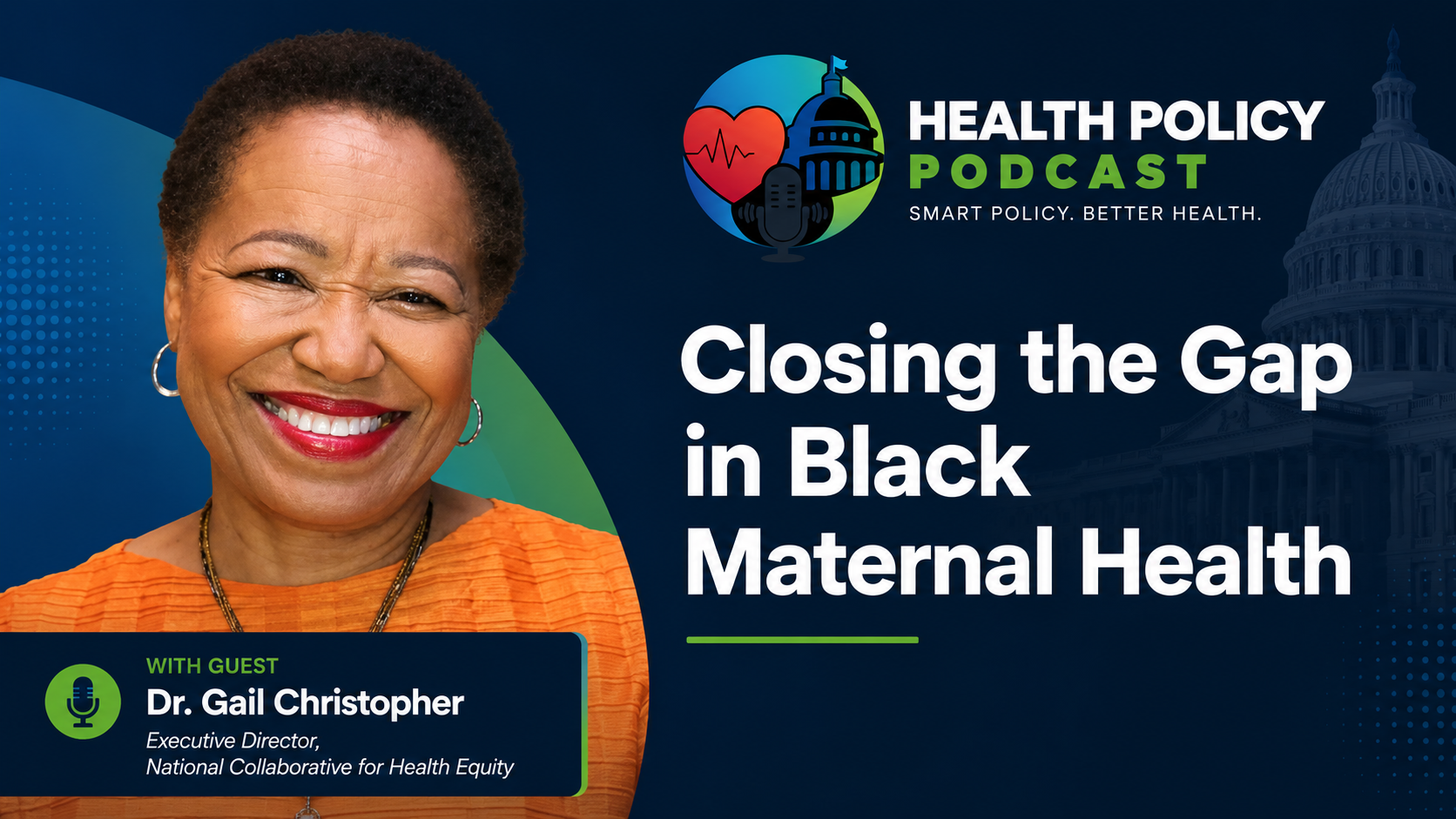
Health Policy Podcast episode featuring Gail C. Christopher discussing Dr. Gail C. Christopher on Closing the Gap in Black Maternal Health

In the latest episode of the Health Policy Podcast, Dr. Gail C. Christopher, Executive Director of the National Collaborative for Health Equity, discusses the urgent issue of Black maternal health. She highlights the Momnibus Act, a comprehensive legislative effort aimed at addressing health disparities affecting Black women and families, and emphasizes the importance of supportive practices like doula services to improve birth outcomes. Dr. Christopher calls for collective action to overcome persistent challenges in maternal health.

Dr. Gail C. Christopher: Closing the Gap in Black Maternal Health

0:00 / 0:00

Dr. Gail C. Christopher: Closing the Gap in Black Maternal Health

Dr. Gail C. Christopher Discusses Black Maternal Health Challenges and Solutions

In a recent episode of the Health Policy Podcast, Dr. Gail C. Christopher, the executive director of the National Collaborative for Health Equity, addressed the pressing issues surrounding Black maternal health. Christopher, who co-founded the organization over 20 years ago, spoke about the alarming disparities in maternal health outcomes for Black women in the United States.

During the interview, Christopher highlighted her recent keynote speech at the Black Maternal Health Conference, where the theme focused on reimagining a future free from health disparities affecting Black women and families. She noted the conference's success in gathering thousands of attendees committed to addressing these critical issues.

Christopher introduced the Momnibus Act, a comprehensive piece of legislation aimed at improving maternal health outcomes. The act encompasses over 14 bills designed to tackle various factors contributing to poor birth outcomes among Black women. "This bill includes a call for the data, the following of progress, so there is accountability for real results," she said. The legislation also addresses the needs of special populations, such as veterans and incarcerated individuals, and seeks to expand Medicaid coverage for pregnancy-related services.

Despite the federal bill not yet passing, Christopher pointed out that at least 17 states have already enacted similar legislation. The initiative has garnered $200 million in funding to support efforts across the country.

Christopher emphasized the severity of the challenges facing Black mothers, stating that they are two to three times more likely to die from childbirth-related complications compared to their white counterparts. She cited issues such as hemorrhaging, cardiovascular challenges, and high infant mortality rates as unacceptable and long-standing problems.

To combat these challenges, Christopher discussed the importance of comprehensive support for expectant mothers. She highlighted the role of doulas, trained companions who provide emotional and physical support during pregnancy and childbirth. Over 40 states now have programs covering the costs of doula services through Medicaid, which is crucial as the majority of births in the U.S. are funded by this program.

Christopher also mentioned the significance of community support and engagement, particularly through centering approaches that foster group connections among expectant mothers. "Compassion and empathetic support can matter in the lives of a mother who is experiencing the stress of creating a new entity within her body," she said.

Expectant parents, according to Christopher, should be aware of the available support and resources in their communities. She encouraged families to prioritize healthy lifestyles, including optimal nutrition and moderate exercise, to enhance maternal and child well-being.

Christopher noted the bipartisan support for the Momnibus Act, which has seen engagement from both political parties and various professional organizations, including the medical and nursing communities. She expressed optimism about the collective effort to address these health disparities.

The National Collaborative for Health Equity, under Christopher's leadership, aims to close health gaps through community engagement and leadership development. The organization is supported by major funders like the Robert Wood Johnson Foundation and the W.K. Kellogg Foundation.

For those interested in contributing to the cause, Christopher invited individuals to visit the National Collaborative's website for more information on how to get involved, either as volunteers or donors.

In closing, Christopher conveyed a hopeful message: "We can collectively overcome this persistent challenge. It is a gift, this gift of life, and together we have made progress."

For more information, visit nationalcollaborative.org.

Interview Q&A

Q&A: Dr. Gail C. Christopher: Closing the Gap in Black Maternal Health

Dr. Gail C. Christopher: Closing the Gap in Black Maternal Health

Q: Who is Dr. Gail Christopher and what does she do?

A: Dr. Gail Christopher is the executive director of the National Collaborative for Health Equity, an organization she co-founded over 20 years ago. She previously served as a vice president and senior advisor at the W.K. Kellogg Foundation.

Q: What was the theme of the recent Black Maternal Health Conference?

A: The theme focused on reimagining a future without health disparities and inequities affecting Black women and families. The conference attracted thousands of attendees working towards progress on these issues.

Q: What is the Momnibus Act and what does it entail?

A: The Momnibus Act is a comprehensive piece of legislation that includes over 14 bills aimed at improving birth outcomes. It addresses various factors affecting maternal health, such as extending Medicaid coverage and supporting special populations.

Q: How has the Momnibus Act progressed at the state level?

A: While the federal bill has not yet passed, at least 17 states have enacted similar legislation. The caucus that introduced the Momnibus has also secured $200 million in funding to support related efforts nationwide.

Q: What are some major challenges regarding poor birth outcomes in the Black community?

A: Black women are two to three times more likely to die from childbirth-related complications. Challenges include high rates of infant mortality, premature births, and low birth weights, all of which can be addressed through comprehensive support for expectant mothers.

Q: What practices are being implemented to support healthy outcomes for mothers and babies?

A: Programs include the use of doulas, who provide emotional and physical support during pregnancy and childbirth. Additionally, centering approaches that involve supportive group engagement are being utilized in over 40 states.

Q: What should expectant parents know to optimize pregnancy outcomes?

A: Expectant parents should know that supportive care is available in their communities. It's important to maintain a healthy lifestyle, including proper nutrition and moderate exercise, while reducing stress during pregnancy.

Q: Who are the allies supporting the Momnibus initiatives?

A: The effort has received bipartisan support in Congress, along with backing from the medical and nursing professions, as well as faith communities. There is a collective understanding of the importance of addressing these issues.

Q: How can individuals get involved with the National Collaborative for Health Equity?

A: Individuals can visit the National Collaborative for Health Equity's website, nationalcollaborative.org, to learn about volunteer opportunities and support programs aimed at closing health gaps.

Q: Is the National Collaborative for Health Equity a national organization?

A: Yes, the organization operates nationally and has representatives from nearly every state. It collaborates with various foundations and community-based groups to advocate for health improvements.

Q: What is a key takeaway from Dr. Christopher's message?

A: A key takeaway is that collective efforts can overcome persistent challenges in maternal health. The gift of life is significant, and progress can be made through creative collaboration.

Key takeaways

  • I am the executive director of the National Collaborative for Health Equity, an organization that I co-founded over 20 years ago.
  • Black women are at least twice, if not three times, as likely to die from childbirth-related complications.
  • The bill includes a call for the data, the following of progress, so there is accountability for real results.
  • Know that there is loving, supportive care available, and it is available usually in your local community.
  • This is a bipartisan effort. We had bipartisan support in Congress.

About the guest

dr-gail-christopher

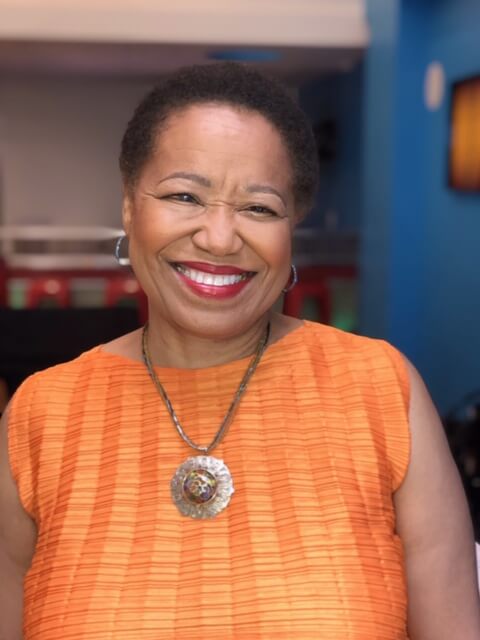
Gail C. Christopher

Executive DirectorNational Collaborative for Health Equity

Dr. Gail Christopher is executive director and co-founder of the National Collaborative for Health Equity and a nationally recognized leader in health equity and public policy. She previously served as vice president and senior advisor at the W.K. Kellogg Foundation, where she led major initiatives focused on community health and well-being.

Full transcript

Show full transcript
[00:00:00] Welcome to the Health Policy podcast. I'm Brian Hyde, and today I'm joined by Dr. Gail Christopher. She's the executive director of the National Collaborative for Health Equity. And Dr. Christopher, thank you so much for joining us. Um, would you mind taking a moment just to tell us a little bit about who you are and what you do? Oh, I'm very happy to do that, Brian, and thank you for, uh, having us here to, to talk about this issue. I am the executive director of the National Collaborative for Health Equity. It's an organization that I co-founded over 20 years ago, uh, before joining the W.K. Kellogg Foundation and serving as a vice president and senior advisor there. Uh, I was honored to be invited to return to the National Collaborative, and, and we work to improve the health of those who are most at risk for poor health outcomes in this country. Now, I understand that, uh, you were the keynote speaker at the Black [00:01:00] Maternal Health Conference recently. What can you tell us about that? It was a wonderful conference, and I really was impressed with their theme, which is to reimagine a future where we don't have the health disparities and the health inequities that have plagued, um, Black women and Black families in this country for s- for so many decades. Uh, the exciting thing about that conference is that thousands of people came together, and they really are working hard and accomplishing and making progress, really, on this issue. Talk to me a little bit about, uh, what you see as the most promising policy news, uh, about the dilemma of poor birth outcomes, uh, that has, has been a problem within the African American community. I am so excited to say that thousands of people have worked on this issue for so many [00:02:00] years, and, and there is something that's called the Momnibus- Act, right? It is a comprehensive piece of legislation, a very creative piece of health and social policy. This, this act includes over 14 different bills that address in, in a most comprehensive way, the factors that will change outcomes. The bill includes, uh, a call for the data, the following of progress, so there is accountability for real results. The bill addresses the needs of special populations like veterans, like those who are inc- incarcerated. It leverages our, our health policy, uh, resources by extending and expanding Medicaid to cover those things that are unique to the pregnancy and birthing process. Uh, it addresses the issues of [00:03:00] coverage for mothers in, in WIC, the Women's Infants and Children nutrition program, through postpartum after the baby's born, and through the breastfeeding era. Uh, there are just so many factors that we call the social determinants, which include, you know, access to housing, affordable housing and, and transportation and, and environmental risk factors. So it's really a beautiful piece of legislation, and to date, although the federal bill hasn't passed, at least 17 states have passed this legislation. And the caucus that introduced it, they have managed to acquire, to get, uh, $200 million in funding to help support the efforts that are going on across the country. So for those of us that have been in this for so many decades, this is really good news. I love that name, Momnibus Bill. That's - Uh-huh that's a stroke of genius. [00:04:00] Has this- It is ... has this been in the works for a long time? Yeah. Well, at least the last five years, do you know? Uh, maybe more like seven. But the work of getting to where such a piece of legislation could be drafted, uh, that work's been going on for, you know, at least the last four decades that I know of. And let's talk a little bit about, uh, I- I'd love to get a little bit more in depth on some of the, the poor birth outcomes that, you know, that have prompted, you know, this effort to, to, to reform and to find improvement. What are some of the major challenges that have been faced regarding those, those poor birth outcomes? Well, to be honest, uh, Brian, you know, Black women are at least twice, if not three times, as likely to die from childbirth-related complications, uh, things like hemorrhaging, um, and, and cardiovascular [00:05:00] challenges. So, so the death rates for mothers in the Black community in, in close proximity to giving birth or while giving birth are just unacceptable. Uh, the other issues, of course, are the loss of the babies, infant mortality. Uh, we have premature births. We have low birth weights. Uh, y- we have multiple challenges and outcomes that can be addressed when, um, we could say there's a comprehensive embrace of the expectant mother and family, uh, when we reduce the stress, when we provide the support and the resources throughout the pregnancy, when we optimize nutrition. Uh, and, and some of these things will be made possible by the suggested policy changes. We have twice the, the infant death rate as, as well, and so this is... You know, this has been going on for too long, and, and I, I [00:06:00] anticipate some real progress. Boy, those, those are some formidable challenges. Talk to me about, uh, the practices and the programs that, that are being, um, implemented or being suggested to, to support healthy outcomes for both the moms and the babies. I'm happy to do that, and, and, you know, the key issue during pregnancy, because it is a, it is a natural stress experience for the mother, uh, but the key issue is to ameliorate and mitigate the unnecessary stresses. And so we do that by providing support, um, and that there's a new approach to that, at least it's new for Western medicine. It's called the doula, uh, where a, a companion provides compassionate, empathetic, and informed support for the mother during the, the pregnancy and birthing experience. And we have now programs in over 40 [00:07:00] states that are covering the cost of doula services, that companion, that supportive care, uh, for expectant mothers and families. W- we also know that i- supportive circles, uh, what we call centering approaches, where the mother is engaged in a, a supportive group throughout the pregnancy. You know, it's amazing how much compassion and empathetic support can matter in, in all of our lives, but certainly in the lives of a mother who is experiencing the stress of creating a new entity within, within her body. Even though pregnancy only, uh, and fetal development only constitutes 1% of the average lifespan, the things that happen during that experience can really predetermine our potential for wellbeing throughout our lives. So by investing in this [00:08:00] period of development, we're actually, uh, benefiting, I think, the society as a whole. I love to hear you, uh, mention doulas, and that's, that's something actually that, uh, my wife and I have had some experience with in the birth of- Uh-huh ... at least two of our children. Um- Mm-hmm ... and to have that, uh, that moral support as well as someone who, who advocates and then, you know, in, in some cases it was home birth, in some cases it was at- Uh-huh the hospital, but, uh- Mm-hmm ... we had an advocate there to help us. It was... Yeah, look, I'm, I'm speaking from the dad's point of view. It took a lot of the stress off of me because, uh, I'm, you know, I'm trying to assist, but really all I can do is stand there and look concerned. But, uh, but the role of the doula is, is really something and, uh, and it makes me happy to hear that, to, that's something that, that's gaining, um, you know, more exposure and, and I would hope more acceptance. It is. Uh, as I indicated, over 40 states now have training and certification programs, and they are, they are covered by Medicaid. So, and the [00:09:00] majority of the births in America are paid for through Medicaid. So having the doula services there, and it's also expanding the workforce. You know, we just don't have enough, uh, diverse individuals in the healthcare workforce in a formalized way, and so certainly this is a way to expand that workforce. So that's exciting to hear that you and your wife had that service. Uh, it does, it does help really. And I, I also appreciate you framing, you know, that that period of time, you know, when, when a pregnancy is taking place and, and before the child is born, that, uh, that is a good... Uh, th- well, it's, it's, it's a small percentage of life, but it sets the stage in so many ways. Yeah. What would you say expectant parents need to know in order to help, uh, mitigate risks and to, to optimize the outcomes of their pregnancies? You know, I think the most important thing is to know that there is [00:10:00] love and support and care available. Um, with all of the focus on poor maternal and child outcomes at this point, too many women and families are really frightened, and one of the key messages I try to send is that be not afraid. Know that there is loving, supportive care available, and it, it is available usually in your local community. The other thing is to know that the wellbeing of the mother translates into the wellbeing, if you will, of the developing child, which means doing those things, those, those... They call them lifestyles, you know, but, but making sure that the food intake is healthy, it's optimal, staying away from ultra-processed foods. Exercise is critically important. Moderate, healthy exercise, like walking, you know? And also being [00:11:00] mindful that this is a, a very special time. Nothing more miraculous ever happens than the creation of a new life. And, and giving yourself the, the gift of, of the time and, uh, the reduced stress and anxiety to focus on this privilege of bearing new life. Talk to me about some of the, uh, allies that you have found along the way in, in moving forward. And I'm, I'm kinda looking back to the Momnibus, um, uh, you know, policies. Um, that's something that, that's a, that's a big, heavy rock to move. It is. Um, who have you found along the way that, that is helping to, to make that happen? I think the first thing I should say, which is really good news in these polarized times, this is a bipartisan effort. Uh, we had bipartisan support in Congress. Um, and the medical profession is right there, the nursing profession. Uh, it is a- [00:12:00] And certainly, you know, communities are stepping up. The, the faith communities are stepping up. I think there's a, a growing understanding that it is in our collective interests to do this, and it's just been, uh, a joy to see how many people are responding to the call. And, and for that matter, people who are hearing this podcast and wish to become more involved, let's talk a little bit about, uh, your organization, the National Collaborative for Health Equity. Um, are, are there ways that you, that people can, can get involved, either as, as volunteers or as donors? By all means. You know, the nationalcollaborative.org is certainly... You can visit our website. It's a robust site that, that talks about our work. Uh, we're coming up on the 20th anniversary of a commission that we s- we created, you know, two decades ago, uh, called The Courage to Love, and in it we called for comprehensive [00:13:00] approaches. And it's, it's really wonderful to be able to see the progress that's been made since that time and to know that we now have the collective momentum to make a, a real difference. So we certainly encourage, uh, donors. We encourage people to get involved in our programs. We have a leadership program where we support, uh, community leaders that are trying to close the gaps in terms of health and wellbeing. Uh, so definitely we would welcome engagement and support. And I'm just curious, are, is it ma- is this organization making inroads, um, across the country? Is, is it more regional at this point? We, we are national. We have, uh, representatives or leaders that have gone through our program from, I believe, every state right now. Uh, our principal funder of our work has been the Robert Wood Johnson Foundation, as well as the W.K. Kellogg Foundation, the de Beaumont Foundation. We partner with [00:14:00] the American Public Health Association, uh, and other organizations. So we work with community-based groups to advocate for and, and really help to generate the, the critical mass of support for change to improve the health and wellbeing. One final question for you, Dr. Christopher, and that is, if there, if there's a, a single idea that a, that a listener could take away from our conversation today that you would want to stick in their mind, what would that be? That we can collectively overcome this persistent challenge. Um, that it is a gift, this gift of life, and together we have made progress, and we will continue to make progress by creatively thinking and creatively working together. Again, the website is nationalcollaborative.org. We have been talking with Dr. Gail Christopher, [00:15:00] with the, uh, she's the executive director of the National Collaborative for Health Equity. And Dr. Christopher, thank you so much for joining us today on the Health Policy Podcast. It's been my pleasure. Thank you, Brian

Filed under