Show full transcriptHide transcript
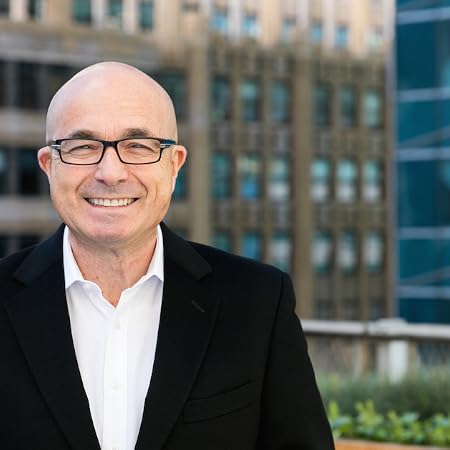
[00:00:00] Welcome to the Health Policy podcast. I'm Brian Hyde. Today I'm joined by Dr. Jeremy Levin. Uh, Dr. Levin is the author of a book, Biotech in the Balance. And before we delve into that topic, uh, Dr. Levin, I wonder, first of all, we could get you to tell us a little bit about yourself and then maybe set the stage for us.
When we're talking biotech, my mind doesn't know exactly where to go. So, so maybe a brief description of what, what all that encompasses. Brian, what a great introduction. What a pleasure to meet you. Uh, delighted to be with you. So my background is essentially somebody deeply technically trained. I started out working on, believe it or not, the thermodynamics of DNA supercoiling, how that giant one-meter piece of DNA folds into a cell.
When I saw that it had implications for disease, I, after my PhD, I went on and did a medical degree at Cambridge and learned so much about patients and how m- [00:01:00] to diagnose them and to think about them. Then one day I heard about this extraordinary industry growing up in America called biotechnology, and we'll come back to what that actually means.
Uh, but at the end of the day, I got on a plane, came across here, and visited many different companies, and to my delight... And this was a long time ago, over 30 years ago. To my delight, found an, an open sesame. Science was blossoming. There was a huge change. And so changed my life, changed my career. Uh, dived into a small company and proceeded.
Was reasonably successful in it early on, and, uh, and when I say successful, I mean I had learnt as medicine that you have a covenant with patients and the only thing that matters is finding a great medicine. And so I could see we were finding interesting and good medicines. So I first of all joined a tiny company and then a larger company called Genzyme, and then after that was, learnt about a great [00:02:00] drug that was helping patients called Seridase.
And then after that, believe it or not, was recruited into a giant company called Novartis, and there learnt about business development Multiple technologies. Had the great pleasure of helping to start and grow a company called Alnylam, and from there, finally one day I was given a call and they asked me to join the senior ranks of Bristol Myers Squibb.
And there really things did take off. Uh, after n- a number of years at Bristol, I, where I treated hundreds of patients and had the great pleasure of starting an area which affects you, me, and pretty much all Americans actually. It's called immuno-oncology. It's how you really revolutionize cancer treatment by getting white cells to attack cancers.
Cancers are very clever. They hide. You can't get to them. But we found a technology, and that launched a whole change in the industry. [00:03:00] And with a bit of luck now, we've hundreds of thousands and maybe millions of patient years have been saved by that. From there, I had a complete change. I was... got a call, and they said, "Would you lead a generics company, the largest in the world?"
And I did. It was called, uh, Teva, and is, remains called Teva Pharmaceuticals, and produced one drug, one pill, I apologize, for every six taken by Americans. And so I had the great pleasure of d- dealing with a giant company stretching over 100-plus countries, 70 different languages, and delivering medicines to people all around the world.
And then when I came back from that to the States, which I, I felt I really wanted to go back to my love, which was early stage novel innovation, and contribute back into the industry and society. And so took on roles also being chairman eventually of the biotech industry, which is, represents 1,000 [00:04:00] companies.
So here I am today. I'm the chairman of several companies. I have had a technical background. Delighted to say also the father of two daughters, incredible people, and married now for a long time, 38 years. I guess that's a long time, right? Wow. That is, that is quite a background. And, and the, the amazing thing to me is unless you or perhaps someone you love is involved in medicine or in biotech, um, I think this...
I'm s- I'm thinking this is probably a, a largely misunderstood, um, kind of, kind of, uh, field of study. In other words, most people go about their lives. Well, if I need something, I'll go to the drugstore, I'll go to the doctor, but they don't ever really get exposed to, um, what is happening in, in biotech. And, and I guess I'm just gonna come right out and ask, would, would we be shocked at how far medicine has advanced because of the, the research and the advancements taking place within that industry?[00:05:00]
You know, Brian, I think it would be stunned. And it's an opportunity to teach people about something rather wonderful, and it was created here in America. Arguably, the, the foundations for this particular industrial segment was in 1973, a long time ago, when two scientists suddenly said, "You know what? We can take an- a...
one of the pieces of machinery inside a cell and make it do something for us." It's called an enzyme that chews up things, and then you could do something with it, and that was Cohen and Boyer. These were heroes. From them, four years later or three years later, they founded the first ever biotech company called Genentech.
Now, this was completely different to J&J, Bristol, what was then Squibb, and Merck, which were around. They were big giants. They were the guys who were basically distributing the kinds of medicines that we all knew about, the [00:06:00] aspirins, the Tylenols, that kind of stuff, and a few of the early drugs, particularly Bristol, who had a new drug for heart failure, which was called Captopril.
Doesn't really matter about that. The point was the revolution started in 1973, and a bunch of scrappy, incredibly entrepreneurial people and venture capitalists took huge risks to unpack the cells of our body and ask the question, could you change the behavior of those cells? Well, we fast-forward today to a, a group of about 1,000 companies, small, completely small, each one of them having scientists going into the lab every day, and actually, the truth of the matter is they fail.
Mostly they fail, but they go back the next day. It's incredible spirit of these people, and they consume tremendous amounts of capital. But the industry as a whole is immensely, immensely productive, and what it [00:07:00] has given us is something special. They're small. They don't have global footprints, and so they partnered with these giant, the Bristols, the, uh, GSKs, the Pfizers, the names you know, brand names, AstraZeneca.
These are distribution giant companies that sell drugs, and they do a lot of the heavy lifting on late-stage development, which costs hundreds of millions of dollars. But they don't necessarily invent them. 70% of the drugs that you and I consume, the new ones, I'm not talking about the generics, I'm not talking about the aspirins, 70% of the new drugs come from biotech.
So in America, over a period of from 1973 to now, we built an invisible industry. You just said it. You don't even know what it is. But effectively, it is the engine that you don't see. It's the chip in the Uh, in the [00:08:00] computer. That's the thing that really makes it work, and it's special. There are millions of people who depend on it.
The medicines have changed the lives of so many people. And I today, even all these many years that I'm i- in the industry and having run all of the different segments of it, big companies like the Bristol and Novartas, Teva, the small companies are where innovation stands, and that is quintessentially what's happening in America, and it's what was so strong and should remain strong for the future, Brian.
And that's why I wrote the book, 'cause I'm worried it isn't going to. Yeah. Uh, I noticed the subtitle of the book, Saving a Strategic Industry in an Age of Distrust. Could you unpack that for me? Um, I, I agree, but I couldn't explain why we live in an age of distrust. I just know that, uh, there is. There's... It, it seems like, uh, there has been a politicizing of, of science that, that has, has now [00:09:00] caused, you know, polarization and, um, people don't know who to trust.
I know, and you know, it's so sad. This is a situation which should never have arisen. Let's go and take a quick snap of history. And if you go back, think about the excitement of the giant pharmaceutical companies in the 1960s. They were the heroes. They were curing things. They had... We'd just got rid of polio in the 1950s.
We were stopping that terrible scourge of measles, mumps, and other areas with new vaccinations that they produced. Tremendously great science. Then couple things happened. The first was an unfortunate event when a publication in the early 1980s started to talk about publishing vaccines causing autism.
Real problem. Real problem, 'cause the evidence simply wasn't there. That's a... I... But people are thoughtful and people [00:10:00] wanted to question and they wanted to understand what was going on, which is legitimate. We just didn't, as an industry, communicate back. We let it grow. That was item number one. Item number two was a little different.
These big heroes, the pharmaceutical companies, s- were so successful that Wall Street logged into them, and their stocks started to fly. The fact of the matter is they were getting further and further away from the patient. The patient who mattered so that today when a person in the street thinks about the industry, they conf- they confuse.
They don't see biotech, and they think about biotech as only being pharma. And when they see pharma, that means that they pay money out of their pocket when they go to CVS, Walmart, or somewhere else, or they hear about inflated and completely, uh, increasing drug prices, or they hear about some mystery that somehow pharma wants to control, uh, [00:11:00] Congress, and et cetera.
Many of these are really enhanced by what the pharma actually does. Number one, pharma basically advertises about drugs. It doesn't advertise about innovation. It talks about a drug that you'll get, and then immediately after that you get this list of things that will cause you a problem if you take it.
And a lot of our education could ... of what the industry is, comes from those kind of sources. So naturally, it's not unusual that when two events occurred, there was a bedrock ready to rise up and say, "Here's a problem." The first was a dreadful person, and a person who led a huge problem, and that was 2015 when Martin Shkreli basically took an old drug, nothing to do with biotech, nothing to do with innovation, an old generic drug, and inflated the price dramatically.
That [00:12:00] led to a whole scandal. Then a presidential candidate, uh, Hillary Clinton, slammed down. Now, we as an industry of the biotech, the small companies, the real innovators, should've ... That was the canary. We should have said, "Boy, we don't wanna be branded with this," because all the stocks of biotech were dragged along by pharma as they were hammered, and they fell, and that's tremendously important.
In a pharmaceutical company, stock price kind of doesn't matter. You generate cash, your company goes on. In a biotech company, your stock price ca- crashes. You can't raise money to do the innovation. Nobody's gonna give you money. So it's completely different. There's no cash flow in biotech, and that's a really big deal.
So 2015, first point. Distrust led to real problems. The next was during COVID Here, you [00:13:00] know, it's very important for us to remember that the system didn't just suddenly come up with vaccines. This was 30 years of hard work that allowed vaccines to be developed. Now, yes, there's questions about how effective they are, but there's little doubt of the fact that had we not had them, as other countries experienced, we wouldn't have seen, as we did, 1.3 million Americans die.
That's a terrible figure, terrible figure. Some people project we would've seen much more, perhaps as many as 10 million. Well, COVID's behind us, but during that period of time, unfortunately, while there was an, an heroic effort by the administration through Project Warp Speed to bring these drugs, these, these, uh, [00:14:00] vaccines to the table in light speed, I mean, they really did.
It was 18 months, and boy, we were there. Despite that, rumors abounded. Distrust was about them. I was on radio talking to people, and you know, I was so sad because here we're hearing people say, "Well, I'm getting a chip implanted in me. I'm going to be sterile. My children who've never had this vaccine are going to go become autistic."
All of these myths were being propounded. Now, there are, every drug has a side effect, but we know now that when you have millions vaccinated, you do not have the kind of side effects. The real things that happen is data tells you that. So unfortunately, Brian, against this bedrock, the whole industry, biotech on one side and pharma, became a political piñata.
People in the [00:15:00] street rightly don't like paying money out of their pocket. Why should the pharmaceutical companies do it? Not the pharmaceutical companies, the insurance companies should be paying for it. Why are we paying when we're sick? It's wrong. Then you have something else. You know, people look at price rises, but they don't see the middlemen.
Pharmaceutical companies account for a certain proportion of the price, but nearly 50%, 5-0, comes from invisible middlemen. Doesn't matter. It still means that you, the individual, hear the story. I, the individual, hear the story. And the pharmaceutical industry becomes, and the biotech industry, by unfortunately being lumped together, become the same problem.
Distrust starts to creep. And that Is where the real problem starts for the industry. Because of that distrust, politicians say, "You know what? [00:16:00] This is the moment that I can get votes. This is the moment I can ride that wave of distrust, and so I'm going to introduce legislation to hammer the industry."
It's not really to hammer the industry. They don't really want to hammer the industry, but it's a vote-getter. It gets votes. There's no question about it. And as a consequence of that, they ignore the middlemen. They ignore the insurance companies that are taking money out of the pockets of the individual and they go there.
And worse yet, when they do all of this, they then start to erode the foundations of what it generates the entire industry of biotech. Dr. Levin, what, what needs to happen to, uh, take the politicizing out of the, the science or to, to separate, uh, the politics and science and, and to restore that trust [00:17:00] that, that you've just...
I, I think you've given a very good explanation of how, how the, that distrust has grown. What needs to happen to, to restore trust in, in biotech? It, it's really two sides to this equation, and the first is one which is very special and should occur, and should occur rapidly. Given that science is so wonderful in America, b- Brian, it's incomparably better than anywhere else, and it's never been better.
And given that now we're seeing massive cuts in NIH, dislocation, disruption at the FDA, which is the core engine of approving drugs, and the dislocation that's occurred in the way of detecting disease at CDC, okay? Coupled with an immense outpouring of communication, there are two sides that we need to change.
One [00:18:00] is actually on the policymakers, and two is in the companies. On the policymaker side, I think the story is very clear. We need to make biotech a national strategic asset, just like housing, just like defense. Because if we don't, none of the things that I've just talked about, the building of science, the establishment of a rigorous world-class FDA, the establishment of how you monitor disease, will ever be put into place.
What we have will erode, and it will take decades to rebuild- And but the inverse is if we, the, uh, the policymakers in Washington say, "This is strategic," then they help us compete against other nations who've already said that. China has a 25-year plan. [00:19:00] They have said flatly, "We are going to build biotech.
We will be the predominant producers of biotech medicines by 2035." And boy, they're right on track. They've helped everything grow in that way. We're not ... But the industry doesn't need money from the policymakers, it needs levers. It needs assurance of communication. It needs assurance that in fact process in the FDA will be predictable.
It needs assurance that in fact the funding of innovation at the NIH continues. It needs assurance that in fact the CDC continues as is. That's on the side of the policymakers. Big decisions, they can do it. On the f- on the biotech side, it's a little different. I think we have, in the book I laid out 10 commitments.
We have commitments. If we do those, they respond to, one, [00:20:00] transparency; two, articulating genuine, uh, commitment to patients; and really three, and this is really part of the whole story, commit changing our focus to be the post- the not just the purpose being the patient, not just transparency, but committing to call out anything that isn't a fact.
Show it. Talk about it. The Shchrellis of the world, call them out. The changes in a fact that is clear, that is demonstrated, call it out. And focus on innovation. Drive the innovation. Focus on innovation, not just of new medicine, but of manufacturing. Build that here in America. We can do that. And if you do this together, you create not just what I think is critical bio build, which is reinvigorating the American economy using our skills, our abilities, [00:21:00] our innovation, but at the same time, it also then turns to the public and says, "Gee, we're open.
We're here." Now, this is ... I'm not going to address our colleagues in the pharma industry. These are titans, amazingly important companies. They are the true partners of the biotech world, but they're different. They do not necess- in fact, if innovation stopped today, no more new drugs, these guys would still be around in 10 years They would definitely still be around.
They keep on talking about innovation. They love it. GLP-1, well, I got news for you. GLP-1 was around 30 years ago. And the reason it didn't hit the market was that not a single company up until Eli Lilly and Novo suddenly said, "You know, there's a disease called obesity." [00:22:00] They didn't define it as a disease.
The minute they defined it as a disease, these old drugs came in, these old concepts came in. And now biotech has taken that and said, "You know what? Let's find better things like better than this. Let's find things that don't impact your muscles. Let's make it oral. Let's help people who are really, really strengthen their bodies."
So they're partners. They have a role to play as well. They need to stand up. They need to be quite clear about what they're saying. They need to offer the public a view, not just of advertisements, but of the wonderful things that they actually do internally, develop drugs, distribute a drug, making sure that every day a patient who takes that drug will continue taking it and not stop taking it.
By the way, Brian, 50%, five zero percent of all people taking drugs stop them at the end of the first year. It's [00:23:00] extraordinary. Uh, that should stop. That should stop. So there are many things that we can do to rebuild trust, and I actually really welcome the opportunity to h- help make that a part of what we do every day.
I'm sorry to say we are up against the end of our segment, and I feel like we just barely scratched the surface. But again, we are talking with Dr. Jeremy Levin. He is the author of Biotech in the Balance: Saving a Strategic Industry in the, in an Age of Distrust. Um, that book will be available here in, uh, about two weeks, correct?
That is correct, May 19. And where can people find it? Amazon has it on there, and I've just finished the audiobook. Hopefully, that'll be on there, and it's also on Kindle. Well, Dr. Levin, thank you so much for joining us today on the Health Policy Podcast. Brian, thank you so much for your time today