
2026-05-26 · Ellen Lubensky
Ellen Lubensky: Advocating for Mental Health Reform and Informed Consent
with Ellen Lubensky, Attorney — Ellen Lubensky
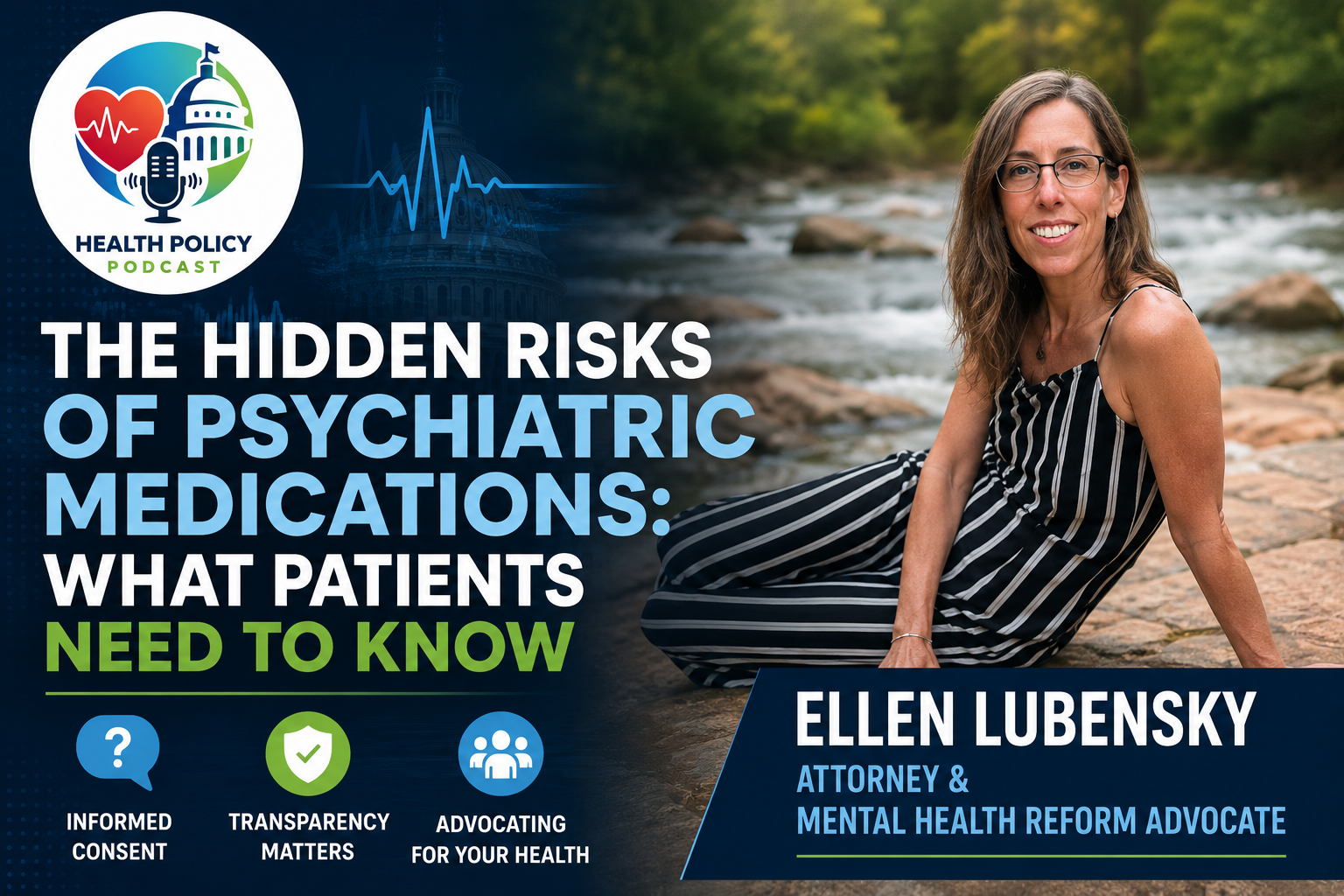
Ellen Lubensky, an attorney and mental health reform advocate, discusses the importance of informed consent and transparency in psychiatric medication prescriptions on the Health Policy Podcast. She emphasizes the need for longer patient appointments and better education for both patients and healthcare providers regarding the risks of psychiatric medications. Lubensky advocates for systemic changes to improve mental health care access and reduce stigma surrounding mental health issues.
Ellen Lubensky Advocates for Mental Health Reform and Informed Consent
Ellen Lubensky Advocates for Mental Health Reform and Informed Consent
Ellen Lubensky, a Stanford-educated attorney and mental health reform advocate, discussed the need for informed consent and transparency in psychiatric medication prescriptions during a recent episode of the Health Policy Podcast. Lubensky, who has firsthand experience with psychiatric medications, emphasized the importance of patient education and the responsibility of healthcare providers to communicate risks associated with these treatments.
Lubensky, who graduated from Rutgers Law School, has dedicated her career to raising awareness about the potential detrimental effects of psychiatric medications. She highlighted the variety of medications available, including antidepressants, benzodiazepines, and antipsychotics. "Most doctors, most psychiatrists are given 15-minute appointments in which to medicate people," she said. "This is not enough time to discuss the risks and benefits of treatment."
She criticized the pharmaceutical industry's influence on prescribing practices, suggesting that the pressure to prescribe medications often overshadows the need for comprehensive patient care. "I firmly believe that this is because of big pharma," she stated. "Doctors should have transparency when they're prescribing medications."
Lubensky shared her personal experiences with psychiatric medications, noting that she was not adequately informed about the risks involved. "I did not have a sit down with my psychiatrist telling me what the risks would be," she said. "If I had known about the risks, I would never have ingested them in the first place."
The concept of informed consent is central to Lubensky's advocacy. She defined informed consent as the process of ensuring that patients understand the risks and potential outcomes of their treatment. "Informed consent means telling you the risks, telling you what may happen if you ingest psychiatric medications," she explained. "Doctors have a duty to speak openly about whether the 'may' will happen to you."
Lubensky pointed out that many patients feel unable to speak up about their mental health issues due to stigma and fear of judgment. She believes that patients should advocate for themselves and seek out healthcare providers who will take the time to answer their questions. "If your psychiatrist does not give you the time to ask questions, then you should find another psychiatrist," she advised.
The podcast also addressed the rising mental health spending in the United States, particularly in light of Medicaid expansion. Lubensky expressed concern that despite increased funding, many individuals continue to suffer unnecessarily. "This is almost a hundred percent preventable with information," she said. "Doctors need to speak openly about these issues."
She emphasized that therapy should be the first line of treatment before considering medication. "Medications should never be the first resort," she stated. Lubensky also called for more funding to allow for longer appointment times, which would enable psychiatrists to provide better care and support for their patients.
Regarding mental health parity regulations, Lubensky noted that while there has been progress, disparities still exist in how mental health conditions are covered compared to physical health ailments. "There should be no differentiation between people who are struggling with mental health issues and physical issues," she said.
Lubensky's advocacy extends beyond her personal experiences. She has filed suit against a psychiatrist to challenge the lack of informed consent in her treatment. "I firmly believe that these are things that people need to take into their own hands and advocate for themselves," she said.
As the conversation concluded, Lubensky urged listeners to ask questions and seek out information about their mental health treatment. "You can ask questions. If somebody does not have time to ask questions, you find somebody else," she said.
For those interested in learning more about mental health reform and informed consent, Lubensky directs them to her website, ellenlubensky.com, where she shares resources and insights on the topic.
Lubensky's commitment to mental health advocacy highlights the critical need for transparency, education, and patient empowerment in the field of psychiatry.
Interview Q&A
Q&A: Ellen Lubensky Advocates for Mental Health Reform and Informed Consent
Health Policy Podcast: Ellen Lubensky Advocates for Mental Health Reform and Informed Consent
Q: Can you tell us about your background?
A: I am a Stanford graduate and an attorney who graduated from Rutgers Law School. I aim to spread awareness about the detrimental effects of psychiatric medications.
Q: What range of psychiatric medications are there?
A: There is a wide range of psychiatric medications, including antidepressants, benzodiazepines, and antipsychotics. I believe doctors should have transparency when prescribing these medications.
Q: What issues do you see with the current prescription practices of psychiatrists?
A: Most psychiatrists have only 15-minute appointments to medicate patients, which leads to a lack of thorough discussions about the risks and benefits of medications. This is influenced by the pharmaceutical industry.
Q: What is informed consent in the context of psychiatric medication?
A: Informed consent means that patients should be informed about the risks of psychiatric medications, including potential physical dependency. Doctors have a duty to discuss these risks openly.
Q: How can the system improve informed consent practices?
A: The system needs to change, particularly regarding funding, to allow psychiatrists more time for appointments. This would enable better communication about psychiatric issues.
Q: What is your view on the rising spending in mental health due to Medicaid expansion?
A: While spending is increasing, many people continue to suffer unnecessarily. Providing information can help individuals make informed decisions about their treatment options.
Q: What changes do you suggest for improving the quality of time spent between patients and psychiatrists?
A: There should be shifts in funding to allow for longer appointment times. Psychiatrists should not be the first resort; therapy should come first before medication.
Q: What role do health insurance companies play in mental health care?
A: There is greater parity now in mental health coverage, but historically, mental health conditions were not covered as comprehensively as physical ailments. This disparity is concerning.
Q: What is your key takeaway for listeners regarding mental health treatment?
A: Ask questions. If your psychiatrist does not give you the time to ask questions, find another psychiatrist who will.
Q: Where can people learn more about your work?
A: People can visit my website at ellenlubensky.com. I also post on multiple platforms and host live sessions to discuss these issues.
Q: How can individuals combat the stigma associated with mental health issues?
A: People should feel free to speak openly about their mental health struggles. There is no shame in taking psychiatric medications, and discussing these issues can help reduce stigma.
Q: What advice do you have for those who may feel ashamed about their mental health treatment?
A: Recognize that being human includes experiencing challenges. Open conversations about mental health can foster understanding and support among friends and family.
Key takeaways
- “I firmly believe that doctors should have transparency when they're prescribing them.”
- “If I had known about the risks of psychiatric medications, I would never have ingested them in the first place.”
- “Medications should never be the first resort.”
- “You can ask questions. If somebody does not have time to ask questions, you find somebody else.”
- “This is not something that you live in shame over. It is not something that should be disguised.”
About the guest

Attorney — Ellen Lubensky
Ellen Lubensky is a Stanford-educated attorney, speaker, and healthcare advocate whose work focuses on patient rights, mental health, and medical advocacy. After spending nearly three decades living under what she describes as a wrongful psychiatric diagnosis, Lubensky became an outspoken advocate for informed consent, patient-centered healthcare, and greater scrutiny of psychiatric treatment practices. She previously practiced Social Security Disability and medical malpractice law and now shares her personal recovery journey through podcasts, interviews, and public speaking appearances.
Full transcript
Show full transcriptHide transcript
Filed under