
2026-03-31 · American Council on Science and Health
Susan Goldhaber Explores the Fluoride Controversy in Public Health
with Susan Goldhaber, Writer — American Council on Science and Health
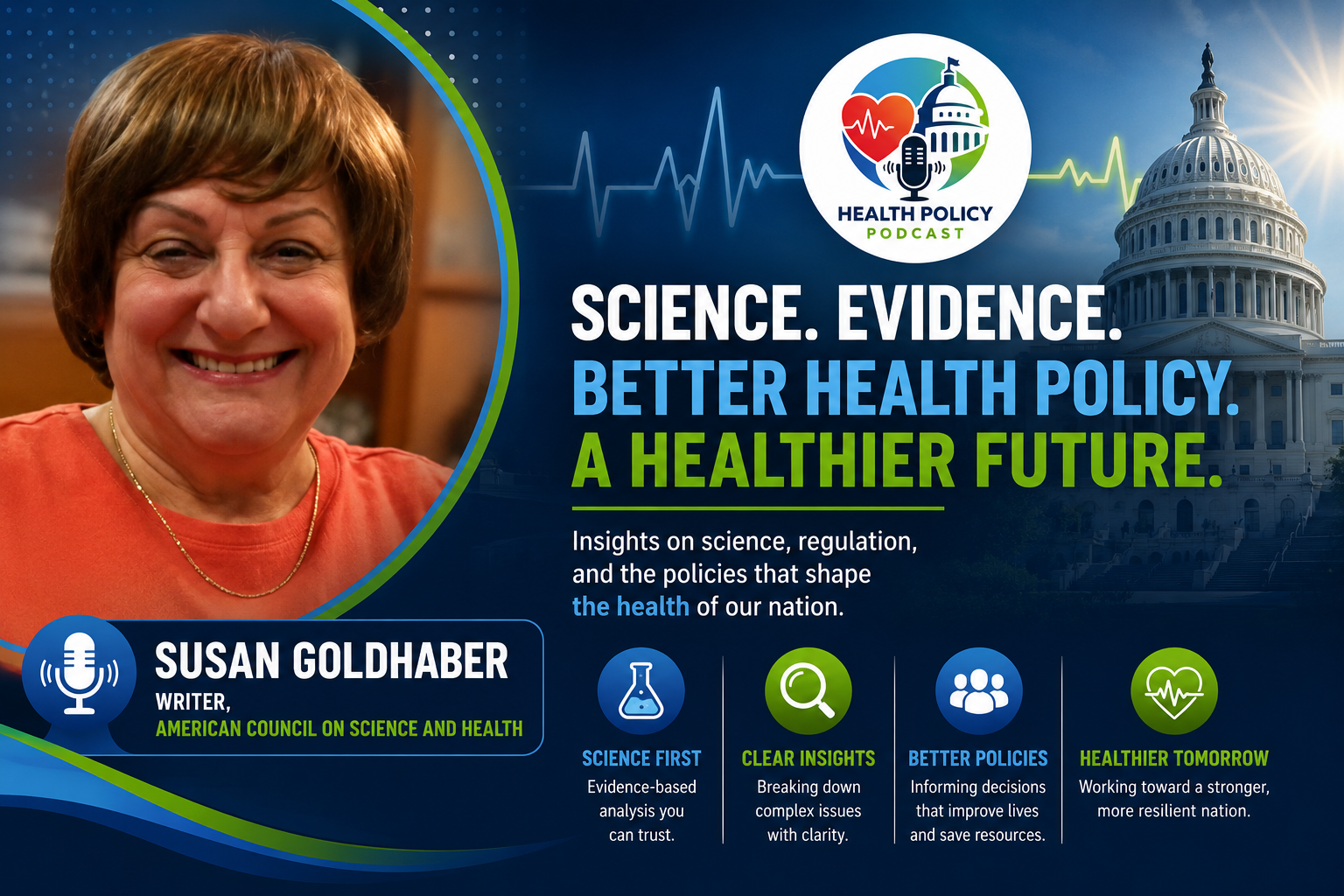
In the latest episode of the Health Policy Podcast, host Brian Hyde interviews Susan Goldhaber, a writer for the American Council on Science and Health, about the ongoing fluoride controversy. Goldhaber discusses the Environmental Protection Agency's new toxicity assessment of fluoride in drinking water, its historical context, and the implications of recent studies linking fluoride to potential neurological effects in children. The episode highlights the contrasting views of public health advocates and organizations like the American Dental Association regarding the safety and necessity of water fluoridation.
Susan Goldhaber Discusses the Fluoride Controversy and Public Health
Susan Goldhaber Discusses Fluoride Controversy and Public Health
In a recent episode of the Health Policy Podcast, Susan Goldhaber, a writer for the American Council on Science and Health, discussed the ongoing debate surrounding fluoride in drinking water. The conversation comes as the U.S. Environmental Protection Agency (EPA) announced it would conduct a new toxicity assessment to determine safe levels of fluoride. Goldhaber, who has worked on fluoride-related issues since the 1980s, provided historical context and insights into the current controversies.
Goldhaber began by detailing her background, which includes a decade spent at the EPA working on fluoride standards. She noted that the agency is revisiting fluoride safety levels, similar to the assessments she participated in decades ago. "Throughout like 40 something years, it's just been there," she said, emphasizing her extensive experience with the issue.
Fluoride's contentious history dates back to the early 20th century. Goldhaber recounted how in 1909, Dr. Frederick McKay discovered a correlation between high fluoride levels in water and dental health in Colorado Springs, Colorado. While some residents exhibited brown stains on their teeth, their dental decay rates were significantly lower than average. This finding spurred interest in fluoride as a public health measure.
The practice of water fluoridation began in 1945 when Grand Rapids, Michigan, became the first city to add fluoride to its drinking water. Goldhaber explained that this initiative aimed to improve dental health after World War II, when poor oral hygiene among military recruits became a national concern. Despite its benefits, fluoride has remained controversial, with detractors raising concerns about its safety.
Goldhaber highlighted the ongoing debate regarding fluoride's potential health risks. "Fluoride, like all chemicals, has different effects at different levels," she explained. The EPA currently sets the drinking water standard for fluoride at four milligrams per liter, a level intended to prevent skeletal fluorosis, a condition that can cause bone deformities. However, Goldhaber noted that lower levels of fluoride are associated with dental health benefits, with the Centers for Disease Control and Prevention recommending concentrations between 0.7 and 1.2 milligrams per liter.
Recent research has sparked renewed scrutiny of fluoride. The National Toxicology Program, part of the National Institutes of Health, reported that fluoride concentrations above 1.5 milligrams per liter could be linked to lower IQ levels in children. This finding has prompted the EPA to reconsider its fluoride standards. Goldhaber stated, "It's going to be very hard for [the EPA] to defend that if another government agency is saying you see things at 1.5."
The American Dental Association (ADA) has historically supported water fluoridation as a critical public health measure. Goldhaber noted that the ADA has strong political connections and is likely to play a significant role in the ongoing debate. "They are not going to just roll over," she said, emphasizing the ADA's commitment to defending fluoridation.
The controversy surrounding fluoride has gained traction in recent years, particularly with the rise of movements like Make America Healthy Again (MAHA), which advocate for reduced chemical exposure in drinking water. Goldhaber acknowledged that some arguments against fluoride are rooted in valid concerns, such as the increased exposure to fluoride from multiple sources, including toothpaste and processed foods.
However, she cautioned that the debate should not be driven solely by sensational claims. "Some of it is based on sound science," Goldhaber said, while also expressing skepticism about the validity of certain studies linking fluoride to IQ reduction. She pointed out that IQ is a standardized measure with inherent variability, making it difficult to draw definitive conclusions.
As the EPA prepares to reevaluate fluoride standards, Goldhaber predicts that the battle over public opinion and legal challenges will intensify. "It'll come out in the courts and also in public opinion," she said, highlighting the importance of local and state-level decisions on fluoridation.
In conclusion, the fluoride debate continues to evolve, with scientific research, public health policy, and community opinions all playing crucial roles. As discussions unfold, stakeholders on both sides of the issue will likely engage in a complex dialogue about the benefits and risks of fluoride in drinking water.
Interview Q&A
Q&A: Susan Goldhaber Discusses the Fluoride Controversy and Public Health
Health Policy Podcast: Susan Goldhaber Discusses the Fluoride Controversy and Public Health
Q: What is Susan Goldhaber's background related to fluoride?
A: Susan Goldhaber worked at the Environmental Protection Agency (EPA) in the 1980s, where her first assignment involved revising the fluoride standard. She spent ten years on that project and has continued to work on fluoride-related issues throughout her career.
Q: Why is fluoride considered controversial?
A: Fluoride has a complex history, beginning in 1909 when Dr. Frederick McKay discovered that residents of Colorado Springs had brown mottled teeth but fewer cavities due to high natural fluoride levels in their water. The controversy grew over the decades, especially after the introduction of fluoridation in Grand Rapids, Michigan, in 1945.
Q: What were the historical concerns about fluoride?
A: Concerns about fluoride have persisted since its introduction, with some claiming it was a communist plot in the 1950s. The debate has continued, especially with the rise of movements advocating against added chemicals in drinking water.
Q: At what levels does fluoride become problematic?
A: Fluoride has different effects at varying levels. The EPA's drinking water standard is set at four milligrams per liter to prevent skeletal fluorosis, while two milligrams per liter is associated with dental fluorosis. The CDC recommends fluoride levels between 0.7 and 1.2 milligrams per liter for dental health.
Q: What recent findings have raised concerns about fluoride?
A: The National Toxicology Program reported that fluoride concentrations above 1.5 milligrams per liter are associated with lower IQ in children. This finding has prompted the EPA to reassess fluoride levels in drinking water.
Q: What is the American Dental Association's stance on fluoride?
A: The American Dental Association (ADA) has historically supported fluoridation as a crucial public health measure for dental health. They are expected to play a significant role in the ongoing debate, especially if the EPA proposes changes to fluoride standards.
Q: How does the "Make America Healthy Again" movement fit into this discussion?
A: The "Make America Healthy Again" movement argues against the necessity of fluoride in drinking water, citing that fluoride exposure now comes from multiple sources, such as toothpaste and processed foods. They question the need for added fluoride in public water supplies.
Q: Are the concerns raised by the movement based on sound science?
A: Some concerns are based on valid scientific arguments, particularly regarding increased fluoride exposure from various sources. However, there are differing opinions on the impact of fluoride on children's dental health and the significance of studies linking fluoride to lower IQ.
Q: Where is the battle over fluoride likely to be fought?
A: The battle over fluoride will likely occur in courts and public opinion. The ADA may challenge any proposed changes to fluoride standards legally, while public sentiment will play a crucial role in local and state decisions regarding fluoridation.
Q: What role do local dentists play in this debate?
A: Local dentists can significantly influence public opinion by sharing data on cavity rates and the benefits of fluoridation with their communities. Their long-term relationships with patients may impact local decisions on fluoride in drinking water.
Q: What does Goldhaber predict about the future of fluoride standards?
A: Goldhaber believes the EPA may lower fluoride standards due to new findings, but she also acknowledges the strong opposition from the ADA and local dentists, suggesting that the debate will be complex and multifaceted.
Q: How does Goldhaber view the current discourse around fluoride?
A: Goldhaber recognizes that the conversation around fluoride is evolving, with new research and public movements challenging long-held beliefs. She emphasizes the importance of considering both sides of the debate as it unfolds.
Key takeaways
- “Fluoride has a really interesting history... It started back in 1909 when there was a doctor named Frederick McKay.”
- “In 1945, Grand Rapids, Michigan became the first city in the world to add fluoride to their drinking water.”
- “Fluoride, like all chemicals, has different effects at different levels.”
- “One of their main persuasive arguments is we don't need it anymore because people get enough fluoride from other sources now.”
- “It's very difficult to throw out a whole, particularly when the National Toxicology Program says that you need to be concerned about this.”
About the guest

Writer — American Council on Science and Health
Susan Goldhaber, M.P.H., is an environmental toxicologist with over 40 years’ experience working at Federal and State agencies and in the private sector, emphasizing issues concerning chemicals in drinking water, air, and hazardous waste. Her current focus is on translating scientific data into usable information for the public.
Full transcript
Show full transcriptHide transcript
Filed under