Tuesday, June 2, 2026 · The Health Policy Podcast
Health Policy Podcast logo
← Health Policy Podcast

2026-06-02 · National Taxpayers Union

National Taxpayers Union's Pete Sepp: Why Medical Bills are High, Unpredictable, and Opaque

with Pete Sepp, President — National Taxpayers Union
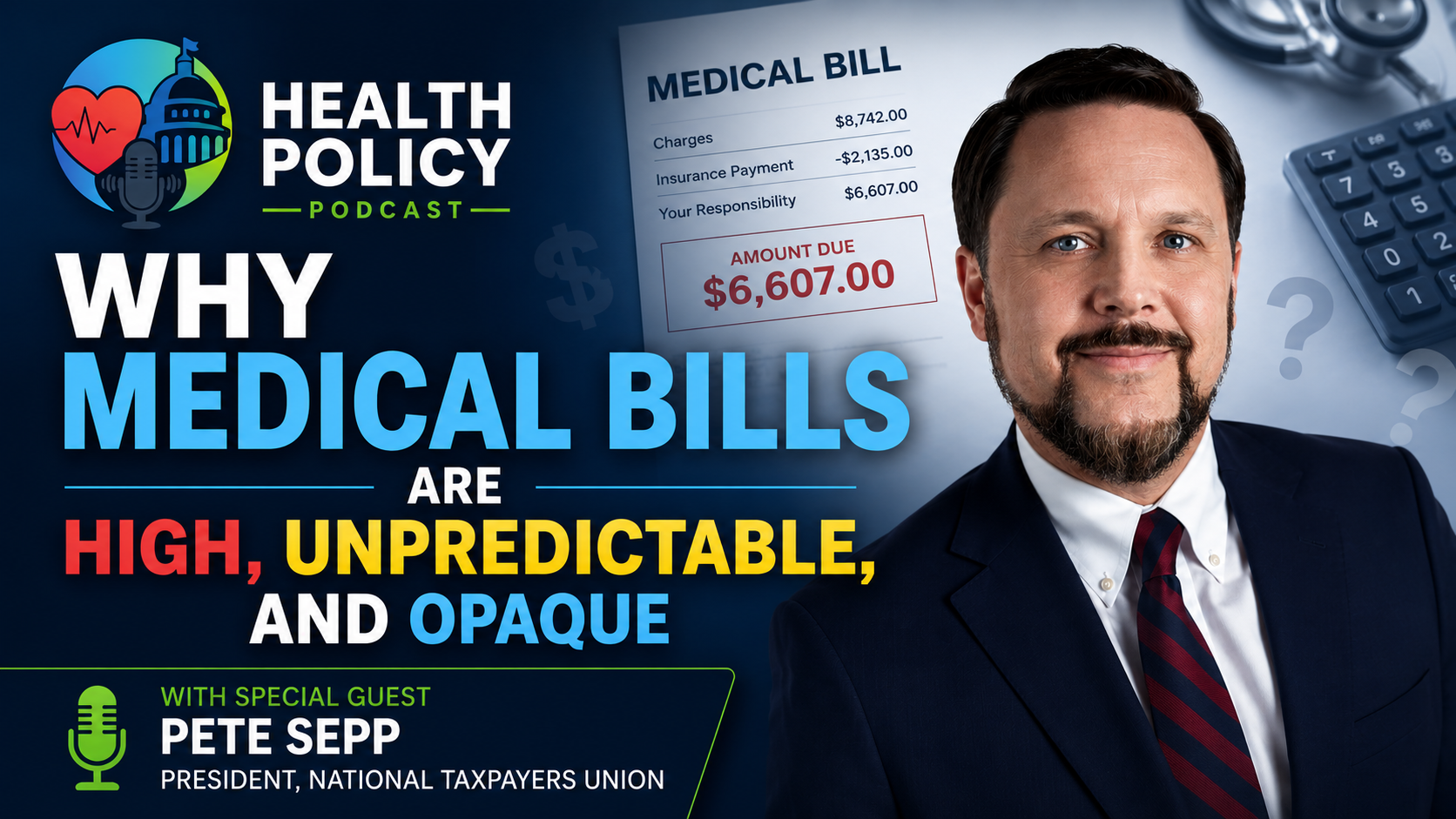
Health Policy Podcast episode featuring Pete Sepp discussing National Taxpayers Union's Pete Sepp: Why Medical Bills are High, Unpredictable, and Opaque

In the latest episode of the Health Policy Podcast, Pete Sepp, president of the National Taxpayers Union, discusses the complexities of healthcare costs, emphasizing their unpredictability and opacity. He highlights systemic issues such as hospital billing practices, the influence of insurance and pharmaceutical companies, and bureaucratic overhead that contribute to high medical expenses. Sepp advocates for comprehensive reforms, including site-neutral billing and streamlined regulations, to improve transparency and reduce costs in the healthcare system.

National Taxpayers Union's Pete Sepp: Why Medical Bills are High, Unpredictable, and Opaque

0:00 / 0:00

National Taxpayers Union's Pete Sepp: Why Medical Bills are High, Unpredictable, and Opaque

High Medical Bills: Insights from National Taxpayers Union President Pete Sepp

In a recent episode of the Health Policy Podcast, Pete Sepp, president of the National Taxpayers Union, discussed the complexities and challenges of the U.S. healthcare system. Founded in 1969, the National Taxpayers Union is a nonpartisan organization advocating for lower taxes and government accountability. Sepp highlighted the persistent issues of high, unpredictable, and opaque medical costs that plague patients and providers alike.

Sepp emphasized that the unpredictability of healthcare costs is a significant concern. For example, a biopsy performed in a doctor’s office may cost around $150, while the same procedure at a hospital outpatient clinic can soar to $800. This stark difference illustrates the broader problem of inconsistent pricing within the healthcare system. "It is very difficult for a patient or even a doctor to figure out why a certain charge is being levied for a given service," Sepp said.

The National Taxpayers Union has long been involved in healthcare policy discussions, dating back to the early 1970s when it formed a citizens' advisory commission to address proposed healthcare reforms. Sepp noted that many of the same questions about healthcare costs and access remain unanswered decades later.

The Role of Incentives in Rising Costs

Sepp pointed to systemic issues within the healthcare system that contribute to rising costs. He explained that hospitals are incentivized to consolidate and bring more doctors under their umbrella, which limits competition and drives prices higher. He also criticized government programs like Medicare and Medicaid for creating "perverse incentives" that exacerbate the problem.

One example Sepp provided was the 340B drug program, which is intended to help underserved hospitals but often leads to improper payments due to a lack of oversight. "We actually just pay through the federal government to reimburse these costs without asking questions," he said. This "pay and chase" model results in billions in improper payments each year, complicating the financial landscape for both patients and providers.

Bureaucratic Overhead and Its Impact

Sepp argued that bureaucratic overhead significantly contributes to healthcare costs. He cited instances where medical practices allocate a substantial portion of their workforce to handle insurance paperwork, diverting resources away from patient care. "Three or four employees do almost nothing all day but file insurance and other reimbursement paperwork," he noted.

This complexity, he argued, does not translate into better patient outcomes. Instead, it creates inefficiencies that ultimately increase costs for consumers. Sepp pointed out that administrative spending in hospitals accounts for 15% to 30% of total healthcare expenditures, a figure that has remained constant for two decades.

Barriers to Reform

Sepp identified several structural factors that hinder meaningful healthcare reform. He mentioned laws and regulations that effectively freeze the healthcare system in time, making it difficult to introduce necessary changes. For example, certificate of need laws require providers to obtain approval before expanding services, which can limit competition and keep prices high.

He also highlighted the need for reforms such as site-neutral billing, which would ensure that patients pay similar prices for the same procedures regardless of where they receive care. Additionally, he called for eliminating outdated regulations that contribute to inefficiencies in the system.

A Call for Comprehensive Change

Sepp advocates for a comprehensive approach to healthcare reform, suggesting that incremental changes across various areas can lead to significant improvements. He noted that while there is a tendency to focus on specific issues like prescription drug pricing, a broader strategy is necessary to address the interconnected problems within the healthcare system.

For those seeking to understand these issues better, Sepp recommended visiting the National Taxpayers Union's website, which offers a range of resources, including op-eds and official government statistics on healthcare costs.

As the healthcare debate continues, Sepp's insights highlight the need for a systemic reevaluation of policies and practices that govern the U.S. healthcare landscape.

Interview Q&A

Q&A: National Taxpayers Union's Pete Sepp: Why Medical Bills are High, Unpredictable, and Opaque

National Taxpayers Union's Pete Sepp: Why Medical Bills are High, Unpredictable, and Opaque

Q: Can you tell us about yourself and the National Taxpayers Union?

A: I am Pete Sepp, president of the National Taxpayers Union, a nonprofit, nonpartisan citizen group founded in 1969. We advocate for lower, fairer taxes, less wasteful government spending, and accountability from public officials. In the early 1970s, we formed a citizens' advisory commission on healthcare policy in response to proposals for a socialized medicine-style system.

Q: What are the primary concerns people have regarding healthcare?

A: Cost is a major concern, particularly the unpredictability of costs. For instance, a biopsy could cost around $150 in a doctor's office but $800 in a hospital outpatient setting. This unpredictability and lack of transparency make it difficult for patients and doctors to understand charges for services.

Q: Who is responsible for the high costs in healthcare?

A: There are bad incentives throughout the system. Hospitals consolidate and limit the pricing freedom of private practices. Medicare and Medicaid create perverse incentives, and the 340B drug program complicates reimbursement models. Additionally, pharmacy benefit managers engage in spread pricing, which adds to costs.

Q: How does bureaucratic complexity affect healthcare costs?

A: Bureaucratic overhead contributes significantly to costs. Many healthcare providers spend a considerable amount of time on insurance paperwork rather than patient care. This inefficiency adds to overall healthcare expenditures without improving oversight.

Q: Do the complexities in the system lead to better health outcomes?

A: The complexities do not generally lead to better outcomes. While some oversight exists to track improper payments, the system is plagued by billions in improper payments, particularly in Medicaid. The process of recovering these payments is often cumbersome and costly.

Q: What structural factors prevent healthcare reform?

A: A layer of laws and regulations freezes the healthcare system in time, leading to high administrative costs. Out-of-network billing practices and certificate of need laws further distort the market, allowing hospitals to charge higher rates without competition.

Q: What changes would lead to a better healthcare system?

A: We need reforms like site-neutral billing, which would ensure similar procedures have comparable costs regardless of where they are performed. Eliminating certificate of need laws and addressing tax exemptions for nonprofit hospitals are also critical steps.

Q: Are policymakers focusing on the right issues in healthcare reform?

A: Policymakers often focus too narrowly on single issues rather than addressing multiple problems simultaneously. While prescription drug costs receive significant attention, other systemic issues also need to be addressed to create meaningful change.

Q: What resources can individuals use to understand healthcare issues better?

A: Individuals can visit the National Taxpayers Union website at ntu.org for a range of materials, including op-eds, comments on rulemakings, and congressional testimony. Additionally, government statistics like the National Health Expenditures Survey can provide insights into healthcare cost growth.

Q: How can small changes lead to better outcomes in healthcare?

A: Incremental changes across the system can yield better results. By addressing various issues simultaneously, rather than focusing on one at a time, we can create a more effective healthcare system without causing unintended consequences elsewhere.

Q: What is the impact of administrative costs in hospitals?

A: Administrative spending in hospitals accounts for 15 to 30% of total healthcare expenditures. This has remained consistent for over 20 years, highlighting the need for reform in how hospitals operate and bill for services.

Q: How can the government improve the recovery of improper payments?

A: The government can improve recovery efforts by streamlining processes and reducing bureaucratic hurdles. Private insurers have more success in recovering improper payments than the federal government, which often resorts to lengthy legal processes.

Q: What role do pharmacy benefit managers play in healthcare costs?

A: Pharmacy benefit managers contribute to rising healthcare costs through practices like spread pricing, where they profit from the difference between what they charge clients and the discounts they negotiate. This lack of transparency adds to overall healthcare expenses.

Q: What is the significance of the No Surprises Act?

A: The No Surprises Act was intended to address out-of-network billing practices, which had increased significantly. However, its effectiveness in curbing these practices has not met expectations, indicating the need for further reforms.

Key takeaways

  • It's not just the amount of cost, it's the unpredictability of cost.
  • There are bad incentives, frankly, baked into the entire system.
  • Administrative spending in hospitals accounts for somewhere between 15 and 30% of total healthcare expenditures.
  • We shouldn't have price differentials that are four, five times different.
  • We focus in too closely on one problem rather than numerous problems.

About the guest

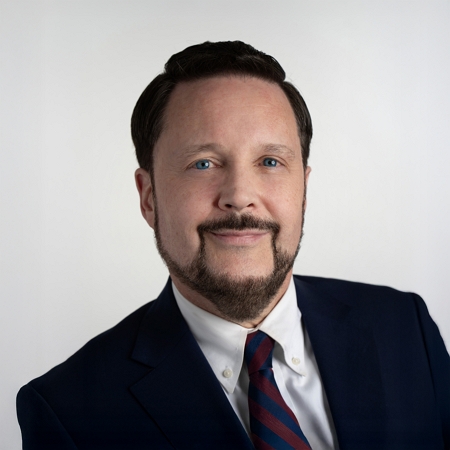
Pete-sepp-ntu

Pete Sepp

PresidentNational Taxpayers Union

As NTU President, Pete Sepp leads the non-profit, non-partisan National Taxpayers Union’s (NTU’s) government affairs, public relations, and development activities. Pete also oversees strategic planning for NTU and its staff, and supervises the research and educational operations of the National Taxpayers Union Foundation (NTUF). Since beginning his service with NTU in 1988, Pete has written and edited numerous policy papers, informational publications, and activist manuals, as well as studies on topics such as Congressional perquisites, citizen-initiated tax revolts, antitrust and competition regulation, and Pentagon spending. He has testified before Congress on matters ranging from Government-Sponsored Enterprises in lending to Medicare and federal pension reforms, from underground infrastructure to small business taxpayer concerns. He has lectured in the U.S. and abroad on issues such as tax administration reform, and has lobbied on numerous legislative matters including the IRS Restructuring and Reform Act and successor proposals, the Balanced Budget Constitutional Amendment, and the Whistleblower Protection Enhancement Act. Pete has appeared on every major television network, and regularly provides interviews and commentaries to cable channels such as CNN, CNBC, and the Fox Business. He is a frequent guest on radio programs from coast-to-coast, and has been widely featured in print media, including The New York Times, the Chicago Tribune, U.S. News & World Report, The Washington Post, The Wall Street Journal, USA Today, Forbes, and Money Magazine. Pete graduated cum laude from Webster University in St. Louis, MO with a degree in History and Political Science. Before coming to NTU, Sepp served with the St. Louis County Board of Elections and with a U.S. Senate campaign.

Full transcript

Show full transcript
[00:00:00] Welcome to the Health Policy podcast. I'm Brian Hyde, and today I'm joined by Pete Sepp, president of the National Taxpayers Union. And Pete, uh, tell us a little bit about yourself and a little bit about your organization, and then let's talk about healthcare. Sure. National Taxpayers Union is a nonprofit, nonpartisan citizen group. We were founded all the way back in 1969 to work for lower, fairer, simpler taxes, less wasteful government spending, and accountability from public officials at all levels. And in fact, in the early 1970s, we formed a citizens' advisory commission on healthcare policy in response at the time to, uh, proposals from Senator Ted Kennedy and others to have a socialized medicine-style system. And we came up with some interesting recommendations about healthcare choice and, uh, providing [00:01:00] paraprofessionals to deliver care. Some of them are still quite relevant today, and I think it illustrates that after 50 years, we keep asking some of the same questions about health policy, and we don't answer a whole lot of them from year to year as far as action from the government is concerned. So Pete, let's, let's begin with some of the concerns that you hear more often than not from people, you know, in, in the course of your work when it comes to healthcare. Um, I'm gonna guess costs are gonna be near the top of the list of their concerns. Yeah, it's not just the amount of cost, it's the unpredictability of cost. For example, when you might get a procedure like a biopsy in a doctor's office, well, your insurance might cover part of it, might cover none of it. Your out-of-pocket cost on average could be about $150. Now, if you go into a hospital outpatient [00:02:00] situation, and plenty of unassuming people do that, they say, "Well, maybe this outpatient clinic is more convenient to me with better times than my doctor. I'll get it done there." Suddenly the price is $800 for the very same procedure. This, in fact, was a statistic that Jason Smith, the chairman of the House Ways and Means Committee, recently cited in a hearing about healthcare costs. It's just one of the problems we see in the system: high costs, unpredictable costs, and opaque costs. It is very difficult for a patient or even a doctor to figure out why a certain charge is being levied for a given service. You know, uh, I, I know it's easy to point fingers and, and I, I too wanna kind of feel, "Okay, who do we blame for this? Is it the drug companies? Is it, uh, is it the, the insurers? Is it the hospitals?" [00:03:00] Who has the incentive to, to bring those prices up? There are bad incentives, frankly, baked into the entire system. With hospitals, for example, the, that site neutrality problem that I just discussed, they are incentivized to keep consolidating, bringing doctors under their rubric so that private practices no longer have as much freedom to price and charge what they want to their patients, and so the prices go up. Also, Medicare and Medicaid offer all kinds of perverse incentives, as does the 340B drug program. There, of course, we don't have even a reimbursement model for providing drug discounts to rural or underserved hospitals in urban areas. We actually just pay through the federal government to reimburse these [00:04:00] costs that so-called 340B discount drug, uh, outlets and hospitals, uh, end up providing. Well, that is something called the pay and chase model, whereby the government reimburses first without asking questions, which come very late in the process after the payments have been made, and then we wonder why there are so many improper payments occurring in the system. You know, we can go on about pharmacy benefit managers charging what's called spread pricing, and, uh, that means what they get to pocket versus, uh, what they pick up in discounts for their clients, their, their medical establishments and hospitals. We can talk about the red tape that occurs for biosimilar drugs, uh, having to go through a redundant process to be called an interchangeable with a brand [00:05:00] name drug of the same quality. Uh, there's legislation to fix that, and so it's really a circular thing. Hospitals have bad incentives. Pharmaceutical companies have bad incentives. Insurers have bad incentives as well. I believe on a previous podcast we talked about the No Upcode Act, where, uh, right now we've got a problem with providers, insurers, um, upcoding treatments so that, uh, they can get the maximum reimbursement for Medicare, and even if the patient may not necessarily need that treatment and might be able to get something that's just as good for a better price. Wow I g- well, you know, incentives are everything. Um, I'm curious too, you mentioned, you know, that, uh, it- the unpredictability i- is a big part of this equation. And, you know, I know when, when it comes to getting answers about, well, why does this cost what it does, [00:06:00] getting answers is not easy either. It seems like there is a lot of, uh, bureaucracy and administrative people that you have to wade through just to get somebody who knows the answer that, that you're looking for. Talk to me about, uh, th- this complexity. How much of it is really necessary, um, and, and how much of this, uh, accounts for some of the, the increased costs that we're spending? Is it, is it because there's so much bureaucratic overhead? Yeah, there certainly is. And of course, the bureaucratic overhead for coding certain procedures and making sure that insurers and all the federal government and state and local government healthcare programs have oversight, some of it might be important in that we wanna know where the money is going and why, but so much of it doesn't do anything to simplify and expose where the money is going and why. It's simply make work. In fact, uh, all the time I hear from [00:07:00] doctors, nurse practitioners, and others who say they work in practices of, say, 10 employees, where three of them, even four of them, do almost nothing all day but file insurance and other reimbursement paperwork, either with private companies or with the government. That is an incredible amount of bureaucratic overhead that has little to do with oversight. We've got to make it better. And in fact, uh, I've seen articles in magazines such as Reason, which is kind of a, a libertarian-oriented publication, and, uh, they profile doctors who no longer accept insurance and are able to reduce their prices for given services by 65, even 75%, by simply not going through all of that trouble. Man, based on what you just [00:08:00] described, though, I, I can see why, you know, that kind of complexity, um... It would require a lot of people to, to maintain- Yeah ... that, that level of, of complexity. Talk to me a little bit about outcomes. D- does the, does the complicatedness of the system in any way affect the outcomes in a positive way? In a positive way, I see very little of it. Again, you might get some infrastructure in there that it provides oversight on improper payments. We've gotten pretty good at the federal level about identifying improper payments in, uh, Medicare Part D, Part A. Also, in the joint federal state program, Medicaid. Uh, there we find staggering amounts of improper payments every year, $25 to $30 billion worth in Medicaid alone, and, uh, a lot of that doesn't even count some of the programs that are on the [00:09:00] periphery of Medicaid, like that 340B drug discount program I was mentioning. So having this procedure of documenting what patients get for services, what kind of medicines they take, that's great because it helps to track payments through the system. But if you do things like provide upfront reimbursement and you have to pay, you do the pay and chase model, well, that's going to make improper payments much more difficult to recover, and that is a problem we have across our healthcare system. Private insurers use recovery, um, firms that will follow up claims that are made, ask for documentation and whatnot. They have some success. Uh, the federal government has less. They often have to result to outright prosecutions of healthcare providers. And [00:10:00] when a case like that winds up in court for years, that's taxpayers actually shelling out more for lawyers, investigators, and whatnot just to s- get justice and start to recover those funds. So we're seeing that now in California with hospice providers. We've seen some of it in Minnesota and other places e- even with Medicare as well as Medicaid. I mean, based on what you've outlined here, Pete, um, uh, there's plenty of room for, for reform. Uh, what are some of the structural factors that, that prevent that reform from taking place? Well, I think there's a whole layer of laws and regulations that basically freeze the healthcare system in time. Uh, when you think of hospitals, for example, um, administrative spending in, uh, hospitals [00:11:00] accounts for somewhere between 15 and 30% of total healthcare expenditures. Uh, that has been a constant now for at least 20 years as many of the reimbursement programs have gotten, uh, more opaque, more complex. Um, out-of-network billing at, uh, in-network hospitals, uh, that's a trend that was dramatically, uh, evident in the mid-2010s where, uh, out-of-network billing rose from about one-third t- of emergency room visits to more than, uh, 43%. That led to the No Surprises Act in 2020, trying to pull the curtain back on billing practices. Hasn't really worked as well as most experts thought it would. Uh, you also have what are called certificate of need laws at the state level. Uh, basically, providers have to obtain [00:12:00] approval before expanding facilities or offering new services, especially in hospitals. Well, if you are increasing the overhead on hospitals, you are letting hospitals bill at higher rates for the same services, and the government reimburses them, and you're limiting the number of hospitals that can enter the market, you have a severely distorted healthcare system, and the distortions are all upward. They do nothing to reduce prices, only raise them. So let- And those have been frozen in place for years. Let's talk about, uh, what would a properly aligned system look like? What, what would we have to change to, to, to get the d- the better results? Yeah, o-on the hospital side alone, we need to introduce the concept of what's called site-neutral billing. In other words, if you [00:13:00] get the same procedure in a doctor's office versus a hospital inpatient versus a hospital outpatient, you get reimbursed for roughly the same things. Roughly, I say, because, okay, an inpatient hospital, well, you might spend, uh, a night in a bed, and that's going to cost more than going in and out of an in-- a, a clinic in the course of a day. Okay, fine, but we shouldn't have price differentials that are four, five times different. That's one reform. Uh, no up code is another. Uh, that's on the insurer end, but it also involves the facilities, the doctors and the hospitals themselves. If you say that you have to provide evidence of a patient's condition that is contemporaneous, in other words, you can't say that, "Well, um, this patient had a [00:14:00] code for his, uh, heart problem three years ago, and we think it's gotten worse. We're not going to ask the patient or the doctor for any documentation that they visited the doctor recently," well, th-that is going to create distortions as well and price increases. You have to get rid of these certificate of need laws or at least streamline the approval process for new or expanded facilities. You have to take a look at the tax exemptions for nonprofit hospitals versus for-profit ones that do pay taxes. In fact, there are statistics that say nonprofit hospitals actually provide less charity care than for-profit ones. We're going to have to revisit that in a thoughtful manner. Uh, there are other areas in prescription drugs. I mentioned, uh, the, uh, red [00:15:00] tape around biosimilars. There's a bill in Congress, S 1954, that would, uh, dramatically streamline the red tape around biosimilar approval. I'm mentioning all of these because I think you really have to approach this systemically. You don't have to do it all at once. You don't have to be comprehensive everywhere, but you do have to make small changes throughout the system. Otherwise, you're, you're really just pulling a thread on one part of the fabric, and something else in another part of the fabric is going to unravel at the same time that you don't know about. Change can be gradual, it can be small, but it's got to happen comprehensively in each area of the system if we're going to get good results. Pete, you mentioned that, uh, you know, there, there are people calling for reform, and they focus on things like price [00:16:00] transparency or insurance reform or, uh, regulation. Do they tend to focus on, uh, the, the wrong symptoms or, or focus too much on one symptom as opposed to, you know, the, the broader approach you just described? And I'm, I'm just curious, what gets the most attention and, and therefore prevents solving the, the bigger problem? Yeah, I think you, you've really hit the nail on the head here, that we are not necessarily focusing on the wrong problems, but we focus in too closely on one problem rather than numerous problems. And policymakers will say, "Well, we can only solve one thing at a time." And my response would be, "Well, if you wanna do something really big, you may only be able to solve one problem at a time. But if you wanna do things incrementally, you can solve a bunch of them at once, make gradual, modest changes everywhere." And I, I think one [00:17:00] of the inordinate focuses we see is on prescription drugs, and it's natural because it's the one thing that most patients have some kind of payment responsibility for. A copay of 5, 10, 20 bucks at the pharmaceutical counter, or worse, if they're paying out of pocket for a full cost, that's a horrible hit. And as a consumer, you appreciate what you see at the cash register much more than a 20-page bill you might get from your insurer that says, "Well, here's 20 grand in costs. Your responsibility was 100." And you just say, "Oh, okay." You file it away, and you don't appreciate all of the incredible distortions that went on in providing your medical care. Again, we're talking with Pete Sepp. He is president of the National Taxpayers Union. And, and I have to [00:18:00] ask you, Pete, for people who want to get a better understanding of this issue, what are some of the resources you'd recommend that they turn to? Well, definitely they should take a look at our website at NTU, our initials for National Taxpayers Union, ntu.org. We have a wide range of materials from op-eds that boil down these healthcare problems into 600 words or less- Detailed comments on rulemakings in the Department of Health and Human Services, other pla- uh, places in the executive branch. We have letters to members of Congress and testimony on legislation that's before the various committees. So all kinds of levels of depth that, uh, folks can check out. I'd also urge folks to, uh, take a look at, uh, official government statistics when they come out on healthcare costs. There's something called the National [00:19:00] Health Expenditures Survey that, uh, Department of Health and Human Services and, uh, Census and others work on to show where the cost growth is in the health system. And, uh, if you've, uh, taken any kind of, uh, basic mathematics in high school or college, you can understand the spreadsheets they've got there, and in the process, uh, get a better grip on where the cost drivers are in the system. Pete, I appreciate you bringing clarity to this issue, and I hope we get a chance to talk about it again. Pete Sepp with the National Taxpayers Union, thank you so much for joining us on the Health Policy Podcast. My pleasure.

Filed under