
· The Health Policy Podcast
Health Policy Podcast logo

Receive new episodes in your inbox.

← Health Policy Podcast

2026-10-29 · Gazuntite

Moneyball Healthcare: John Harrison on E-Consults Transforming Care

with John Harrison, Founder and CEO — Gazuntite
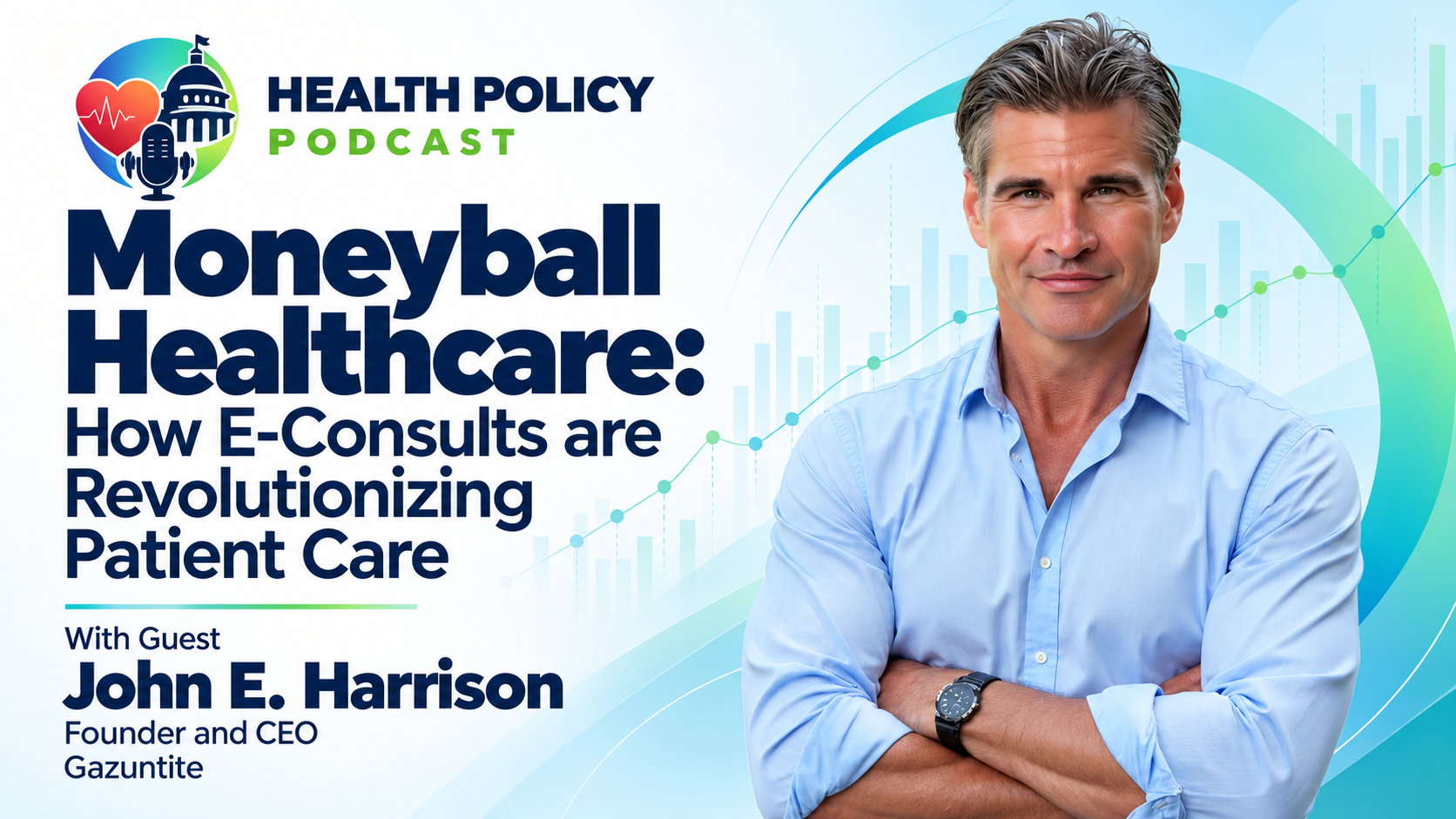
Health Policy Podcast episode featuring John Harrison discussing Moneyball Healthcare: John Harrison on E-Consults Transforming Care

In the latest episode of the Health Policy Podcast, host Bryan Hyde interviews John E. Harrison, founder and CEO of Gesundheit, an e-consult platform for community health clinics. Harrison discusses how e-consults can improve patient care by integrating specialists into primary care settings, drawing parallels to the "Moneyball" approach in baseball, which emphasizes resource optimization. He highlights successful case studies, particularly in rural Kentucky, and the potential for scalability in the U.S. healthcare system.

Moneyball Healthcare: How E-Consults are Revolutionizing Patient Care

0:00 / 0:00

Moneyball Healthcare: How E-Consults are Revolutionizing Patient Care

E-Consults Transforming Patient Care in U.S. Healthcare System

In a recent episode of the Health Policy Podcast, John E. Harrison, founder and CEO of Gazuntite, discussed how e-consults are revolutionizing patient care in the United States. The podcast, hosted by Bryan Hyde, aired on [insert date], and focused on the challenges of the current healthcare system and the innovative solutions Gazuntite is implementing to improve patient outcomes.

Harrison explained that Gazuntite is an e-consult platform designed to serve community health clinics. The concept of e-consults, he noted, originated from the Veterans Affairs (VA) system in 2012. Faced with budget constraints, the VA integrated specialists into primary care settings to reduce unnecessary referrals. This model led to a significant increase in referrals and a 40% reduction in costs, with 60% of specialist consultations eliminating the need for in-person visits.

"America just needs to do this," Harrison said, emphasizing the potential benefits of integrating specialists into primary care. However, he acknowledged that the fragmented nature of the U.S. healthcare system presents challenges in replicating the VA's success. Gazuntite aims to bridge this gap by connecting specialists with primary care providers, allowing for timely and effective patient care.

The Moneyball Approach to Healthcare

During the podcast, Harrison drew parallels between the healthcare system and the "Moneyball" strategy used in baseball. He explained that, similar to the underfunded Oakland Athletics, which leveraged data to compete against wealthier teams, healthcare must adopt innovative strategies to maximize resources and improve outcomes.

Harrison referenced a conversation he had while in Washington, D.C., where he likened the healthcare system to the Oakland Athletics. "We think we're the Yankees, but we're actually the A's," he said, highlighting the need for a shift in how healthcare resources are utilized.

He emphasized that the key to success lies in transforming the way specialists and primary care providers interact. By moving specialists to the front lines of care, Gazuntite aims to create a more efficient system that prioritizes patient needs and reduces costs.

Real-World Impact

Harrison shared a compelling case study from rural Kentucky, where a patient with kidney disease and heart failure faced significant barriers to care. Traditionally, the patient would have had to travel two hours for specialist appointments, often resulting in missed visits and worsening health conditions. However, with Gazuntite's e-consult model, the patient's case was reviewed by specialists within eight hours, eliminating the need for travel and preventing a potential emergency room visit.

"This story changed me," Harrison said, noting that the efficiency of the e-consult system not only improved patient outcomes but also reduced healthcare costs significantly.

Challenges and Future Directions

Despite the promising results, Harrison acknowledged the inertia within the healthcare system. He noted that many healthcare leaders are still hesitant to adopt new methods due to entrenched practices and bureaucracy. "The culture is the biggest problem right now," he said, emphasizing the need for a shift in mindset among healthcare providers.

Harrison expressed optimism about the potential for change, particularly with initiatives like the Rural Health Transformation Program, which aims to improve healthcare delivery in underserved areas. However, he stressed that success will depend on the willingness of healthcare providers to embrace new approaches and technologies.

As Gazuntite continues to expand its reach, Harrison believes that the scalability of e-consults could transform care for millions of patients. He stated that the company has the potential to serve 50 million patients in federally qualified health centers across the country.

In closing, Harrison called for greater awareness and support for innovative healthcare solutions. "Just get us a little bit of a knock on the door," he said, referring to the need for increased visibility and understanding of e-consult models.

For more information about Gazuntite and its mission to improve healthcare delivery, visit their website at [insert website URL].

Interview Q&A

Q&A: Moneyball Healthcare: How E-Consults are Revolutionizing Patient Care

Moneyball Healthcare: How E-Consults are Revolutionizing Patient Care

Q: What is Gesundheit and what inspired its creation?
A: Gesundheit is an e-consult platform designed to serve community health clinics. It was inspired by the Veterans Affairs (VA) system, which faced resource constraints and began integrating specialists into primary care settings to improve patient outcomes and reduce costs.

Q: How did the VA's approach impact patient referrals?
A: The VA's approach led to a significant increase in referrals, from 10% to nearly 36% of primary care visits. By having specialists consult directly with primary care providers, many patients were able to receive guidance without needing to travel for specialist appointments.

Q: Can you explain the Moneyball analogy in relation to healthcare?
A: The Moneyball analogy compares under-resourced healthcare systems to the Oakland A's baseball team, which achieved success by using data-driven strategies rather than traditional methods. In healthcare, this means repositioning specialists to improve efficiency and outcomes without requiring additional resources.

Q: What are some challenges in implementing this model in the U.S. healthcare system?
A: The U.S. healthcare system is fragmented and lacks the centralized control seen in the VA. This fragmentation makes it difficult to implement systemic changes and encourages inertia in existing practices.

Q: Can you share a specific case that illustrates the effectiveness of e-consults?
A: A patient in rural Kentucky with heart failure and kidney disease faced long wait times for specialist appointments. Through Gesundheit, the primary care provider consulted a nephrologist and cardiologist, receiving a treatment plan within eight hours instead of waiting months, effectively addressing the patient's needs without unnecessary travel.

Q: How does Gesundheit plan to scale its services?
A: Gesundheit aims to increase its reach by partnering with more clinics, making them financially self-sustaining while improving patient care. The platform has shown that clinics can increase patient visits by about 25%.

Q: What role does the Rural Health Transformation Program play in this context?
A: The Rural Health Transformation Program has allocated funds to improve rural healthcare. However, many leaders are unaware of innovative solutions like Gesundheit's, which could help clinics become more effective without relying heavily on external funding.

Q: Who needs to initiate the changes necessary for this model to succeed?
A: Change needs to occur at the clinic level, with providers willing to adopt new methods. While legislative support could help, the primary focus is on grassroots adoption within the healthcare system.

Q: How can interested parties learn more about Gesundheit?
A: Interested individuals can visit the Gesundheit website for more information about the platform and its services.

Q: What is the ultimate goal of Gesundheit in the healthcare landscape?
A: Gesundheit aims to transform patient care by integrating specialists into primary care, improving access, reducing costs, and enhancing health outcomes for patients in underserved areas.

Q: How does the current healthcare culture impact innovation?
A: The current healthcare culture often resists change and tends to favor traditional methods, such as hiring more specialists. This inertia can hinder the adoption of innovative solutions that could improve patient care.

Q: What is the significance of having named specialists in the e-consult model?
A: Named specialists create familiarity and accountability, which enhances communication and trust between primary care providers and specialists, ultimately leading to better patient outcomes.

Q: How does the e-consult process differ from traditional referrals?
A: The e-consult process allows for real-time collaboration between primary care providers and specialists, resulting in quicker treatment plans and reduced need for in-person visits, unlike traditional referrals that often involve long wait times and travel.

Key takeaways

  • “We put specialists right on the front lines of care, right up with primary care.”
  • “If we just move one of our pieces, the specialist, to the front lines, there's tremendous downstream savings, and in both terms of financial and incredible health outcomes.”
  • “This story changed me. It took this from a business into now a mission.”
  • “Wouldn't it be nice if he says, hey, wait a second, you mind if I just send your results to our cardiologist and I'll get back to you on a treatment plan?”
  • “We actually make these clinics self-sustaining.”

About the guest
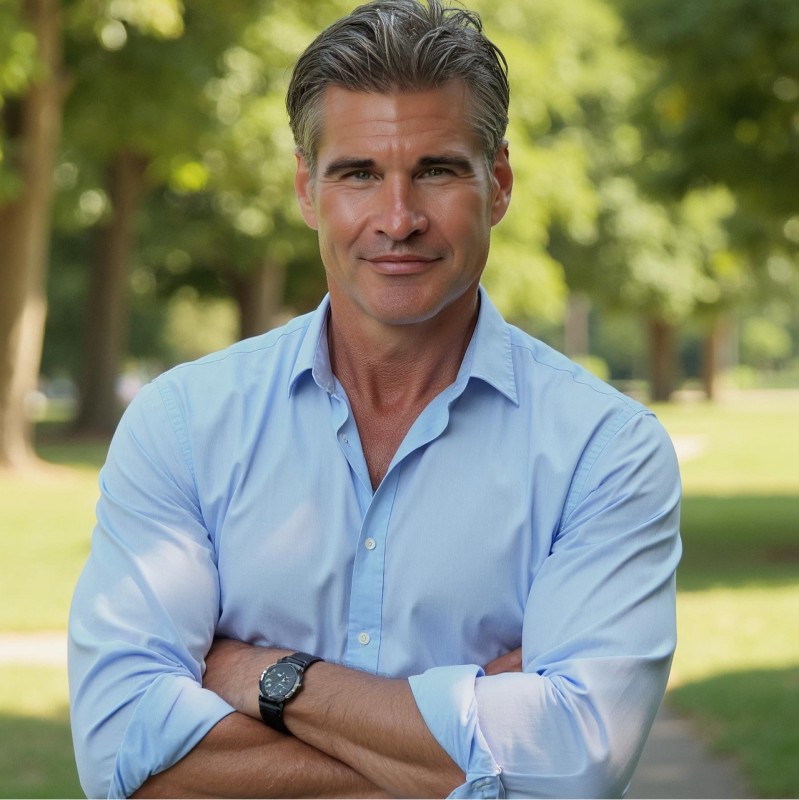
John Harrison Headshot

John Harrison

Founder and CEO — Gazuntite

John E. Harrison is the founder and CEO of Gazuntite, a digital health company connecting primary care providers with specialist expertise. His background spans defense intelligence and technology entrepreneurship, including founding Ecutel and Liqwid Networks. He founded Gazuntite with cardiologist Dr. Lalit Vadlamani to help address gaps in specialist access, particularly in rural and underserved communities. His work focuses on using e-consults and better coordination to support local clinicians and help patients receive timely care closer to home.

Full transcript

Show full transcript
[00:00] Bryan Hyde: Welcome to the Health Policy Podcast. I'm Brian Hyde, and today I'm joined by John E. Harrison. John is the founder and CEO of Gesundheit, a specialist e-consult platform serving community health clinics. And John, first of all, I've got to say, that is— that's a very catchy name. But welcome to the program. Tell us a little bit about your background and about what you do. [00:19] John Harrison: Hey, thanks, Brian. Appreciate you having me on the show. Well, Gesundheit, as you said, is an e-consult company, but nobody seems to know what that means. And, um, you know, to be perfectly frank and at the risk of, uh, showing that it's not that creative, we stole it from the VA. I mean, in 2012, they were running out of money and resources. They weren't going to go out and hire more doctors. They weren't going to go out and hire more specialists to cater to the primary care because they just didn't have the funds for it. So they did something incredibly unique. They, they took specialists and instead of having the patient go to them, they put them on the front lines of care, right up with primary care. And what's interesting about that is they had seen a substantial increase in their number of referrals. Every time increased from 10% per PCP visits to nearly 36%. So 1 out of every 3 times they were sending a patient From the primary care clinic to a specialist. And sometimes that's a 2-hour drive, 120 days, and 50% of the time the patient doesn't even go. So they go, well, we gotta— this is too costly and our disease progression is increasing, so we've gotta do something about that. And they go, we're gonna put specialists right on the front lines. And now instead of referring out, they confer with the specialists before any referrals go out. And the results are incredible. Uh, 40%, uh, cost savings. And I thought this was interesting. 60% of the, um, visits ended up— or, or the guidance that came from a specialist did not need to eventually see physically a specialist. So now you go, okay, America just needs to do this. And that's incredibly hard because the VA is a homogeneous system. They have top-down directives saying, hey, we're going to move our specialists here, we're going to do this, we're going to make a policy across the board. And well, you're probably aware that the US healthcare is nowhere near that controlled. It's very fragmented. People don't talk to one another. And so what Gozuntai did is we figured out a way to plug in specialists in a fragmented system so that we can achieve the same goals. And So far, we're doing really well. We're sort of matching what the VA has done. We have a very unique approach to it. [02:45] Bryan Hyde: John, I'm looking at an article that you originally had published in the Baltimore Sun. I saw this on the Maha Report about American healthcare's Moneyball moment. And for those who've seen the movie Moneyball, this is all going to make sense. I'm going to ask you to kind of tie this together for us, but everybody, I think, understands healthcare in America right now is Very expensive. It can be extremely complicated, like you were just outlining. Talk to me a little bit about— let's, first of all, let's visit the Moneyball premise, and then let's talk about how that could be applied to American healthcare to help solve some of these problems. [03:18] John Harrison: I live in D.C., and I was on the roof of a friend of mine who actually works for HHS, and we were talking about the World Health Transformation Program. And I don't know if you're familiar with that, but it's, it's, you know, if anything about Maha and, and the Kennedy administration is— or, or, uh, yeah, administration, um, is they're at least shaking things up. They're moving things around. And the, the key word of the RHGP is transformation. You know, we can't keep doing things the way we're doing them, so we're going to give you some money. And think about it as a venture capital fund. They're basically saying we're gonna, we're gonna shake it up a little bit and we're And those programs that succeed are gonna get, you know, further policy directives behind them. And so we're gonna ferret all that out. But while we were on the roof and it was sunset, we were having a few drinks and they were talking about it. And I overheard the conversation and I go, well, we think we're the Yankees, but we're actually the A's. And this one guy looked at me and he goes, Moneyball? And I go, yeah, absolutely, 100%. Then the conversation just went from there. If you know Moneyball, it's a great story of an under-resourced team playing against the most-resourced team and achieving the exact same number of wins, but just by really looking at the game differently, looking at where you can position players differently and use them in a different way to reach the economy of scale that you need. And that's essentially what we're doing in healthcare. We're actually saying, okay, let's just— if we just move one of our pieces, the specialist, to the front lines, there's tremendous downstream savings, and in both terms of financial and incredible health outcomes. [05:12] Bryan Hyde: So you say in the article, look, it's when you compare Moneyball to what healthcare needs, it's not about the movie, it's the method. Tell me a little bit about Billy Beane, who was the inspiration for the movie Moneyball, and How did he leverage that underfinanced team in such a way that it could keep up with one that was spending much, much more money? [05:34] John Harrison: He was a little bit like the VA. He was in a position where he had to try to keep up with the wins that they had had the prior season, but they had lost about 3 or 4 of their players. And he was surrounded by a bunch of scouts. that were trying to go the old traditional way. Get your hits, get your fielders, buy the team that is going to get you these wins. But they didn't have the money to do that. So there— I forgot the guy's name, but there was another guy who said, wait a second. He ran some numbers and basically said, look, getting on base is what's critical. Once you get on base, it's much cheaper to get a player who walks and gets on base than it is to buy a hitter. And so then you look at what Billy Beane did. Now, he didn't invent this. He just went and looked for the ability to extend his wins with the resources that he had. And that's actually, we're looking sort of in healthcare, we're looking for our Billy Beane. The guy's gonna have the courage to go out there and look for new methods. And we're finding it in, obviously Bobby Kennedy's out there shaking things up. And even at the state level, now there's, they have to spend $200 million a year on these type of initiatives. So hopefully we'll get a bunch of, of, of Billy Beans out there with the courage to try something new and then get the number of wins that we need. Does that make sense? [07:07] Bryan Hyde: Yeah. Is there a lot of inertia within the system due to the bureaucracy that you were referencing earlier? Does that kind of keep things moving slow in its current state? [07:16] John Harrison: Yeah, I think the culture is, is the biggest problem right now. You know, here's the way we do things. We just want to throw more money at it. We're going to hire more specialists. We want to relocate those specialists to these rural areas. We want to get new primary care doctors and, um, and provide the same healthcare we do. And first of all, we don't really need that. We just need to adjust what we have so we get better outcomes. And I gotta tell you, it— this is healthcare. It's, it's slow moving. It just— they just don't really like change. Um, we are finding some future-looking, uh, uh, people within these leadership positions that are kind of excited about what we're doing. And we've had some successful outcomes in Kentucky, particularly, that are helping move the needle, helping them look at what we're doing and then say, okay, wait a second, if they can do it in Kentucky, in these rural areas, Appalachian areas, that's no different than mine. In fact, you know what's interesting? I was watching CNN not too long ago and I saw a guy in Ukraine. He was in Kharkiv and he was basically 70-something years old, had a bit of a belly, looked like he probably had heart failure and diabetes. And I watched him and I go, I wonder what this guy's doing for care. He was basically saying, look, I don't care how many missiles, I don't care how many drones are coming towards me, and I'm staying home. And I was like, okay, he's probably got the same issues we have. I wonder who's taking care of him. I actually got on a plane and flew to Kyiv and met with all the leaders over there. And now we're within 2 months, we're planning a pilot to cater to those exact same people using our same service. So the sense of urgency there versus the sense of urgency here for the same problem— actually, you could say it's a little bit extreme over there— is what we need here, that sense of urgency. [09:14] Bryan Hyde: You mentioned in the article, you actually give an example of a patient in Kentucky, in rural Kentucky, with kidney disease and heart failure. Talk to me about that story. And let's, let's use this to kind of flesh out how, how this approach differs from the fragmented pieces trying to communicate with each other in vain. [09:36] John Harrison: Yeah, that story changed me. It took this from a business into now a mission. Yeah, a guy comes in, same profile as the Ukrainian. Um, he had heart failure, as you say, kidney disease, and normally he would have to drive 2 hours for each one of those appointments both ways. He would have to take 2, 3 days off of work. Um, the earliest appointment for a nephrologist was, I think, at that point, 4 or 5 months. We average about 120 days, but in this case it was actually much longer. A cardiologist was another 100 days plus. So 50% of the time, this guy wasn't even going to go to them. So that disease was just going to get worse and he was going to go to the emergency room. And that's a $10,000, $12,000, uh, venture that actually doesn't improve the patient's health. So we had just started with this one clinic in Somerset, Kentucky, and mostly staffed by nurse practitioners. And this one really— I— this is one of my favorite nurse practitioners. He's, he's just, uh, really embraces things. He's an early adopter and an aggressive user. And he goes, uh, he sends the case to our nephrologist. Our nephrologist looks at it, writes the, the treatment plan, and says in the treatment plan, hey, uh, we probably should bring in cardiology on this one. It looks like we need to do a care coordination on this. They bring in our cardiologist. They took— all 3 of them, you know, kind of go over the treatment plan, and within 8 hours that was sent back to them. So that means the patient didn't have to travel anywhere, didn't go to the emergency room, and the disease was addressed almost immediately. It's— it can happen anywhere now. I mean, now that we've seen that happen and we could do it in that extreme case, everybody needs this. I mean, put yourself in your shoes. If you— I don't want to ask you about your healthcare, but if you go to a primary care and they say, Brian, you know, we need to see— you need to see a cardiologist, even if it's the next day, you don't want to go. But most of the cases, it's 30, 60 days, even for urban settings. Wouldn't it be nice if he says, hey, wait a second, you mind if I just send your results to our cardiologist and I'll get back to you on a treatment plan? I mean, that's— you go home and then they call you up with the treatment plan. It's that easy. It's that much of a game changer. And it's really, as convenient as it is, it also saves a ton of money. [12:11] Bryan Hyde: I mean, 100+ days versus 8 hours. [12:16] John Harrison: Yeah, that's a no-brainer. That's a no-brainer. Yeah, I agree. It was fun. [12:21] Bryan Hyde: So how do we scale this up? I mean, I think you mentioned in the article it's been tried before, but, but they missed some of the essential pieces like the software, was scaled up, but, but putting it into practice, it didn't happen. [12:34] John Harrison: It's interesting. Um, one of the things we recognized that the VA was doing so well is they have named specialists, so the primary care gets to know the specialist. Uh, and the other— the, the people who have tried this, or the companies that have tried this, are— I mean, they're, they're great technologies, and, and they've, they've done well But they use a random pool of doctors, and so you never really get to know who it is. And then on top of that, they don't get their— they're not accountable for the care that they give. So we, we actually— you get to know our doctor, but we sign these notes and recommend recommendations and put them strictly directly into the EMR. So now they're saying— now you're telling the nurse practitioner or the doctor, the primary care doctor, Hey, we got your back. We are— what we say, we hold to. And the only caveat being is, hey, we didn't actually physically see the patient, so all the information we got is dependent on what you gave us. Yeah, it's scalability. Golly, we could be— we could get all 50 million Safety Net Clinic patients in the next 5 years. I mean, that wouldn't be a problem. The, the clinics that we go to actually increase their patient visits by about 25%. So they become financially self-sustaining. The, the doctors that join on our side actually make more than they do, uh, in their day-to-day practice, if for no other reason, they can get more in a day. in an hour and without compromising care because our technology goes out and scans all the standards of care against what we're being fed and recommends an approach that they either modify and say, no, I don't agree with that, I agree with that, and then goes in. So their time to treatment goes down, the quality of our information or our suggestions goes up. And patient care improves. [14:44] Bryan Hyde: Now, with the Rural Health Transformation Program, there is money that's been appropriated, you know, to help transform rural healthcare and fix some of these problems. Are they inclined to look at new ways like you're describing? Are they inclined to look at putting people in the right position? Or is there still that tendency to, well, we've always done it this way, so let's just keep keep adding to the old system. [15:09] John Harrison: Yeah, it's— they don't know that this even exists. And it's funny, I— when I talk to— I've talked to some really forward-thinking secretaries of health of states, particularly I would say Arvind Singh of West Virginia is one of the more forward-thinking. Um, who really, uh, sort of looks at this as an exciting way to go. Um, but you're really talking about a new, new way of doing things that people really don't know about. And when we go in, we don't really need RHTP money directly. So we're not asking for any money from an RHTP. We're saying, hey, we go in there, we actually make these clinics self-sustaining. What I would love to see is if we can get more diagnostics, some of that RHTV money to go to diagnostics at primary care so that we become even more powerful in supporting them. But that's really our only mission, is just get us more clinics and we'll show you what we can do. [16:14] Bryan Hyde: So where do those decisions begin? In other words, who has to make the first move to get this ball rolling? [16:21] John Harrison: Boy, if I knew that. If I knew that. It is a sort of obscure world. path for sure. So really all we do is go clinic to clinic and clinic to clinic to clinic, and hopefully we'll build some, some mass there. And then as we get more, leadership will start to view it and see it and execute on it. [16:44] Bryan Hyde: So I guess if I'm hearing you correctly, it's— this is not something that Congress, by sheer, well, we'll just pass another bill or we'll pass a resolution— it's, it's not, it's not so much that it has to happen at the upper levels of government as much as it needs to be adopted by the people who comprise the system itself. [17:05] John Harrison: I mean, if the Congress could pass something like this, I would be all for it. If they could sit there and say, hey, the VA's done this, the VA works for us, the nation should do this. We've got a great successful program here. Why are we not doing it across the board? I just don't see that happening anytime soon. But really, look, they've— each one of these states has 500 to 800 federally qualified and rural health centers and Indian health systems that serve 50 million people. To give incentives in whatever method they could use would be great. Just get us, get us a little bit of a knock on the door, at least get the information out there so it makes our job easier to go in. [17:57] Bryan Hyde: So let's connect our listeners with, with more information on this subject. Would it be best for them to go to your Gesundheit website? [18:05] John Harrison: It would be hugely informative, I believe, and we're adding to it as we go. I can give you my website if you like. [18:14] Bryan Hyde: Please do. [18:14] John Harrison: Gesundheit is a unique name, and I understand most people, you know, sort of shudder at the thought of spelling it. So here we go. It's www. And we'll get you all the information you need. And, you know, certainly reach out to me if you need any more. [18:37] Bryan Hyde: Yeah, no, you don't need to be fluent in German. You can— this one is spelled phonetically. It's, it's actually very easy to find. And again, we are talking with John E. Harrison. He's the founder and CEO of Gesundheit, a specialist e-consult platform serving community health clinics. And John, thanks again for joining us. On the Health Policy Podcast. [18:56] John Harrison: Thanks, Brian. This was fun.

Filed under