2026-08-04 · The Brokerage, Inc.
Navigating Health Insurance Challenges with Mike Smith: Beyond the ACA
with Mike Smith, President Emeritus — The Brokerage, Inc.
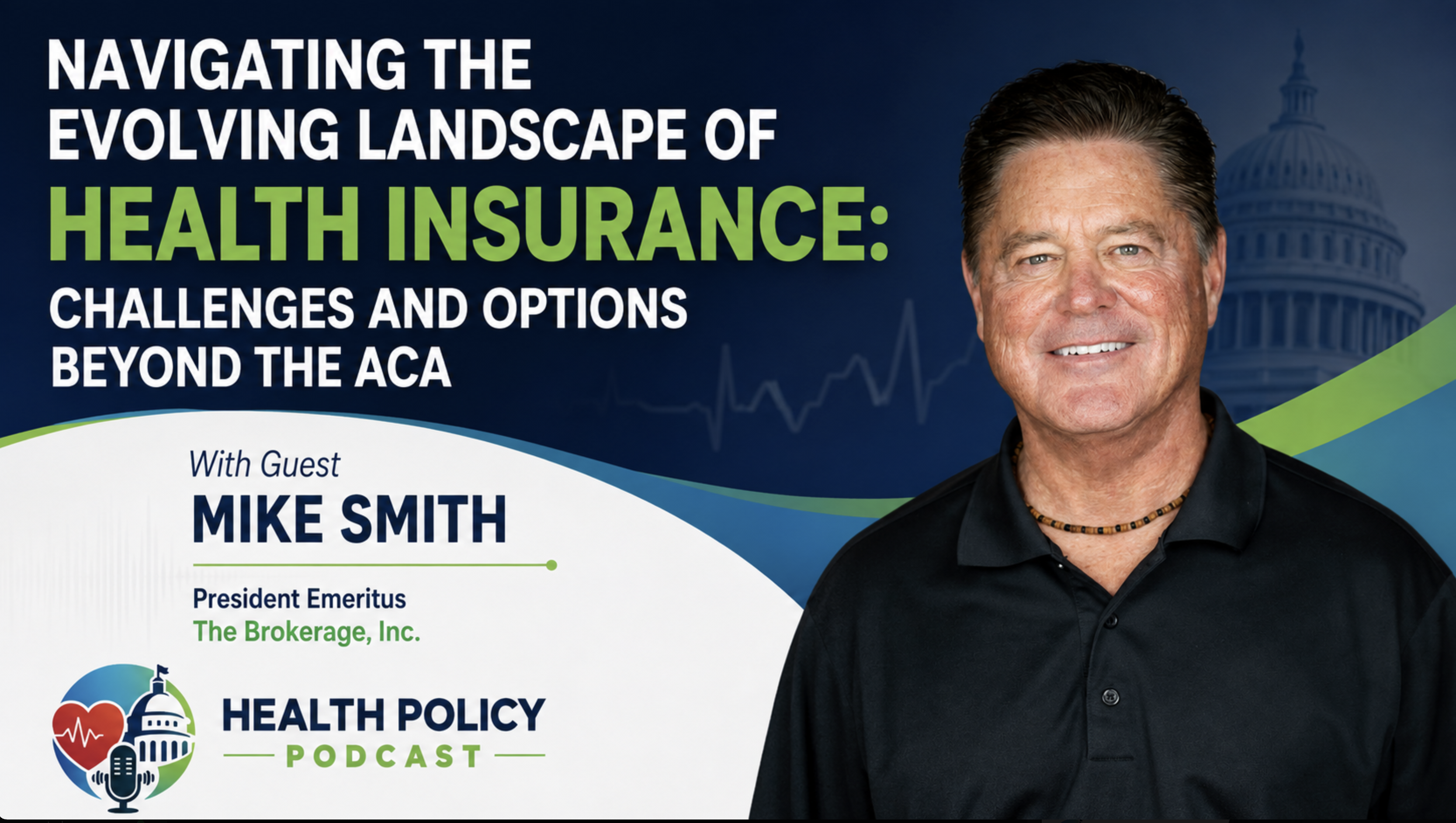
In the latest episode of the Health Policy Podcast, host Bryan Hyde discusses the evolving landscape of health insurance with Mike Smith, President Emeritus of The Brokerage, Inc. They explore the challenges of affordability in health insurance, particularly following changes to the Affordable Care Act (ACA) and the expiration of enhanced premium tax credits. Smith outlines alternative options for consumers, including short-term health plans, healthcare sharing ministries, and group health insurance plans, while emphasizing the need for individuals to take responsibility for their health to mitigate rising costs.
Navigating the Evolving Landscape of Health Insurance: Challenges and Options Beyond the ACA
Navigating Health Insurance Challenges: Insights from Mike Smith
In a recent episode of the Health Policy Podcast, Bryan Hyde interviewed Mike Smith, President Emeritus of The Brokerage, Inc., to discuss the evolving landscape of health insurance and the challenges consumers face beyond the Affordable Care Act (ACA). The conversation highlighted the complexities of health insurance, the impact of recent changes, and potential options for individuals seeking affordable coverage.
The ACA, enacted in 2010 and implemented in 2014, aimed to reduce the number of uninsured Americans. Smith noted that the number of uninsured individuals has halved since the law's introduction, dropping from about 50 million to approximately 25 million. However, this progress has come with significant costs. “We’ve seen companies that have come into the market and been burned by big claims,” Smith explained, referring to instances where unexpected medical expenses have led insurers to exit certain markets.
The COVID-19 pandemic temporarily enhanced premium tax credits, allowing many individuals to secure coverage with little to no cost. However, these subsidies expired at the end of last year, leading to a spike in premiums and out-of-pocket expenses. Smith warned that this could result in a significant portion of the population becoming uninsured again. “It’s predicted that up to about 25% of the people that were enrolled as of December last year will be somehow uninsured during the year of 2026,” he said.
Smith emphasized that the challenges facing health insurance are not solely political. “A lot of the health insurance premiums are a direct reflection of the healthcare cost,” he stated. He noted that there has yet to be a viable solution from either political party to address these rising costs.
As individuals seek alternatives, Smith outlined several options outside of the ACA. Short-term health plans, which can last from four to 36 months, may offer more affordable coverage, albeit with some underwriting requirements. These plans can be 40% to 50% less expensive than traditional ACA plans. Additionally, healthcare sharing ministries have emerged as another option, where members contribute to a collective fund to cover medical expenses.
Smith also highlighted the benefits of group health insurance plans for employees. These plans can be funded by employers and offer tax advantages for both parties. Furthermore, he suggested that individuals consider high-deductible health plans paired with Health Savings Accounts (HSAs), which allow for tax-advantaged savings for medical expenses.
While discussing the role of personal health in insurance costs, Smith encouraged individuals to take responsibility for their well-being. He acknowledged that while genetics play a role in health outcomes, lifestyle choices significantly impact insurance costs. “At some point, people do have to play a personal role in making sure that they're taking care of themselves the best they can,” he said.
Smith also addressed the growing government involvement in healthcare through programs like Medicaid and Medicare. He noted that Medicaid is often the largest line item in state budgets, and the ACA has functioned as a form of Medicaid expansion. “At some point, where’s that going to tip over to the point where everyone is in that type of a plan?” he questioned.
For those seeking guidance on health insurance options, Smith recommended reaching out to local insurance agents. “There’s an agent out there willing to help just about anybody, and that doesn’t cost anything,” he said. He emphasized the importance of consulting professionals who understand the specific offerings available in different states.
As the healthcare landscape continues to evolve, the insights shared by Smith provide a framework for understanding the challenges and options available to consumers navigating health insurance. The conversation underscores the need for ongoing dialogue and innovative solutions to address the affordability and accessibility of healthcare in the United States.
Interview Q&A
Q&A: Navigating the Evolving Landscape of Health Insurance: Challenges and Options Beyond the ACA
Navigating the Evolving Landscape of Health Insurance: Challenges and Options Beyond the ACA
Q: Can you introduce yourself and describe your role?
A: I’m Mike Smith, President Emeritus of The Brokerage, Inc. We market insurance products across all 50 states and recruit insurance agents to sell these products, acting as a wholesaler between insurance companies and agents.
Q: What challenges do people face when selecting health insurance?
A: Many people struggle to find affordable health insurance options that fit their budget. Often, they spend more time planning vacations than managing their health insurance, which can lead to significant stress.
Q: What trends have emerged since the Affordable Care Act (ACA) was enacted?
A: Since the ACA was passed in 2010, we saw a significant increase in insured individuals, cutting the number of uninsured Americans from about 50 million to half that number. However, the market has experienced instability, with companies entering and exiting due to high claims costs.
Q: How have recent changes affected health insurance premiums?
A: The expiration of enhanced premium tax credits at the end of last year led to a spike in premiums and increased out-of-pocket expenses. This has resulted in many individuals feeling they can no longer afford coverage.
Q: Is the issue of health insurance affordability purely political?
A: No, the rising costs of healthcare significantly impact insurance premiums. There has been little consensus on how to effectively address these costs from either political side, leading to ongoing challenges.
Q: What options exist for individuals seeking affordable health insurance?
A: Options outside the ACA include short-term health plans, which can be 40-50% cheaper than ACA plans, and healthcare sharing plans. Group health insurance plans through employers can also provide tax advantages.
Q: Are healthcare sharing plans tax-favored like group plans?
A: Generally, healthcare sharing plans do not offer the same tax advantages as group plans. Individuals should consult a tax advisor for specific guidance on potential deductions.
Q: How does Medicaid fit into the current healthcare landscape?
A: Medicaid is a significant part of state budgets and functions as a government-run system. The ACA effectively expanded Medicaid by providing subsidized premiums to many individuals.
Q: What role does personal health responsibility play in insurance costs?
A: Individuals who neglect their health may face higher insurance premiums or worse health outcomes. Taking personal responsibility for health can mitigate some of these costs.
Q: Are there opportunities for innovation in the insurance industry?
A: Yes, there are opportunities for entrepreneurs to create affordable insurance solutions. However, insurability remains a challenge, and regulatory barriers can hinder innovation.
Q: What resources are available for individuals exploring health insurance options?
A: Individuals can contact local insurance agents for assistance. These agents are trained professionals who can provide information about available options in their specific markets at no cost.
Q: How can people avoid becoming sicker due to lack of insurance?
A: It’s important for individuals to seek care early and not let health issues linger. There are clinics that offer low-cost services for those who may be uninsured.
Q: What advice do you have for individuals regarding their health insurance decisions?
A: Reach out to a local insurance agent to discuss your situation and explore options. Many people are surprised by the resources available to them.
Key takeaways
- “Most people spend way more time planning a vacation, sometimes one that they can't afford, versus trying to manage their health insurance and healthcare benefits.”
- “The cost of the healthcare is reflected in the health insurance premiums, and therein lies the problem.”
- “We've seen companies that have come into the market and been burned by big claims, things like organ transplants that were unexpected.”
- “At some point, we have to throw our hands up and say we've done everything that we can.”
- “The challenge is always going to be affordability, and that's where we struggle as an industry.”
About the guest

President Emeritus — The Brokerage, Inc.
Mike Smith entered the insurance industry in 1993 as a marketing and agent service representative at The Brokerage Inc. and later became president of the company. The Brokerage is licensed in all 50 states and specializes in life, health, financial and senior insurance products, along with marketing services for insurance professionals. Smith oversees the company’s marketing strategy, operations, sales support, business development, website development and public relations efforts.
Full transcript
Show full transcriptHide transcript
Filed under