2026-02-17 · Independent Women
Understanding New Dietary Guidelines: Insights from Monique Yohanan, MD
with Monique Yohanan, MD, MPH, Senior Fellow — Independent Women
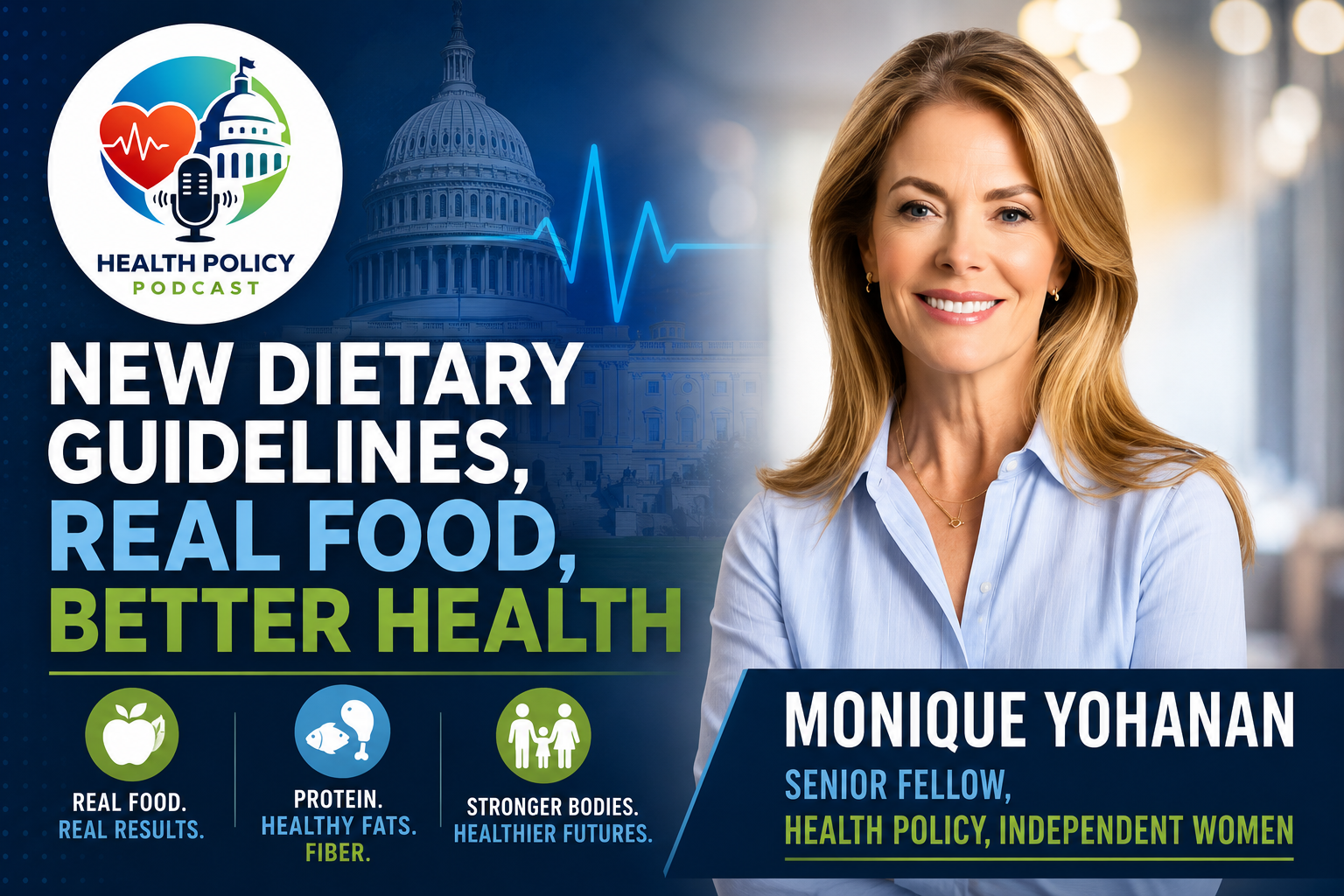
In this episode of the Health Policy Podcast, host Brian Hyde interviews Monique Yohanan, MD, MPH, a Senior Fellow at Independent Women, about the newly released dietary guidelines for Americans. Yohanan discusses the shift from the traditional food pyramid to a focus on protein, healthy fats, and fiber, emphasizing the importance of real, minimally processed foods. She also addresses the role of politics in dietary recommendations and the implications of these guidelines for public health and nutrition.
Understanding the New Dietary Guidelines with Monique Yohanan
New Dietary Guidelines Promote Protein, Healthy Fats, and Fiber
The U.S. Department of Agriculture (USDA) recently released new dietary guidelines emphasizing protein, healthy fats, and fiber as key components of a balanced diet. Monique Yohanan, MD, MPH, a senior fellow at Independent Women, discussed the implications of these guidelines in a recent interview on the Health Policy Podcast.
The new guidelines represent a significant shift from previous recommendations that largely discouraged fat consumption. According to Yohanan, the updated approach encourages individuals to focus on "real food" rather than ultra-processed items. "Think about the old food pyramid and flip it upside down," she said, emphasizing the importance of whole foods that are easily recognizable.
The guidelines prioritize protein from various sources, including meat, beans, and legumes. Yohanan noted that healthy fats, such as those found in avocados and full-fat dairy products, are also encouraged. "One of the bigger changes is really a focus on full-fat dairy," she said, highlighting the nutritional benefits of whole milk and cheese. Fiber from fruits and vegetables remains a critical component, with a focus on consuming foods that retain their skins for maximum nutritional value.
Yohanan explained that the previous dietary guidelines, which emphasized low-fat diets, were based on outdated research linking fat consumption to obesity and metabolic issues. This perspective has evolved over the past two decades as new studies have shown that excessive carbohydrate intake, rather than fat, contributes to insulin resistance and weight gain. "The old dietary recommendations were a setup for people to eat more calories," she said.
The new guidelines advocate for a more individualized approach to diet, recognizing that there is no one-size-fits-all solution. "We are all very different," Yohanan explained. "Eat real foods, focus on protein, healthy fats, and fiber, and you're going to be fine." This flexibility allows individuals to choose dietary patterns that suit their personal preferences and metabolic needs, whether that be a vegan, ketogenic, or Mediterranean diet.
Yohanan also addressed the political implications surrounding dietary guidelines, acknowledging that the previous recommendations were influenced by longstanding beliefs in the medical community. "Doctors hate saying they're wrong," she said, suggesting that resistance to change has contributed to the persistence of outdated dietary advice.
She noted that dietary practices in other countries, particularly in Europe, differ significantly from those in the United States. "We eat snacking-wise a lot more than our friends in Europe do," she said, pointing out that communal meals and a focus on whole foods are more common in European cultures. Additionally, she highlighted that many chemicals and preservatives found in American food products are not permitted in European countries, which may contribute to lower obesity rates.
Yohanan emphasized the importance of community and seasonal eating, suggesting that local food sources can enhance the nutritional quality of diets. However, she acknowledged that access to fresh foods can be challenging for some individuals, particularly those with limited financial resources. "There are ways that you can have a food diet that fits in with a pyramid that aren't necessarily about spending a fortune," she said.
Looking ahead, the new dietary guidelines are set to remain in place for the next five years. While Yohanan expressed hope that the guidelines would not revert to previous recommendations, she acknowledged the potential for political influence. "I do worry that this might lead to some backlash," she said, emphasizing the need for continued advocacy for evidence-based dietary practices.
The new guidelines reflect a growing recognition of the importance of protein, healthy fats, and fiber in promoting overall health. As the conversation around diet continues to evolve, experts like Yohanan advocate for a more nuanced understanding of nutrition that prioritizes individual needs and preferences.
Interview Q&A
Q&A: Understanding the New Dietary Guidelines with Monique Yohanan
Understanding the New Dietary Guidelines with Monique Yohanan
Q: Can you tell us a little about yourself and your background?
A: I am a physician with a Master's in public health. I have spent about 20 years writing evidence-based medicine guidelines, working as a medical director for Medicaid, and practicing as a geriatrician. Currently, I am a Senior Fellow for health policy at Independent Women.
Q: What are the new dietary guidelines, and how do they differ from previous ones?
A: The new guidelines emphasize protein, healthy fats, and fiber. They suggest focusing on real foods rather than ultra-processed foods. This represents a shift from the old food pyramid, which is now viewed as outdated.
Q: What are the key components of the new dietary guidelines?
A: The guidelines prioritize protein, which can come from meat or plant sources like beans. They also encourage healthy fats, such as those from avocados and full-fat dairy products. Lastly, they emphasize fiber from fruits and vegetables.
Q: How has the response been from food scientists regarding these new guidelines?
A: Many food scientists have supported this evidence-based approach. The old guidelines were based on the misconception that fat was the primary cause of obesity, while recent research indicates that excess carbohydrates can drive insulin secretion and weight gain.
Q: Why can't we have a one-size-fits-all diet?
A: Individual needs vary greatly based on metabolism and personal preferences. The new guidelines encourage focusing on protein, healthy fats, and fiber, allowing for flexibility in dietary choices that suit different lifestyles.
Q: Did politics play a role in the previous dietary guidelines?
A: Yes, there has been political influence in dietary recommendations. Many healthcare professionals were reluctant to change their stance on fat due to longstanding beliefs, which contributed to the persistence of outdated guidelines.
Q: How does the eating culture in the U.S. compare to that in Europe regarding obesity?
A: The U.S. tends to have more snacking and less communal eating compared to Europe. Additionally, many preservatives and chemicals that are banned in Europe are still present in U.S. foods, which may contribute to health issues.
Q: What is the significance of local and seasonal food in the new guidelines?
A: Eating locally and seasonally can enhance nutrition and reduce the distance food travels, which may impact its healthfulness. However, nutritious options are still available in dried and canned foods.
Q: How do the new guidelines affect access to healthy food?
A: While the guidelines encourage local shopping, they also recognize that nutritious diets can be achieved without high costs. Beans and other whole foods can provide essential nutrition without breaking the bank.
Q: Will these new dietary guidelines change in the future?
A: While I hope they remain stable, there is potential for political influence to affect future guidelines. However, the scientific evidence supporting these recommendations is strong and may help maintain their validity.
Q: What are the implications of the new guidelines on public health?
A: The guidelines are designed to improve health outcomes by promoting fullness and reducing calorie intake through high-protein and high-fiber foods. This could lead to better management of weight and overall health.
Q: How can individuals apply these guidelines in their daily lives?
A: Individuals should focus on incorporating real foods rich in protein, healthy fats, and fiber into their meals. This can be achieved through various dietary preferences, whether vegan, keto, or Mediterranean.
Q: What is your final takeaway regarding the new dietary guidelines?
A: The new guidelines offer a science-based approach to nutrition that emphasizes real foods and a balanced diet, which can be adapted to individual preferences and lifestyles.
Key takeaways
- “Big picture, think about the old food pyramid and flip it upside down.”
- “This is a diet that's fine if you're vegan, it's fine if you're keto.”
- “The reality is the old dietary recommendations were a setup for people to eat more calories and to gain weight.”
- “We are all very different and the exact form of this, which is why I don't think it's a good idea to focus on number of servings or anything.”
- “If your grandmother wouldn't recognize it, probably not a great idea to eat it.”
About the guest

Senior Fellow — Independent Women
Monique Yohanan, MD, MPH, is the director of the Center for Better Health at Independent Women. As a physician executive and healthcare innovation leader, Yohanan has more than 20 years of experience at the intersection of clinical medicine, technology, and health policy. She formerly served as Chief Medical Officer at Adia Health, where she led the development of AI-powered clinical decision support systems that enhance diagnostic accuracy and patient care. Before that, she led Change Healthcare’s InterQual division as Chief Medical Officer, overseeing clinical decision support solutions used by more than 100 payers and 6,000 providers nationwide. Dr. Yohanan received her medical degree from the Dartmouth/Brown Program in Medicine and a Master of Public Health from Johns Hopkins. Dr. Yohanan completed her residency in Internal Medicine at Harvard and a fellowship in Geriatrics at Stanford. She has held faculty appointments at UCSF and Stanford, and maintains active licensure and board certification in Internal Medicine.
Full transcript
Show full transcriptHide transcript
Filed under