· The Health Policy Podcast
Health Policy Podcast logo

Receive new episodes in your inbox.

← Health Policy Podcast

2026-07-21 · Patients Rising

Terry Wilcox on Bridging the Gap Between FDA Approval and Alzheimer's Access

with Terry Wilcox, Co-Founder — Patients Rising
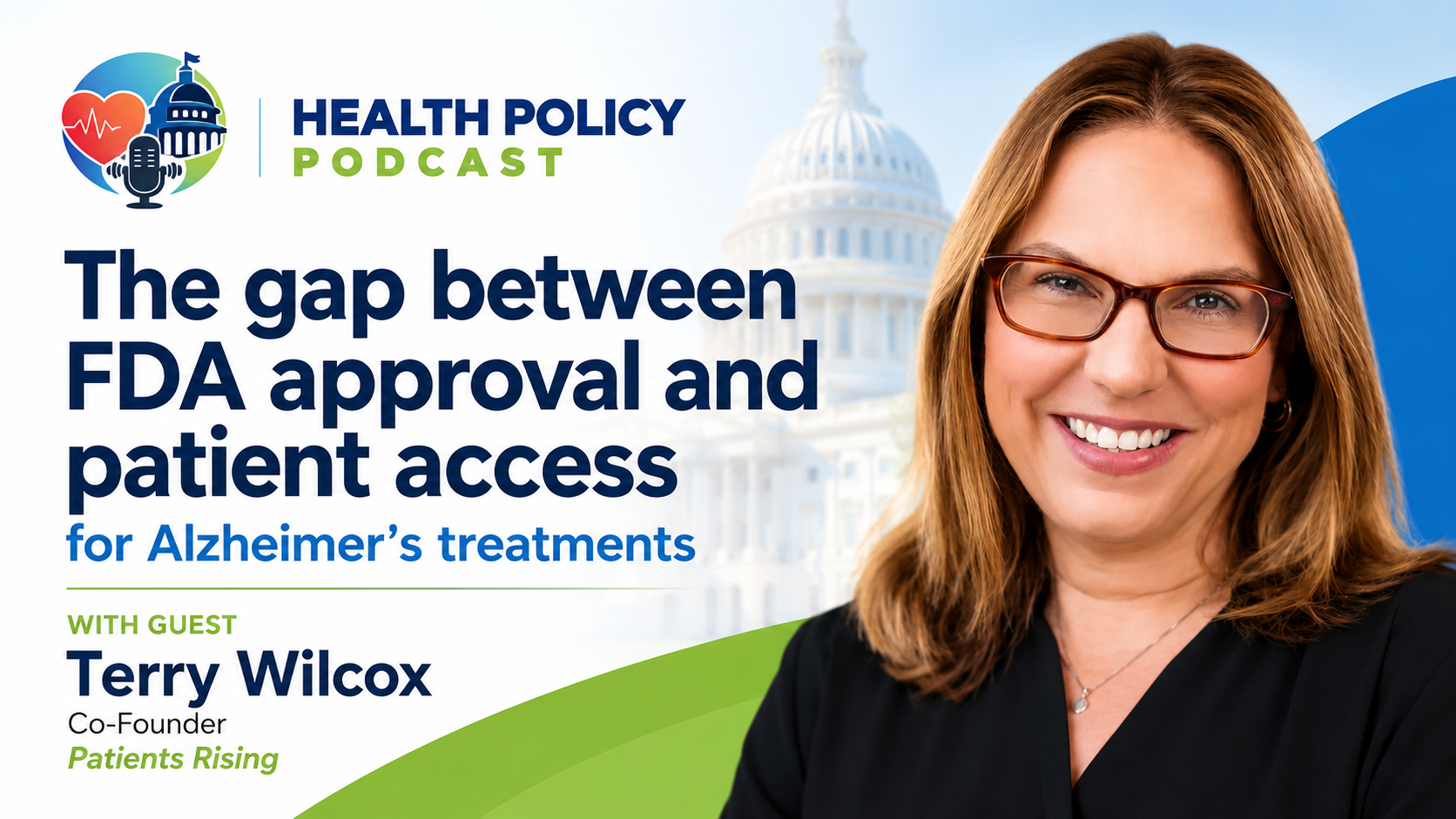
Health Policy Podcast episode featuring Terry Wilcox discussing Terry Wilcox on Bridging the Gap Between FDA Approval and Alzheimer's Access

In the Health Policy Podcast episode featuring Terry Wilcox, co-founder and CEO of Patients Rising, the discussion centers on the gap between FDA approval and patient access to Alzheimer's treatments. Wilcox emphasizes the importance of early diagnosis and treatment for Alzheimer's, the challenges patients face in accessing these treatments, and the need for policy changes to improve care. She also shares personal experiences related to caregiving and the complexities of navigating healthcare for loved ones with Alzheimer's.

Patient's Rising's Terry Wilcox: The gap between FDA approval and patient access for Alzheimer’s treatments

0:00 / 0:00

Patient's Rising's Terry Wilcos: The gap between FDA approval and patient access for Alzheimer’s treatments

Patients Rising's Terry Wilcox Discusses Alzheimer’s Treatment Access Gap

Terry Wilcox, co-founder and CEO of Patients Rising, addressed the challenges surrounding access to new Alzheimer’s treatments during a recent interview on the Health Policy Podcast. Wilcox emphasized the disconnect between FDA approval and patient access, particularly for early-stage Alzheimer’s patients. Patients Rising is a national advocacy organization focused on empowering patients through education and policy engagement.

Wilcox explained that while new Alzheimer’s treatments have been developed, they primarily target early-stage patients. “We do not have a cure for Alzheimer’s by any stretch of the imagination, but we do have a way to slow progression,” she said. This distinction is crucial for families navigating the disease, as many individuals may not be aware of the testing and treatment options available.

Despite the promising developments in Alzheimer’s treatments, Wilcox highlighted significant barriers to access. “If Medicare slows down access, then that gives insurance companies the go-ahead to do that,” she said. This creates a bottleneck for patients who need these therapies. Wilcox noted that the Centers for Medicare & Medicaid Services (CMS) has been particularly slow in approving coverage for these new treatments, which complicates the situation for patients and their families.

The conversation also touched on the legislative efforts aimed at improving access to Alzheimer’s treatments. Wilcox mentioned the ASAP Act, a bipartisan bill designed to facilitate access to these therapies for patients who qualify. “At the very least, we should be covering the tests broadly,” she said. Testing is essential to determine eligibility for treatment, especially for those with a family history of Alzheimer’s.

Wilcox shared her personal experience caring for her stepmother, who has Alzheimer’s. She noted the emotional and logistical challenges families face when managing care for loved ones with the disease. “It is difficult to keep someone with Alzheimer’s safe,” she said, highlighting the need for better long-term care options.

She pointed out that while there are facilities providing excellent care, access to these resources is often limited by financial constraints. “We have a two-tiered system,” Wilcox said, emphasizing the disparity in care quality based on insurance coverage and financial means.

Reflecting on her journey, Wilcox expressed a desire for families facing a new Alzheimer’s diagnosis to seek help sooner. “If your parents are bumbling around in their house alone and one of them is living with dementia, please do everything you can to get them somewhere where there’s a semblance of help,” she advised.

Wilcox's insights underscore the importance of advocacy and education in navigating the complexities of Alzheimer’s care. Patients Rising aims to empower individuals to advocate for themselves and their loved ones through various resources, including a community platform and advocacy training.

For more information on Patients Rising and its initiatives, visit patientsrising.org. Wilcox also shares her experiences and insights on her Substack, "State of the Patient," available at terrilox.com.

The conversation with Wilcox highlights the urgent need for improved access to Alzheimer’s treatments and the importance of patient advocacy in shaping health policy. As the landscape of Alzheimer’s care continues to evolve, organizations like Patients Rising play a crucial role in bridging the gap between policy and patient experience.

Interview Q&A

Q&A: Patient's Rising's Terry Wilcos: The gap between FDA approval and patient access for Alzheimer’s treatments

Health Policy Podcast: Q&A with Terry Wilcox

Q: Can you tell us about yourself and Patients Rising?

A: I am Terry Wilcox, co-founder and CEO of Patients Rising, a national patient advocacy organization. We focus on educating patient advocates about health policy, helping them engage with legislators, and understanding their insurance plans. We also emphasize community building and advocacy work.

Q: How does Patients Rising bridge the gap between policymakers and patients?

A: We aim to connect the right patients with the right legislators at the right time. Personal stories can significantly influence policy decisions, and we work to ensure that patients' experiences are heard in legislative discussions.

Q: What should people understand about new Alzheimer's treatments?

A: New Alzheimer's treatments are primarily for early-stage Alzheimer's patients. They are not suitable for those in more advanced stages. It's crucial for patients to be tested and aware of their eligibility for these treatments.

Q: Why is access to these treatments challenging?

A: Despite FDA approval, access is often limited due to bureaucratic hurdles. If Medicare delays access, private insurance companies may follow suit, making it difficult for patients to receive necessary treatments.

Q: What is the ASAP Act?

A: The ASAP Act is a bicameral bipartisan bill aimed at improving access to Alzheimer's treatments for qualifying patients. It emphasizes the need for coverage of testing to determine eligibility for these treatments.

Q: What gives you hope regarding Alzheimer's care and policy?

A: There are many emerging care programs and facilities that provide excellent support for Alzheimer's patients. However, there remains a disparity in access to quality care based on insurance coverage, which is a significant concern.

Q: What advice would you give to someone whose loved one has just been diagnosed with Alzheimer's?

A: I wish I had understood the importance of getting loved ones into supportive environments sooner. If a family member is struggling with dementia, it's vital to ensure they have adequate care and support.

Q: Can you share your personal experience with Alzheimer's care?

A: I took care of my stepmom, who has Alzheimer's, while also managing my mother-in-law's care. It highlighted the challenges of keeping someone with Alzheimer's safe and the importance of finding quality care facilities.

Q: How can people learn more about your work and advocacy?

A: People can visit my Substack, "State of the Patient," at Terrilox.com, where I discuss healthcare advocacy. For information on Patients Rising, visit PatientsRising.org, which offers resources for patient advocacy and community engagement.

Q: What are some challenges you see in long-term care for Alzheimer's patients?

A: There is a two-tiered system in long-term care, where access to quality facilities often depends on insurance coverage. This disparity raises concerns about how we will care for individuals with dementia in the future.

Q: How do you view innovation in Alzheimer's treatment?

A: Innovation should lead to broad access to FDA-approved treatments. If a treatment is not effective for a patient, they won't use it. Real-world data should guide access and usage of these treatments.

Q: What lessons have you learned from your experience?

A: It's essential not to take for granted the support systems available for Alzheimer's patients. Reflecting on my experiences, I strive to share insights that can help others navigate similar challenges.

Key takeaways

  • If you want policy to pass, you need the right patient in front of the right legislator at the right time with the right story.
  • We do not have a cure for Alzheimer's by any stretch of the imagination, but we do have a way to slow progression, and I think that's something to be celebrated.
  • If something's not working for a patient, they're not going to take it.
  • I would do anything in my power to have gotten my parents to me a lot sooner.
  • It's difficult to keep someone with Alzheimer's safe, and there's a lot of care programs and facilities that do beautiful jobs.

About the guest

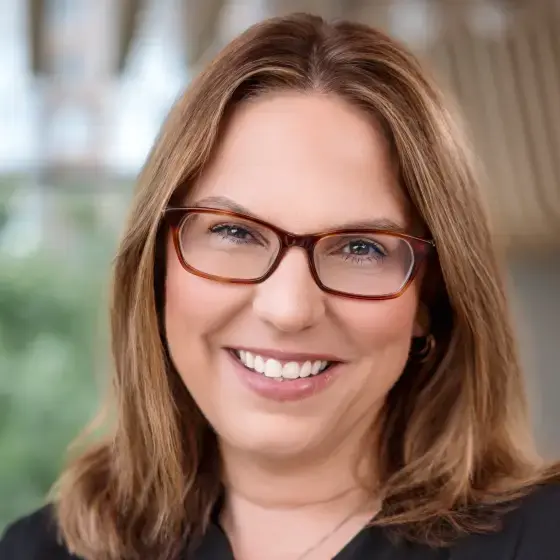
Terry Wilcox

Co-FounderPatients Rising

Full transcript

Show full transcript
[00:00:00] Welcome to the Health Policy podcast. I'm Brian Hyde. Today, I'm joined by Terry Willcox. She's the co-founder and CEO of Patients Rising. Terry, welcome to the program. Take a moment, if you would, to tell us a little bit about yourself and about your organization. Hi, Brian. Thanks for having me. Yes, I am the co-founder, and I am the CEO, but I like to call myself the chief patient advocate, because that's really more of what I do I s- I would say on a day-to-day basis. Patients Rising is a national patient advocacy organization that focuses on educating patient advocates for, you know, to be knowledgeable in health policy. And it's not just health policy to talk to your legislators, though that is a big part of, part of it. We do hill days and bill- we talk about bills and all of those things, but it's also the policy of your insurance plan , of your formulary Like, there's other... There's all sorts of places where patients, especially nowadays, need to learn how to advocate for [00:01:00] themselves, and so we do a lot of policy and advocacy work, and then we also do a lot of education and community building. Um, we have a C3, 501[3] and a 501[4], which is two types of, of nonprofit organizations that are connected. It sounds like sometimes there's a, a bit of a gap between the policymakers and the reality of what the patients- Mm-hmm ... are, are experiencing. Do you help to, to bridge that gap? Yes, we do. We do. We... You know, it's... I always say, you know, one of the things now w- that they often say in medicine is you need, you know, you wanna make sure you have the r- right patient, has the right treatment at the right time, right? 'Cause you wanna make sure that they're getting all the care they need. And I say, "Well, if you want policy to pass, you need the right patient in front of the right legislator at the right time with the right story." Um, it can't just be any story. I mean, though you, they love to hear your stories. But sometimes policy can turn on a dime just with the right story, and I could give examples of that, but I won't dive into that here. [00:02:00] But, uh, of where you're, you're just there in the moment, and all of a sudden you find yourself testifying, and then all of a sudden you find yourself having passed a bill in Texas, which happened to one of our advocates. So, you know, and it was just because of a happenstance that your story came into play, and it moved the needle, um, you know, at the hearing. Literally. We have you here today to talk about, uh, a subject that, uh, for a lot of people is a very tender spot, and that being, um, Alzheimer's, but specifically, specifically rather, new Alzheimer's treatments. And, you know, this is a whole world that, unless you know someone, you know, or someone you love has, has dealt with, with Alzheimer's, um, most people are blissfully unaware. Um, when we talk about, uh, new Alzheimer's treatments, what are some of the major things that we need to understand, uh, before we can even begin that discussion? One of the major things I, I wanna preface that I'm not a doctor, but just I'm sure everybody knows that. But one of the major things to understand about the new [00:03:00] Alzheimer's treatments is that they're for early onset. They're for the early stages of Alzheimer's. They're unfortunately not for people or, or for people living with Alzheimer's now who are in, in more advanced stages like my step-mom, who I've helped take care of over the past, you know, six- since COVID when she moved out here. So that's the difference, and part of even knowing if you need those treatments and how they can be beneficial to you is being tested and being aware that that exists. Because there hasn't always been a testing method and then a treatment plan. You know, even my step-mom back in the day, you know, because her mom had Alzheimer's, had some kind of test, and some neurologist told her her brain was clear. "We took this big test and it was a thing. No, you don't ... You, you won't get Alzheimer's." I'm like, "That's not true. That didn't happen. That was not the, that was not the path." But, you know, she ... We did, we did all these things, [00:04:00] and people are always searching. But now we do actually have tests that, uh, that people need access to, especially if they have a history in their family. Um, and then we have treatments. We have actually have treatments that can, you know, help curb the onset o- of Alzheimer's, and maybe that gives us time to develop more treatments. You know, that's the beauty of innovation, and so that's, you know, that's what we have before us. We do not have a cure for Alzheimer's by any s- stretch of the imagination, but we do have a way to slow progression, and I think that's something to be celebrated, especially since it impacts so many Americans and so many families. Or not just Americans, people around the world, and so many families. Now, Terry, just because those treatments exist doesn't necessarily mean, though, that people are gonna have an easy time accessing them. Why is that? Well, it's always a good question. I always think that innovation ... [00:05:00] You know, my theory on innovation is that, is that you should get it If it's FDA approved, which is we're told is the gold standard, right? It's FDA approved, so it's the gold standard of, of approval in, in the world. Not just here, but in the world. So, you know, why wouldn't you just g- give as many people access to that as possible? Because what I always say is if something's not working for a patient, they're not going to take it. Or if it affects them in a way that doesn't ... They, they won't take it. So use the real worl- world data. Get ... You know, give access to it. Give broad access to it. See what it can do to help- The patients who need it, but that's not what happens. You know, and especially with the Alzheimer's treatments, they've just fought an uphill battle at CMS and, and e- everywhere else because it, you know, because of the type of initial approval with FDA, and I won't get into the policy wonkiness of it. But basically, it's created a, a process whereas if [00:06:00] CMS slows it down, I always say if Medicare slows down the access, then that gives insurance companies who are doing, you know, corporate plans or, you know, the go-ahead to also do that. And so then you find yourself not able to access it anywhere, you know? Or, or not enough people are, are getting access to it. So that's the challenge that we're facing now. We're seeing some, you know, headwinds, uh, especially in the policy front. There's, um, a really great bill that's o- on the Hill. It's a bicameral bipartisan bill called the ASAP Act, which is getting... Which the actual purpose of the bill is getting these treatments into, into the patients who qualify and who need them. I mean, there is a testing, but you have to test, so y- they have to cover the test, right? You can't just put peop- you don't put somebody on a treatment just because their mother had Alzheimer's. There's tests, and at the very least we should be covering the tests broadly [00:07:00] because then you know if you need it. Talk to me about some of the things that, that, uh, you are seeing that, uh, that you find hopeful, you know, in terms of, of policy, in terms of, um, you know, understanding or treatment. I know that y- this is, this is something that you have... This is a walk you have walked yourself. Um, are, are there some, some things that you see that, uh, that actually bring some hope? Um, I do. I, I... There are quite a few things. I mean, even with my, even with my stepmom now, which is, which is my direct experience. Now my stepmom, I took care of my stepmom and my mother-in-law at the same time. My mother-in-law lived with us. She did not have, uh, dementia or Alzheimer's. But my stepmom did, and the, the major thing i- initially was I s- I suddenly realized, wow, it's difficult to keep, and I'm sure many families experience this, someone with Alzheimer's safe. And [00:08:00] so there's chal- there's a, you know, there's challenges. There's a lot of care programs and a lot of programs popping up, you know, and, and facilities and places to put people that do beautiful jobs, that take care of your loved ones wonderfully, and we have that experience with my stepmom. We are blessed in that way. We have that experience. My stepmom also has insurance that covers the whole thing, and so it was just... It's a unicorn plan. You can't even get it anymore. And so it's... The beauty is there's facilities and places to care for people- The double-edged sword of that is not everybody can afford them, and the beautiful places and the places with great care and all types of, you know, care for physical therapy, um, you know, emotional, trips out, really keeping them active for as long as they can has been great, but I [00:09:00] know the, the, the facility on the, the, the other side of that is there's a completely different fa- facility experience for people who don't have that. And so I guess my, one of the biggest issues, you know, things that I think about going forward isn't just the treatments, but I think about the long-term care of, you know, how we're gonna take care of people with dementia, because it is difficult for people to take care of them in their homes safely, and we do have this kind of two-tiered system, and where is that going? That's one of my greatest questions. We have the capability to care for these people, and I can give you all kinds of examples all over the world of other countries that are doing unique and interesting things to c- to care for their seniors, to care for their disabled, to care... You know, and, and, and we do have that in some subsets here, but on the, on the other side of that you also hear, [00:10:00] "Oh, there's fraud and there's Medicare fraud, and there's people set up to do home healthcare and they're not doing home healthcare. There's people set up to do this and they're not doing that." Well, that's true, too. And so it's, it's really being able to, um, figure out for our country and for our seniors and for those living with this disease, you know, how we're going to improve that piece, because that is the onslaught. The treatments are great, and there's many neurologists that can talk all about the amazing things that are happening in Alzheimer's. It's true. And the early onset treatments are also great, because my stepmom, you know, compared to my mom, who's 78 years old, they're both basically the same age, but my mom is a completely different person. You know? She's plays golf and she lives a... You know, she drives, she does all the things. My stepmom can't even talk anymore, and so what would this treatment have meant to her? Because she was [00:11:00] vibrant even 10 years ago, right? So I just... That's the, that's the p- This is, this, this also saves the country and families a lot of money delaying even the onset, and it gives people a longer period to, to, to, you know, to have their life. Um, so that's... I don't know if I completely answered your question in the way that you wanted me to answer it, but that's, that's the biggest avalanche that we're looking at, and there's good things in there. But it's how to get them to all the people who need them. Given that you have firsthand experience in this, Terry, um, let's imagine for a moment someone has just, uh, you know, a loved one has just been given a diagnosis. It's Alzheimer's. All the thoughts that are going through their head, what do you wish that you had understood back when you, uh, you know, if, if you were receiving that n- information for the first time, a loved one has been diagnosed with Alzheimer's, based on what you know now, what do you wish that you had, had known, [00:12:00] you know, when they first are confronted with that? Yeah. I have a lot of thoughts on that. Um, my step-mom and my dad, my dad passed away right at the beginning of COVID. He did not have Alzheimer's at all. He had other comorbidities of all- all sorts. But, um, I, my, the number one thing I wish is when you, you know that, and they're taking medications, and you have a diagnosis, I know it's hard because technically they're still in charge of themselves, so it's difficult. But I, if I could go back, I would do anything in my power to, number one, have gotten my parents to me a lot sooner, my dad and my step-mom, to be near them, because they were alone out in Denver thinking they were gonna rule the world until whenever, because that's where they'd both lived for 42 [00:13:00] years. And literally, instead of a peaceful transition, um, into their senior years with their daughter nearby, we were basically told on the phone, "If you don't have your parents here by 6:00 on, you know, March 17th, they can't come in." That's what we were told. And this was because of the COVID lockdowns. And this was because of the COVID lockdowns. So we went from the Friday before, my step-mom was at a happy hour. She'd seen the place where she was gonna move. We'd bought a new bed. It was so happy. A- and then it was just like overnight it turned on a dime, and everything changed, and they were quarantined, and my dad was stuck in this room with these, you know, Styrofoam meals that were cold, and it was as if he was in some kind of... To him, he thought he was in a concentration camp, in his mind. I mean, he hated it. He only lasted three and a half weeks, and I [00:14:00] think part of it was his complete misery, but also, he, like I said, he had a lot of comorbidities. But I was able to see him only because they never figured out during COVID how to lock down a dialysis patient. So I always take that as my, you know, gift somebody gave me, I didn't know I was accepting at the time. A silver lining. A silver lining. And the, you know, I had no idea that... You know, I got to see my dad three days a week for the three weeks. Whereas my stepmom, I never saw her until the day my dad passed away, 'cause he passed away at the facility, and I didn't see her at all for three and a half weeks. And if my dad hadn't had those appointments and that need, I, I would have dropped him off there at 6:00 on that Tuesday. But instead, I spent the three weeks breaking every COVID rule you could possibly imagine. I took them to, I took him to my kids. I, I did everything they told me not to do. And I'm glad I did, actually. Like I, you know, I don't regret any of it, but it was, it was a difficult, [00:15:00] it was a difficult road. So the number one thing I would tell people is if your parents are bumbling around in their house alone and one of them is living with dementia, and one of them can barely take care of themselves because of other comorbidities, oh, please do everything you can. I, I... Literally everything you can to get them somewhere where there's a, a semblance of help. It, it's... That's my biggest regret, is that I didn't really push that. I could have pushed it. I could have pushed it more. And you've actually written about this, and I, I mention this because I, I would love to direct our listeners to, um, to your Substack where, where you talk about this and, um, it's... I'll tell you, it's a powerful, it's a powerful experience. Where can people find this if they wanna check this out for themselves? I have a Substack and I'm al- it's also... It's called State of the Patient, and it's at, it's actually at a interesting, uh, domain, which is [00:16:00] Terrilox, T-E-R-R-I-L-O-X.com, which is my first ma- maiden and married name all together in a thing. Um, and I just have had that as a placeholder until the, the guy gets the State of the Patient email. I mean, uh, domain up there. But we're launching a podcast of the same name. And I do a lot of discussion on there about being the CEO of your own healthcare, and I am gonna talk... It is a place, we started it apart from Patients Rising because I wanted a place where I could be more, um, opinionated. You know, I didn't have to always talk the brand. You know, that I c- talk like this. And not that, you know, not that it's anything the brand wouldn't support, but I just wanted a place where, where my voice was, was the prominent thing and then the organization had its own, you know, policy positions and all of those things as the, as the organization. A- and what- But yeah, it's great fun. So I mean, I, I, and it's a good outlet for me. I, I enjoy [00:17:00] the communicating of policy, uh, to people and to, of stories like this because all of us have them And likewise, to, to get people connected with your, uh, Patients Rising website, where can they find that? Patientsrising.org. We have a lot of avenues on there. We have a private, we have a private Patients Rising community you can join. You can share your story with us, which we'll publish on the website. We have a monthly Patients Rising magazine where we, you know, it's digital, but where we, um, produce stories. And the main thing there is where you can learn how to advocate. We have an advocacy, um, course where you start with ad- learning to advocate for yourself, and then you can go through to learn to advocate for others. And, and you can go to a Hill day with us. We, we try to do one every other year, f- funding pending, so we, we will have hopefully one in 2027. Um, with each new Congress, we try to do it. But people [00:18:00] come and study with us, and then they go to fly-ins with other organizations. They just learn how to do it. Um, and so we have a, a huge group of advocates, and we always love to hear from, from others. It's a, it's a really great community. I'll tell you, c- based on our conversation here today, um, I am loud and clear, I'm getting the message there are some things we really shouldn't take for granted. A- and I appreciate you, uh, you know, spelling that out and, um, you know, drawing upon some of your own personal experience in, in order to, to make that stick. Well, thank you. I mean, it is true. You look back when things happen, and then I guess that, you know, this happens with a lot of things in your life where you are like, "Yeah, don't take that for granted. Don't..." You know. And, you know, you can always look at, look back and be like, "Oh, if I'd done this," or, "If I'd done that." I try not to do too much of that, but there are things, like I said today, that, that if I could change, and if I can impart that to other people to give them a heads-up, I, I love to do that.[00:19:00] Again, we are talking with Terri Wilcox. She is the co-founder and CEO of Patients Rising. And Terri, thank you again for joining us on the Health Policy podcast. Thank you so much, Brian, for having me. I really appreciate it.

Filed under