Show full transcriptHide transcript
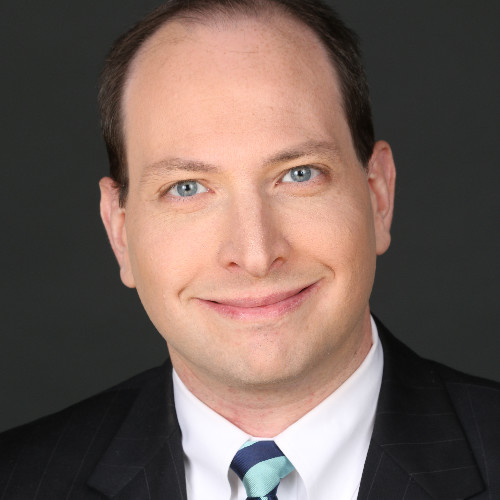
[00:00:00] Welcome to the Health Policy podcast. I'm Brian Hyde, and today I'm joined by Phil Kerpen, who is president of American Commitment. Phil, welcome to the show. Take a moment, if you would, tell us just a little bit about who you are and what you do. Oh, my pleasure, Brian. I, uh, am Phil Kerpen. I run my own organization called American Commitment, which is a national free market advocacy group that works really on all the fiscal, economic, and regulatory issues.
But we try to focus at any given point in time on the fights that are on the margin, where getting citizens a little more educated and engaged might actually affect the outcome, and, uh, get- move things in a more free market direction. So we do a lot of letters to regulatory agencies and to congressmen that we pre-write, and you can edit, and we'll deliver for you, and we do a lot of articles and sort of try to shine spotlights on things.
And then the other hat that I wear is I'm also- I also work with, uh, Steve Moore and Art Laffer at Unleash Prosperity, and we do a daily newsletter, and we also have a healthcare project. I have healthcare projects in both the organizations I work with, [00:01:00] and on that project, which we call our Most Favorite Patient project, I've been working with my co-chair, Steve Moore, Steve Forbes, and Tomas Philipson, who was the, uh, chair of the Council of Economic Advisors in Trump's first term.
And we've really been focused on, uh, sort of reforms to the supply side of healthcare and to get a more functioning market, so we'd have a lot more providers, and you'd have a lot more choice, and, uh, competition, and transparency, and so forth. So the main healthcare project on the American Commitment side has been our Commitment to Seniors project, really trying to shine a spotlight on, uh, the extent to which UnitedHealth has purchased and controls AARP and, uh, uses it to misrepresent the interests of seniors to advance its corporate agenda.
But we... You know, because it's my main entity and my main affiliation, everything I do is sort of associated with American Commitment. And so those are, those are sort of the two hats that I wear, which are both, you know, very relevant to healthcare. You know, Phil, when I hear people talk about healthcare today, um, I don't ever hear anyone, um, gush about how wonderful costs are.
In fact, [00:02:00] I- No ... I don't hear anybody saying anything nice about the, the cost of American healthcare. Um, but I hear fingers pointed in different directions. Some people blame Congress. Some people are blaming, uh, the pharmaceutical companies or insurance companies. Um, talk to me about hospitals and- Yeah ... and the role that they play in those increased healthcare costs.
Well, it's interesting. You know, we, we actually did some polling recently on, uh, who, who people blame for costs being so out of control in healthcare, and, uh, the insurance companies are the number one villain. Uh, they very narrowly edge out Congress, but they're one... Those are one and two by a lot. And, uh, the hospitals are very far down the list.
People don't blame them, and in fact, they still have very high public approval ratings, which I think are largely undeserved, but it might be because they do a lot of brand advertising. You notice almost every sports team and sports venue has the name of a hospital system on it. You look at, like, the patches of, you know, players and...
So they spend a lot of money to build up their, their brand equity, and of course, you know, people like them [00:03:00] also because they, they- Probably know someone whose life was saved at a hospital, or they might have themselves gotten good care at a hospital. And so they tend to wear, uh, the white hat a little bit with public opinion, which has, I think, allowed them to get away with massive price increases, uh, and also really exploit their tax-exempt status.
Most of the large hospital systems are organized as nonprofits. They're tax-exempt. That allows them to go on an acquisition spree, and we've seen them roll up lots and lots of providers in recent years, that they have a huge tax advantage in doing that. And they also have a huge advantage in terms of federal payment policies because what we've seen recently, um, is because Medicare pays facilities fees, uh, for hos- quote, "hospital outpatient facilities," uh, the hospital systems have acquired a lot of formerly independent physicians groups, rebranded the physician's office a, as a hospital outpatient facility.
And now when the same patient goes to see the same doctor that they were seeing before, it's a [00:04:00] much higher reimbursement level, uh, not just because of the s- the, the s- the fee itself may be higher because of it being in a, in a so-called hospital setting, but also now there's a facility fee on it as well.
And sometimes the facility fee is more than the procedure fee, and so they, they can exploit the difference in federal payments to get a huge increase. And they also take that facility off the tax roll. So now they no longer have to pay federal tax. They probably don't have to pay state and local tax as well.
So we've really incentivized this consolidation, and there's been a huge shift, uh, in, in the last 15 years or so from most physicians being independently employed, uh, to the opposite. It's now the majority of physicians, actually kind of the super majority, about 60% now are employed by either hospitals or insurance companies or private equity.
And so we've got corporate ownership now of a majority of doctors and growing very rapidly, and, and that has important implications, uh, for people who think that we should have a market and have competition and choice in healthcare. [00:05:00] It's great to say, as we and a lot of other conservatives have been saying for a long time, you know, we need people to control their own healthcare dollars.
We want choice and competition. We wanna move both employer money and taxpayer subsidies into accounts that you own and control so you can use that money. All of that's great, and I'm still for all of that, but if we don't fix the drivers of this consolidation, what are you really gonna be choosing between, Brian?
You know, one guy who's affiliated with this hospital system and another guy affiliated with the same system making all the same decisions, all bureaucratized, is not really choice. And so I think we have to reverse these drivers of consolidation the same time we're doing the other important elements of getting, you know, a functioning market with real price transparency and people spending money that they own and control instead of it all going directly to insurers.
So I, I see the insurers as, uh, big villains because they've been in bed with the Democrats that sort of forced Obamacare on us and got rid of a lot of the, uh, competition and choice. But also the hospital systems and this consolidation trend are another huge contributor to this. And these actually work in concert with each other, and I know I'm [00:06:00] filibustering a little, so I'll stop in a second.
But, uh, with the medical loss ratio rules that we have under Obamacare, the insurance companies can only make more money if they pay out more in claims. In a normal market, you'd have two ways to make more money, right? You could make more money by either paying less by reducing your own costs or by bringing in more money, by increasing your sales.
Well, when you're limited by f- Obamacare medical loss ratio regulations, now the insurance companies can only make more m- more money one, one way, which is to bring in more money and to pay out more money. They can't make more money by bringing, by paying out less because they're constrained by that medical loss ratio rule.
And so we have these two giant players. In most markets now you have one or two giant health systems. You've got two or three giant insurance companies, and all of them can only make more money when prices rise, not when they fall, and so that's the direction that we've seen. And if you look at the, uh... If you look at the broken-out components of inflation over the last 15 or 20 years, hospital prices are almost vertical.
Uh, they're even more than [00:07:00] higher education, which is in second place, and those two have a lot in common. There's a massive amount of subsidy, there are high barriers to entry, and there's a lot of consolidation. And, and by the way, a lot of hospitals are university hospitals, so there's also overlap between those categories.
So when you describe the kind of centralization and central planning that, that appears to be taking place there, the question that pops into my mind is, okay, how much lobbying influence do we find both at the congressional level and the state legislative level, um, when it comes to healthcare? I- is it one of the prime lobbying influences in, in these lawmaking bodies?
Healthcare lobbyists spend about six times what defense industry lobbyists spend right now at the federal level. Uh, they are number one by a lot in lobbying and, uh, we probably shouldn't be surprised by that, but it definitely has a massive corrosive effect. And, you know, we've now got this... And, and, you know, a lot of that is not even the worst kind of lobbying, which doesn't even necessarily show up in the lobbying figures, which is just the basic public choice implications of [00:08:00] so many places in the country now having a hospital system as their number one employer.
Because, you know, if you're, if you're an elected member of Congress or a senator, you're not gonna do something crosswise with the hospital systems just because of their sheer size and the impact that they have on the number of your constituents who are employed there. And I, you know, there was recently some reporting that, uh, Chuck Schumer told the New York hospitals, and of course, we have so many gigantic hospitals in New York, I mean, they, they don't, you know, I- in a way it's good, it means they don't have the same problem of a lot of other cities of just having one place and no choice.
But on the other hand, we have sort of this national implication. You've got a bunch of these giant health systems that are headquartered in New York, and, you know, you've got Chuck Schumer, who's the, the top Democrat who says, "I wouldn't do anything in healthcare that the hospitals don't agree to." You know, I say essentially gives them a de facto veto, and when you consider that there are really only two ways to get anything done on health policy in Congress, you need to either, one, be able to do it through a reconciliation exercise on a partisan basis, which is very limited in terms of the rules, and there are a [00:09:00] lot of constraints on it.
Or you need to have agreement between the leaders of the two parties. And when you have one of the leaders of the two parties saying, "I'm gonna give a de facto veto to the hospitals," you know, anything that's adverse to the hospitals is very, very hard to, to move even off the starting blocks. And so they've got massive influence, both because of their lobbying expenditures and just because of the sheer size that they've got and the implications of that.
And then at the state level- It's some, it's even worse in some states. I mean, you know, you look at West Virginia, for instance, where the governor's been trying very, very hard for the last couple of years to reform their state certificate of need laws, and they've got a hospital association that has stopped that flat even with big Republican super majorities in that legislature.
And they basically said, "Look, you know, we, we..." You know, hospitals get a lot of explicit subsidies, but they also get a lot of implicit subsidies through, you know, barriers to entry, especially at the state level where they can essentially veto competitors. And 35 states or so still have some form of certificate of need.
And for anyone who's not familiar with this, [00:10:00] Ted Kennedy had this great idea in the 1970s, which is we can save lots of money if we force anyone who wants to open a hospital or an imaging center or a surgical center to prove through a regulatory bureaucratic process that there's a need for it, that we can avoid unnecessary duplication if nobody can open a facility unless they first prove to a board that there's a need for it.
And of course, you know, this process in practice has meant that the incumbent hospitals can object to competitors setting up shop and competing with them, and they can thereby prevent competition. And this was only a federal requirement for, I wanna say, about 10 years between the '70s and '80s. But what happened was the federal requirement came in, every state conformed, the federal requirement was repealed, and we're 30 or so years later now, and the majority of states still have some vestige of that requirement because it set up this situation where powerful moneyed interests in the states that benefit from it can lobby against reform of it, and it's made it very difficult to fix that, that challenge.
And, you know, there, there are other [00:11:00] aspects of state regulation and licensing as well, but that's probably the biggest one that serves a- as an impediment and an example of exactly what you're talking about with the, the lobbying influence of the hospitals. Is there a clear starting point where this, uh, I'm gonna call it a partnership, I don't know if that's the right term, but where, where healthcare and, and government found this, uh, common ground, you know, w- that, uh, worked out so well, you know, for, for both of them?
Um, on the... I mean, what you've described here, um, I've seen the periphery of the problem, but you just described it in some detail, and I'm just wondering, what was the starting point? It sounds like this went back well before Obamacare. Well, I would say the starting point was probably when Medicare and Medicaid were started in the '60s under Lyndon Johnson, is when we went from a relatively.
We still had, if you want to go back even further, you could say the, um, the employer exclusion, uh, when the IRS ruled during World War II that healthcare benefits would not be treated as compensation for tax purposes because that kind of started the whole idea of your [00:12:00] employer paying for your healthcare, which insulated it from normal market pressures and, and, uh, and prevented prices from transmitting information the way they normally would.
It created a strong bias in favor of employer-provided healthcare because that escaped taxation versus other forms of compensation. So you could probably say that was kind of our first point of departure from a normal market system. But you still had, for the most part, um, a lot of competition and choice and providers.
Uh, you know, through the 1960s, you had Medicare and Medicaid, and now you have, uh, now you have government payers and, uh, you have an advantage to systems that start to centralize because they can interface and they can exploit those government payers. And then you had another sort of major consolidation pressure with what I mentioned when they were, when the federal government required the state certificate of need laws, and you had a lot of consolidation of providers starting then.
Uh, then you had, uh, I would say the... You know, I don't want to totally let Republicans off the hook with things like, uh, with things like HIPAA and [00:13:00] the, and Medicare Part D. So there were some other laws in the '90s, but I think, you know, really the major impetus that we had, um- The, you know, after that was Obamacare, which I think was, was sort of a stepwise increase in all of these trends.
And especially a lot of its architects actually said they wanted more consolidation, sort of hearkening back to the old Ted Kennedy logic. They said, "Look, we can have efficiencies and get rid of duplication if we encourage consolidation." And, you know, they, they... A lot of people of the left view market competition, having lots of providers of something, as sort of wasteful instead of the way we tend to view it, which is you have more choice, more competition, it'll drive down prices, let people pick the one that works best for them.
Uh, they see it as, "Let's not have lots of people doing the same thing. Let's cut down on it. Let's integrate. Let's consolidate." And I think that's worked very poorly if you look at what it's done in terms of prices. But I think that impulse, uh, behind Obamacare, um, was intentional and caused a lot of consolidation and sort of the emergence of, of, um, [00:14:00] accountable care organizations, ACOs.
We also saw these, these extreme, uh, sort of narrow network plans, uh, as part of, um, you know, uh, the EPOs they call them, exclusive provider organizations, we've seen emerge, uh, principally in Obamacare plans, but we're seeing them now in some employer plans as well. So I think that was another big point of departure.
And then I would say the final one was COVID, because, you know, we had all these lockdown orders where a lot of medical providers were essentially shut down. And, uh, if you were a surgeon, you weren't allowed to do surgeries, you know, it made a lot of sense for you at that point to look for a buyer for your practice, and a lot of them did.
And so I think that's why you had another increase, uh, even in consolidation. So I... This was all driven by government policies, and, uh, there was a whole series of them. You can go back decades if you want to. Phil, let's take a moment and talk about solutions. And, and by solutions, I mean how do we get the free market to, to again behave as a free market when it comes to healthcare?
What are some of the things that have to happen in order for [00:15:00] that to, to take place? Well, we have a lot of... If you go to mostfavoredpatient.org, which is the project I've been doing with Steve Moore and Tomas Philipson, we've laid out a very high-level checklist of sort of the, the standards that we use to judge whether, uh, a proposed healthcare bill will move us in the right direction or not, and then we have a lot of detailed specifics underneath all of it.
Uh, but in my view, the handful of things we really need to do to start moving in the direction of a functioning market is, number one, we have to dramatically increase the supply side. So we've gotta fix these regulatory Barriers and these payment policies and these tax policies that have encouraged massive consolidation.
So I would say the next round of tax reform, we should really scale back the abuse of nonprofit laws that's led to a lot of these taxes and leads to tax-exempt nonprofits gobbling everything up. I think we need to reverse the regulatory drivers in Obamacare that have caused the insurance companies to become so gigantic.
I think we've got to just make it much easier, including I would preempt the state [00:16:00] certificate of need laws because I think the federal government created that problem. It's clear that just repealing the mandate hasn't gotten rid of a lot of them. I would actually go ahead and preempt them. But I think, you know, we've gotta make it much, much easier to create an independent physician's practice, an imaging center, a surgical center, uh, clinic, and a hospital.
And I would repeal the, uh, Obamacare ban on physician-owned hospitals as well. I- it's crazy that a physician can't own a hospital in this country because of a supposed conflict of interest when you can have these hospital systems that refer everything in-house And that's viewed as somehow okay and, uh, desirable.
So I would get rid of all those barriers, make it much, much easier to expand supply. I think that's critical. If we do the other reforms that are important on the payment side but don't fix the supply side, they're not gonna work very well because you'll own and control your own money, great, but you're only gonna be able to give it To one of two or three insurance companies.
You're only gonna be able to go to one or two health systems. And so, uh, I think you've gotta get the supply side expansion. That's critical. But then on the demand side, I would like to see, as the [00:17:00] president has suggested, a shift away from sending subsidies directly to insurance companies. I'd like to see them instead go into an account that you own and control, and critically, can use for a variety of different arrangements.
'Cause if you own and control the account but all you can do with it is buy from a couple of insurance companies and all the plans are more or less the same, all you've done is add an extra step, but you haven't really accomplished anything. So I think you want people to own and control the money, and you want them to decide if they wanna have a comprehensive cover everything Obamacare type policy, that's fine.
If they wanna have something else that is maybe just for emergencies, for hospitalizations and emergencies, and otherwise they're gonna pay out of pocket for other things, that should be their choice. If they wanna do a subscription model where they find a direct primary care doctor and they pay on a subscription basis and they cover, that ought to be allowed.
Uh, we really ought to open it up for different types of arrangements, including, uh, you know, those traditional, you know, major medical and indemnity type policies that were prohibited by Obamacare. So open that up. Uh, and [00:18:00] I think you've gotta have transparency. You've gotta know what things are going to cost.
It's great to have lots of providers and choices, but if they're all hiding their prices, it's very hard for people to decide where they wanna go. The vast majority of health insurance, uh, uh, excuse me, the vast majority of healthcare purchases are not emergency in nature, and, uh, people would shop if they could shop.
And we know this from the things that they, that people do shop for that are not typically covered by insurance, like cosmetic surgery, LASIK, things like that. We've actually seen prices come down pretty dramatically. So where the markets work, uh, we have seen that prices can function in healthcare. And then the, the l- the, uh, there are a lot of other specifics, particularly for prescription drugs, that we'd like to see reforms, uh, to PBMs and, uh, reforms to get other countries to pay more for their drugs, to shoulder more of the burden of R&D.
We can get into s- some of the specifics on drugs if you want to, but I think the most important reform for drugs, as well as being really important for, for, uh, you know, for medical procedures and doctors and other things, is cash pay parity. And what I mean by that is [00:19:00] if you can get a better price than your insurance company can, if you can pay cash and negotiate a better price or use a discount program and get a better price, that should count towards your deductible and your out-of-pocket maximum.
And, uh, that way I think you'll create a lot of pressure on insurance companies to negotiate better prices, 'cause they'll know that you're gonna use a different channel and some- someone else who negotiated is gonna be able to take margin from that, uh, if they're not being competitive and, uh, they're not gonna be able to hide behind what people are gonna use, uh, their in-channel pricing because they want it to count towards their deductibles and their out-of-pocket maximums.
Again, we are talking with Phil Kerpen. He is the President of American Commitment and Principal of Unleash Prosperity. Phil, where can people find your website? Well, I'll give you, I'll give you two websites. Americancommitment.org is the main website of my organization that I run, and you can look specifically at our Commitment to Seniors project there, which, uh, ha- has all of our research about AARP and the $9 billion worth of fees that they got from UnitedHealth, which is probably the largest [00:20:00] one-time payment to an advocacy organization in the history of the world.
It's hard for me to convey how much money $9 billion is. And, uh, the other website where we've got a lot of the policy specifics, uh, that I was talking about in more depth on it is mostfavoredpatient.org, and that's the project that I've been doing with Steve Moore and Tomas Philipsen, uh, developing, uh, this agenda to, to sort of, uh, unleash, you know, a functioning market in healthcare.
Phil Kerpen, thank you so much for joining us today on the Health Policy Podcast. My pleasure, Brian.