
2026-08-27 · DCI Group
Psychedelics in Mental Health: Insights from Jennifer Cutler of DCI Group
with Jennifer Cutler, Partner — DCI Group
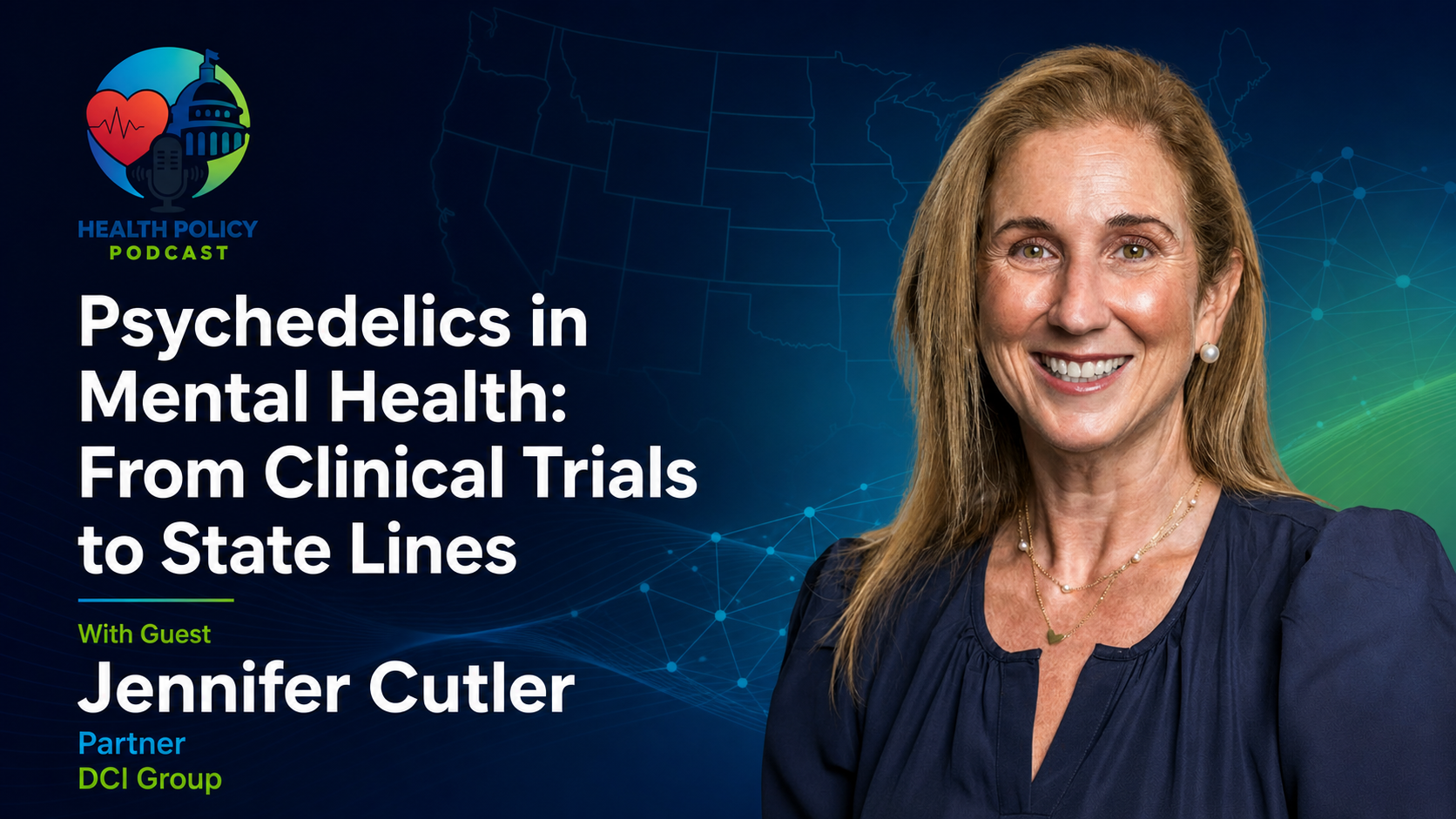
In this episode, Jennifer Cutler, a partner at DCI Group, discusses the evolving landscape of psychedelic treatments for mental health issues. She highlights the FDA's role in approving various psychedelic products aimed at conditions like PTSD and depression, while emphasizing the challenges states face in implementing these therapies after federal approval. Cutler notes the bipartisan support for mental health initiatives, particularly for veterans, and identifies states like Colorado and Illinois as leaders in legislative progress regarding psychedelic-assisted therapy.
Psychedelics in Mental Health: From Clinical Trials to State Lines
Psychedelics in Mental Health: A Growing Focus in Policy and Research
In a recent episode of the Health Policy Podcast, Jennifer Cutler, a partner at DCI Group, discussed the evolving landscape of mental health treatment, particularly the role of psychedelics. With over 14 million Americans suffering from serious mental illnesses, the exploration of psychedelic-assisted therapies is gaining momentum, driven by clinical trials and shifting policy perspectives.
Cutler, who has worked at DCI Group for over 20 years, emphasized that mental health treatment options have stagnated for about 25 years. "There’s finally a serious wave of innovative new psychiatric medicines using psychedelics moving through the FDA," she said. This new wave includes several psychedelic products currently undergoing clinical trials, targeting conditions such as post-traumatic stress disorder (PTSD), major depressive disorder, and treatment-resistant depression.
The U.S. Food and Drug Administration (FDA) plays a critical role in this process. According to Cutler, there are currently eight to nine psychedelic products in the FDA pipeline. These products are subject to rigorous clinical trials to ensure their safety and efficacy. Some have even received "breakthrough therapy" designation, which accelerates their review process. However, FDA approval is just the beginning. Once a psychedelic is approved, it must also be scheduled by the Drug Enforcement Administration (DEA), which oversees controlled substances.
"FDA approval is a huge milestone, but by itself, it does not put a medication in patients' hands," Cutler explained. The regulatory landscape varies by state, with each having its own controlled substances laws. In some states, federal rescheduling occurs automatically, while in others, legislative action is required. This can lead to delays in patient access, particularly if states have not prepared in advance for the integration of these new treatments.
Cutler noted that misconceptions about psychedelic-assisted therapy abound. Many people conflate the term "psychedelic" with recreational drug use, failing to recognize that FDA-approved psychedelic treatments are pharmaceutical-grade compounds administered in controlled clinical settings. "What we're talking about here is a true medicine," she said, emphasizing that these treatments are not the same as the cultural associations often linked to psychedelics.
The bipartisan nature of this issue is notable. Lawmakers from both sides of the aisle are increasingly recognizing the urgent need for effective mental health treatments. "Mental illness does not care about your political party," Cutler stated. The high rates of PTSD among veterans have also catalyzed bipartisan support for psychedelic research and treatment options. "We lose 17 veterans a day to suicide," she added, highlighting the widespread impact of mental health issues.
States such as Utah, Colorado, Illinois, Tennessee, and Georgia are leading the way in legislative efforts to integrate psychedelic treatments into mental health care. Cutler believes that as more states take action, the conversation around mental health will shift from awareness to tangible solutions.
For those seeking more information on the topic, Cutler suggested resources like the PATH Caucus, which focuses on psychedelic medical research, and the Psychedelic Medical Association. As the conversation around psychedelics in mental health continues to evolve, stakeholders from various sectors are urged to engage in discussions that prioritize patient access and effective treatment options.
As the FDA and DEA navigate the regulatory pathways for these emerging therapies, the implications for mental health care in the United States could be significant. With ongoing clinical trials and increasing legislative support, the future of psychedelic-assisted therapy may offer new hope for millions struggling with mental health issues.
Interview Q&A
Q&A: Psychedelics in Mental Health: From Clinical Trials to State Lines
Psychedelics in Mental Health: From Clinical Trials to State Lines
Q: Can you tell us about your background and work at DCI Group?
A: I work at DCI Group, a public affairs firm based in Washington, D.C., with offices in New York, Brussels, and Florida. I've been with DCI for over 20 years and focus on grassroots and coalition building, particularly in healthcare.
Q: Why are mental health treatments struggling to keep up with the demand?
A: Mental health remains a serious issue, with over 14 million Americans living with a serious mental illness. It's been about 25 years since new medications were introduced, but there is a wave of innovative psychiatric medicines using psychedelics moving through the FDA.
Q: What advances are being made in psychedelic use for mental health care?
A: There are currently 8 or 9 different psychedelic products in the FDA pipeline, targeting conditions like PTSD, major depressive disorder, and treatment-resistant depression. The FDA plays a crucial role in determining the safety and effectiveness of these medicines.
Q: Can you name some psychedelics being explored for therapeutic use?
A: Psilocybin, derived from mushrooms, and LSD are at the forefront of clinical trials and may receive approval in the next few years.
Q: What happens after the FDA approves a psychedelic treatment?
A: FDA approval is just the beginning. After approval, the DEA must schedule the drug, and then each state must align its controlled substances laws to allow patient access. This process can be lengthy and varies by state.
Q: What do you mean by "prepared states will lead and unprepared states will watch"?
A: States that prepare for the integration of FDA-approved psychedelics can quickly provide access to patients. If states do not take proactive measures, patients will face delays in accessing these treatments, potentially forcing them to seek care in neighboring states that have acted.
Q: What are some misconceptions about psychedelic-assisted therapy?
A: Many people conflate psychedelics with recreational use, but FDA-approved treatments are standardized, dosed, and administered in clinical settings. Additionally, these treatments are not experimental; they undergo rigorous clinical trials similar to other pharmaceuticals.
Q: How do psychedelics help with conditions like PTSD and depression?
A: Research from decades ago indicated that compounds like LSD could be beneficial for brain health. Recent studies have revisited these compounds to explore new treatment options for mental health issues that current medications do not adequately address.
Q: How are policymakers approaching the issue of psychedelics in mental health?
A: This is a bipartisan issue, as mental illness affects people regardless of political affiliation. Legislators are motivated by the need for effective treatments for their constituents, particularly veterans dealing with PTSD and other mental health challenges.
Q: Which states are leading in the legislative efforts around psychedelics?
A: States like Utah, Colorado, Illinois, Tennessee, and Georgia have taken significant steps to address psychedelics in mental health care, often with bipartisan support.
Q: Where can people find more information on this topic?
A: The PATH Caucus in Congress and the Psychedelic Medical Association are good resources for more information on the legislative efforts surrounding psychedelics in mental health care.
Key takeaways
- “Mental health continues to be a serious issue in this country. And over 14 million Americans live with a serious mental illness.”
- “It's about 25 years of patients having essentially the same treatment options, though, you know, there's finally a serious wave of innovative new psychiatric medicines using psychedelics moving through the FDA.”
- “FDA approval is a huge milestone, but by itself, it does not put a medication in patients' hands, especially not for controlled substances.”
- “If a state hasn't done any of this groundwork in advance, here's what's going to happen: the FDA is going to approve a drug, patients are going to start hearing about it, but if the legislature isn't meeting for another 6 months, these patients aren't going to have access.”
- “When people hear the word psychedelic, you're thinking we're going to go to Woodstock or a festival, which makes sense because that's really how cultural TV, movies, et cetera, have associated with that word for the past 50 years.”
About the guest

Partner — DCI Group
Jennifer Cutler provides counsel to corporate clients on public and government relations strategies, drawing on her experience in state and federal legislative affairs, grassroots management, coalition building, and strategic communications. Jennifer specializes in the telecommunications and technology sectors and has extensive experience in creating and executing public affairs strategies on high profile industry issues. She also has first-hand experience leading winning advocacy campaigns across a variety of policy issues, including tax reform, trade and health care. Prior to joining DCI in 2005, Jennifer served as Vice President and Political and Research Director of McAuliffe Message Media (M3), a top media consulting firm specializing in political messaging, strategy, and media. Jennifer is a graduate of Boston University where she earned a Masters in Mass Communication with a focus on qualitative and quantitative research. Also at Boston University, Jennifer received a Bachelor of Arts in Political Science and a Bachelor of Science in Public Relations. While studying at Boston University, Jennifer interned on a presidential campaign and for a market research company in London, United Kingdom.
Full transcript
Show full transcriptHide transcript
Filed under