2026-01-21 · Taxpayers Protection Alliance
Ross Marchand Reveals the Flaws of the 340B Drug Pricing Program
with Ross Marchand, Executive Director — Taxpayers Protection Alliance
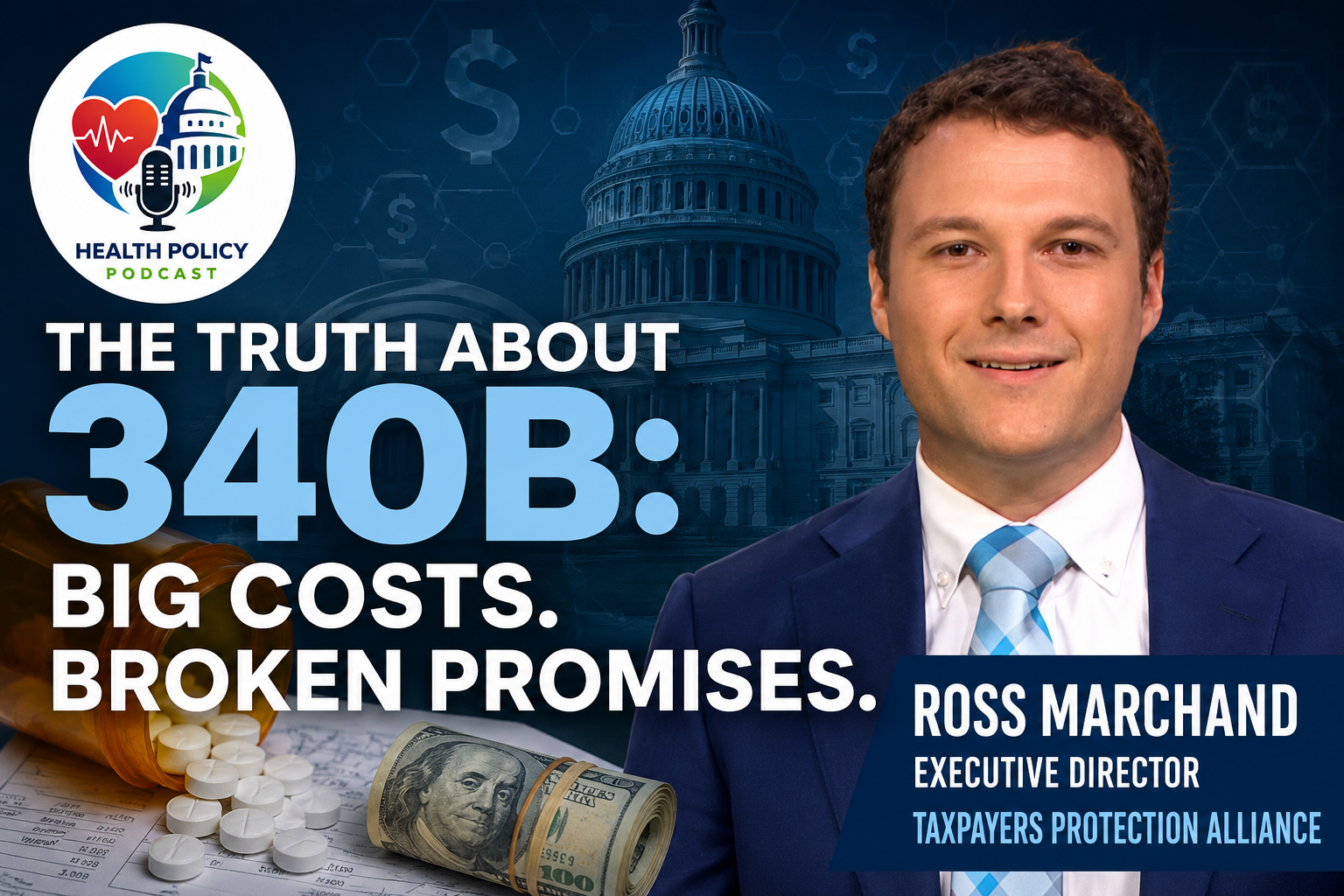
In the latest episode of the Health Policy Podcast, Ross Marchand, Executive Director of the Taxpayers Protection Alliance, discusses the flaws of the 340B Drug Pricing Program. He highlights how the program, intended to provide discounted drugs to hospitals, has led to increased costs for taxpayers and patients as hospitals often do not pass on savings. Marchand advocates for reducing government involvement in healthcare to improve cost and quality.
Taxpayers Protection Alliance Executive Director Ross Marchand Discusses the Flaws of the 340B Drug Pricing Program
Ross Marchand Discusses Flaws in the 340B Drug Pricing Program
In a recent episode of the Health Policy Podcast, Ross Marchand, Executive Director of the Taxpayers Protection Alliance, addressed the shortcomings of the 340B Drug Pricing Program. The program, designed to provide hospitals with access to discounted medications, has faced criticism for failing to deliver on its intended goals. Marchand's insights highlight the complexities and unintended consequences of government intervention in healthcare.
The 340B program was established to enable eligible hospitals to purchase medications at reduced prices, with the expectation that these savings would be passed on to patients. However, Marchand argues that many hospitals are not fulfilling this promise. Instead, they are reportedly charging patients full price for medications while pocketing the difference. "You have a program that has noble intentions, but is failing because of these unintended consequences," Marchand said.
According to Marchand, the financial implications of the program are significant. He cited a 2021 estimate indicating that drug spending related to the 340B program exceeded $40 billion. This figure raises concerns about the impact on taxpayers, as many of these hospitals rely on public funding. "Whenever you have a system where these rich healthcare entities are getting richer, taxpayers lose," he stated.
Despite the program's intentions, Marchand noted that there have been few effective reforms to address these issues. While discussions about increased monitoring and audits of nonprofit hospital systems have occurred, he expressed skepticism about the potential for meaningful change. "You could only do so much for reform in such a deeply dysfunctional system," he said.
Marchand emphasized the need for a fundamental reevaluation of the 340B program. He suggested that if a program is beyond repair, it may be necessary to consider its elimination. "There are more productive ways to approach healthcare in this country," he stated.
The conversation also touched on the broader relationship between government and the healthcare industry. Marchand pointed out that government programs like Medicare and Medicaid account for a significant portion of healthcare spending in the United States. He argued that this level of involvement creates a complex dynamic where prices rise and quality stagnates.
"The government is responsible for the majority of healthcare spending in this country," he said. "Whenever you have all this control and regulation, the prices are going to go up."
Marchand also addressed the influence of the healthcare industry on policy decisions. He noted that healthcare is the most heavily regulated industry in the United States, leading to a scenario where large insurance companies and healthcare entities lobby for favorable regulations. "They try to take increasingly large percentages of that pie," he explained.
In discussing potential solutions, Marchand advocated for increased competition and choice in healthcare. He argued that eliminating wasteful programs like 340B and reducing subsidies to insurers could lead to lower costs and improved quality. "In industries where government mostly stays out of the way, costs go down and quality increases over time," he said.
Marchand concluded by emphasizing the importance of reducing government involvement in healthcare. He believes that meaningful reform will only occur if the government steps back from its current role. "Unless government gets out of the way, costs will continue to climb and quality will continue to stagnate," he stated.
For more information about the Taxpayers Protection Alliance and its initiatives, visit their website at protectingtaxpayers.org.
Interview Q&A
Q&A: Taxpayers Protection Alliance Executive Director Ross Marchand Discusses the Flaws of the 340B Drug Pricing Program
Taxpayers Protection Alliance Executive Director Ross Marchand Discusses the Flaws of the 340B Drug Pricing Program
Q: Can you tell us about yourself and your role?
A: I am a lawyer and economist. As the Executive Director of the Taxpayers Protection Alliance, I focus on the unintended consequences of complicated laws and regulations on taxpayers and customers.
Q: What is the 340B Drug Pricing Program?
A: The 340B program allows hospitals to purchase drugs at discounted prices from pharmaceutical companies. The intention is to pass savings to patients and invest in affordable care.
Q: How has the 340B program been misused?
A: Instead of passing savings to patients, hospitals often charge full price for medications and pocket the difference. This results in a program that fails to meet its noble intentions.
Q: What are the financial implications of the 340B program?
A: In 2021, drug spending related to the 340B program exceeded $40 billion. Taxpayers are affected because most hospital systems are funded by taxpayer money.
Q: Have there been efforts to reform the 340B program?
A: There have been discussions about monitoring how much nonprofit hospitals can profit from the program, but the system is deeply dysfunctional, making meaningful reform challenging.
Q: Is it time to eliminate the 340B program entirely?
A: Yes, if a program is beyond repair, it may be necessary to consider more productive alternatives for healthcare in the country.
Q: How does government involvement affect healthcare costs?
A: The government is responsible for a significant portion of healthcare spending in the U.S. Increased regulation often leads to higher prices and lower quality of care.
Q: Does the healthcare industry have more influence over policy than other sectors?
A: Yes, healthcare is the most heavily regulated industry in the U.S. Industry players often lobby for favorable regulations, which can lead to higher costs for consumers.
Q: What would a free market approach to healthcare look like?
A: In a free market, costs tend to decrease, and quality improves over time. For example, technological advancements in industries like cell phones demonstrate this principle.
Q: What steps can be taken to improve the healthcare system?
A: Increasing choice and competition is crucial. Ending wasteful programs like 340B and allowing more types of healthcare facilities to operate can help reduce costs.
Q: Is there bipartisan support for reforming healthcare?
A: While there is bipartisan recognition of the issues, many politicians are hesitant to tackle the problem due to the influence of campaign contributions from the healthcare industry.
Q: What is the key takeaway from this discussion?
A: The government is too involved in healthcare, and unless it steps back, costs will continue to rise, and quality will stagnate.
Q: How can people support the Taxpayers Protection Alliance?
A: Individuals can learn more and get involved by visiting our website at protectingtaxpayers.org.
Key takeaways
- “Whenever you have these complicated laws and these outta control regulations, everyone loses.”
- “What has actually been happening with the 340B program is it's being abused.”
- “You have a program that has noble intentions, but is failing because of these unintended consequences.”
- “If a program is beyond repair, that is the only solution at the end of the day.”
- “Whenever you have all this control and whenever you have all this regulation... the prices are gonna go up and the quality is going to stagnate.”
About the guest

Executive Director — Taxpayers Protection Alliance
Ross Marchand is Executive Director of TPA. Ross is an alumnus of the Mercatus Center MA Fellowship at George Mason University and a graduate of the University of Virginia School of Law. He has worked on a variety of legal matters, including the Alaska-Hawaiian airline merger and the United States Postal Service v. Konan Supreme Court case. He has also authored policy briefs on a variety of issues, including multiple analyses on the legal and policy issues facing the Food and Drug Administration. His work has appeared in numerous publications including The Wall Street Journal, National Review, Forbes, The Denver Post, and the Washington Examiner.
Full transcript
Show full transcriptHide transcript
Filed under