2026-09-29 · National Taxpayers Union
Taxpayer Advocate Pete Sepp: Washington State's Cookware Rules Go "Overboard"
with Pete Sepp, President — National Taxpayers Union
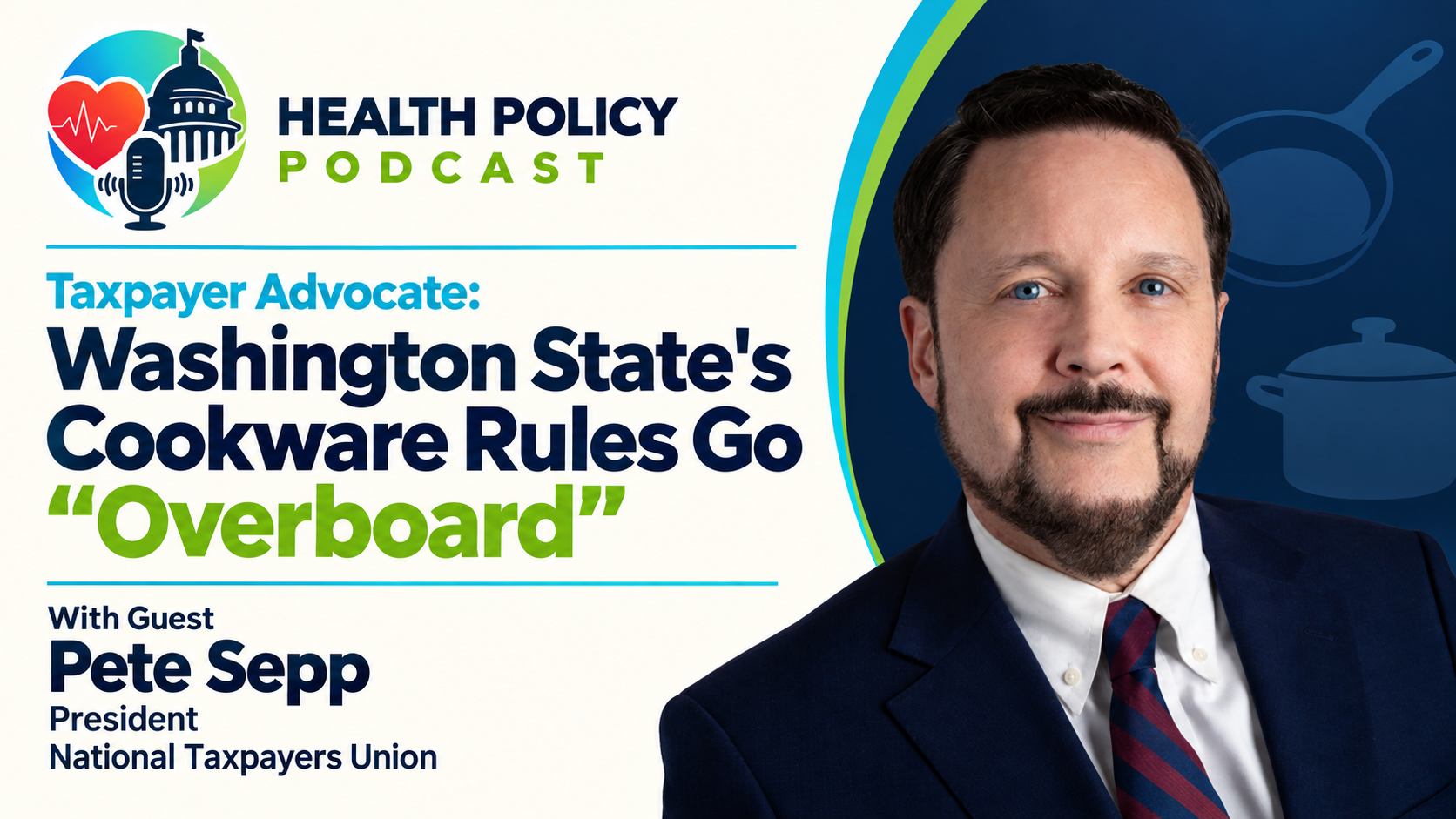
In the latest episode of the Health Policy Podcast, Pete Sepp, President of the National Taxpayers Union, discusses Washington State's regulations on PFAS chemicals, particularly in cookware. Sepp argues that these regulations may be excessive and could lead to increased costs for taxpayers, as they affect essential products used in healthcare and everyday life. He emphasizes the need for balanced chemical regulation that considers both safety and economic implications.
Taxpayer Advocate Pete Sepp: Washington State's Cookware Rules Go "Overboard"
Taxpayer Advocate Critiques Washington State's Chemical Regulations
Pete Sepp, president of the National Taxpayers Union, expressed concerns about Washington State's regulations on PFAS chemicals during a recent interview on the Health Policy Podcast. Sepp argues that these regulations could lead to increased costs for taxpayers and consumers, particularly in the cookware industry.
Founded in 1969, the National Taxpayers Union is a nonprofit, nonpartisan organization that advocates for lower taxes and reduced government spending. Sepp emphasized the importance of chemical regulation policies, noting their direct impact on everyday life and economic freedom.
Impact of Chemical Regulation
Sepp explained that regulations on chemicals affect a wide range of industries and consumer products. He cited the Infrastructure Investment and Jobs Act of 2021, which included an excise tax on certain chemicals. He criticized the implementation of this tax, stating that it was not used for its intended purpose of cleaning up environmental issues but instead offset higher spending elsewhere in the bill.
“The more we regulate various substances to the point where they become unaffordable, unusable, the more we get into questions of, well, how are taxpayers going to make up the difference?” Sepp said. He highlighted the healthcare sector's reliance on these chemicals and how increased costs could ultimately burden taxpayers through programs like Medicare and Medicaid.
Misconceptions About Chemical Safety
Sepp pointed out that many taxpayers may not fully understand how chemical regulations affect them. He noted that while the Environmental Protection Agency (EPA) and state agencies play crucial roles in ensuring public safety, some regulations may be based on subjective judgments rather than solid scientific evidence.
He criticized the precautionary principle, which suggests that any potential risk associated with a chemical warrants strict regulation or a ban. “That’s where the problems really begin to pile up for taxpayers and everyday Americans who are depending upon a more balanced approach,” Sepp said.
The Case of PTFE Cookware
A significant focus of the discussion was Washington State's approach to regulating PTFE, a chemical used in nonstick cookware. Sepp mentioned that California Governor Gavin Newsom vetoed a similar ban, stating that it would negatively impact consumer access to affordable cookware. Sepp argued that Washington's regulations are similarly excessive, treating PTFE and PFAS as interchangeable without recognizing their differences.
“There is no replacement that we can come up with, at least not in the near term,” Sepp said. He emphasized that banning PTFE outright could create affordability issues, particularly for moderate-income households.
Recommendations for Balanced Regulation
Sepp proposed that better self-regulation could help address safety concerns without overburdening taxpayers. He cited Underwriters Laboratories as an example of a self-regulating organization that maintains industry standards. He also called for improvements to the EPA’s Integrated Risk Information System (IRIS), which assesses chemical safety.
He suggested that Congress should consider the Regulatory Early Notice and Engagement Act, which would require agencies to publicly justify new regulations and explore alternatives. “The more people who have eyes on it and the more people who have a voice in its formation, the better it’s going to be,” Sepp said.
Superfund Excise Tax Concerns
Sepp also discussed the Superfund excise tax, which was reintroduced as part of the Infrastructure Investment and Jobs Act. Originally designed to fund the cleanup of toxic waste sites, the tax has been criticized for being misallocated to cover unrelated government spending. Sepp argued that this misdirection undermines the original purpose of the Superfund program.
“Superfund was set up to start cleaning up those sites in a very comprehensive manner,” he said. “But now, it’s really got nothing to do with environmental cleanup.”
Conclusion
Sepp’s insights highlight the complexities of chemical regulation and its implications for taxpayers. He advocates for a more balanced approach that considers both public safety and economic realities. For more information on the National Taxpayers Union and their initiatives, visit their website at NTU.org.
Interview Q&A
Q&A: Taxpayer Advocate Pete Sepp: Washington State's Cookware Rules Go "Overboard"
Health Policy Podcast: Taxpayer Advocate Pete Sepp on Washington State's Cookware Rules
Q: Can you introduce yourself and explain your work?
A: I am Pete Sepp, President of the National Taxpayers Union, a nonprofit, nonpartisan group founded in 1969. We advocate for lower, fairer taxes, reduced government spending, and economic freedom for taxpayers.
Q: How do chemical regulations impact everyday life?
A: Chemical regulations affect everyone daily. For example, the Superfund excise tax imposed by the Infrastructure Investment and Jobs Act of 2021 is supposed to clean up environmental problems but often serves as an offset for higher spending elsewhere. This can lead to increased costs for industries producing essential chemicals, ultimately affecting taxpayers.
Q: Why do many taxpayers overlook the impact of chemical policy?
A: Many taxpayers may not realize how chemical regulations affect them. While they may support the EPA's efforts to ban dangerous chemicals, they often miss the broader implications, such as increased costs passed on to healthcare programs funded by taxpayers.
Q: What issues arise from the precautionary principle in chemical regulation?
A: The precautionary principle can lead to bans on chemicals based on minimal risk, even if those chemicals occur naturally. This approach can create unnecessary burdens on industries and ultimately cost taxpayers more.
Q: What is the current situation regarding PTFE cookware regulations in California?
A: California had a bill to ban PTFE in cookware, pushed by various environmental organizations. However, Governor Gavin Newsom vetoed it, citing concerns over consumer access and affordability, indicating that the regulation may have been excessive.
Q: How does Washington State's approach to chemical regulation compare to California's?
A: Washington State is also targeting PTFE in cookware, influenced by the same precautionary principle. However, they are not banning it outright but are implementing regulations that may still be overly restrictive.
Q: What are the potential consequences of overregulating chemicals like PTFE?
A: Overregulation can lead to higher costs for consumers and limit access to useful products. It fails to recognize that many chemicals can be safe and beneficial when used properly.
Q: What are some effective policies for regulating chemicals without burdening taxpayers?
A: Good self-regulation by industries, like Underwriters Laboratories, can help. Additionally, the EPA's Integrated Risk Information System (IRIS) should be driven by scientific evaluations to maintain public trust. Congress could also pass the Regulatory Early Notice and Engagement Act to improve transparency in the regulatory process.
Q: What is the Superfund excise tax, and why is it controversial?
A: The Superfund tax was established to fund the cleanup of toxic waste sites. Recently, it was resurrected to fund other spending in the Infrastructure Investment and Jobs Act, which has led to criticism that it no longer serves its original purpose.
Q: How can taxpayers learn more about chemical regulation policies?
A: Taxpayers can visit the National Taxpayers Union website at NTU.org for information on reforming chemical regulation policy, the Superfund excise tax, and other related issues.
Q: What is the overall message regarding chemical regulation and taxpayer interests?
A: It's essential to ensure that chemical regulations are balanced and consider taxpayer interests to avoid unnecessary costs and restrictions on beneficial products.
Key takeaways
- “Without chemicals, life for taxpayers would be a lot more expensive.”
- “The problem comes in when subjective judgments get made, not based on scientific evidence, but on something that many of us call the precautionary principle.”
- “Governor Newsom actually vetoed a bill that was sent to him to ban this PTFE substance in cookware, because he said, California's retail shelves would be horribly affected.”
- “Washington State's regulations are really going overboard here. They're simply saying that PTFE, PFAS, they both sound the same. We're going to regulate them the same.”
- “We need to have a credible IRIS. If the IRIS process is tainted by politics, the public trust begins to erode.”
About the guest
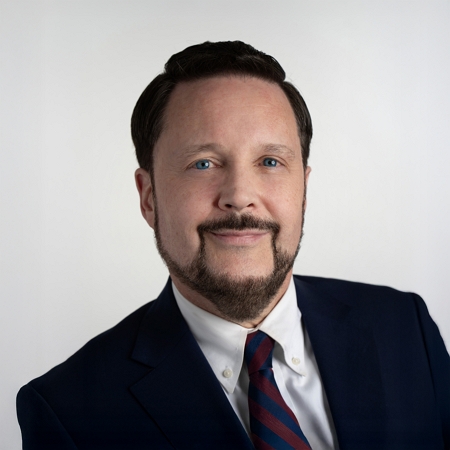
President — National Taxpayers Union
As NTU President, Pete Sepp leads the non-profit, non-partisan National Taxpayers Union’s (NTU’s) government affairs, public relations, and development activities. Pete also oversees strategic planning for NTU and its staff, and supervises the research and educational operations of the National Taxpayers Union Foundation (NTUF). Since beginning his service with NTU in 1988, Pete has written and edited numerous policy papers, informational publications, and activist manuals, as well as studies on topics such as Congressional perquisites, citizen-initiated tax revolts, antitrust and competition regulation, and Pentagon spending. He has testified before Congress on matters ranging from Government-Sponsored Enterprises in lending to Medicare and federal pension reforms, from underground infrastructure to small business taxpayer concerns. He has lectured in the U.S. and abroad on issues such as tax administration reform, and has lobbied on numerous legislative matters including the IRS Restructuring and Reform Act and successor proposals, the Balanced Budget Constitutional Amendment, and the Whistleblower Protection Enhancement Act. Pete has appeared on every major television network, and regularly provides interviews and commentaries to cable channels such as CNN, CNBC, and the Fox Business. He is a frequent guest on radio programs from coast-to-coast, and has been widely featured in print media, including The New York Times, the Chicago Tribune, U.S. News & World Report, The Washington Post, The Wall Street Journal, USA Today, Forbes, and Money Magazine. Pete graduated cum laude from Webster University in St. Louis, MO with a degree in History and Political Science. Before coming to NTU, Sepp served with the St. Louis County Board of Elections and with a U.S. Senate campaign.
Full transcript
Show full transcriptHide transcript
Filed under