2026-09-15 · Consumer Choice Center
David Clement Discusses Washington State's Nonstick Cookware Regulation
with David Clement, Policy Director — Consumer Choice Center
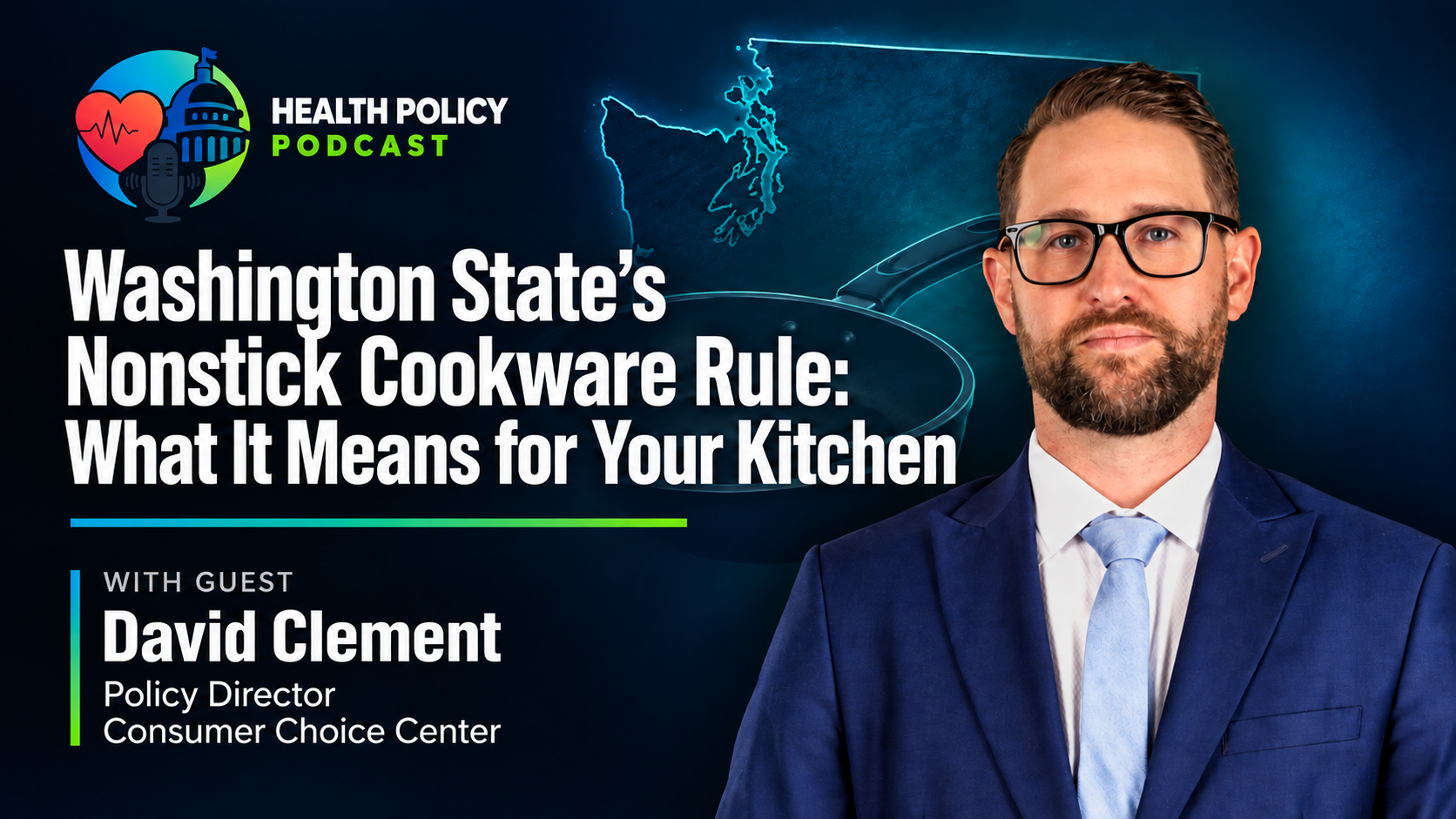
In the Health Policy Podcast episode titled "Washington State's Nonstick Cookware Rule: What It Means for Your Kitchen," Bryan Hyde interviews David Clement, Policy Director at the Consumer Choice Center. They discuss the implications of Washington State's Safer Products Rule, which targets PFAS chemicals in cookware, and compare it to California's recent veto of similar legislation. The conversation highlights concerns about consumer choice, affordability, and the broader impact of regulations on various industries.
Washington State's Nonstick Cookware Rule: What It Means for Your Kitchen
Washington State's Nonstick Cookware Rule: What It Means for Your Kitchen
In a recent episode of the Health Policy Podcast, David Clement, Policy Director at the Consumer Choice Center, discussed the implications of Washington State's proposed regulations on nonstick cookware containing per- and polyfluoroalkyl substances (PFAS). The discussion highlighted the balance between consumer safety and choice, as well as the potential economic impact of such regulations.
Clement explained that PFAS are a group of manmade chemicals known for their heat and water resistance. These substances are commonly found in various products, including nonstick cookware, electrical wiring, and medical devices. While there are approximately 5,000 different PFAS chemicals, their safety and potential risks can vary significantly.
In 2022, California lawmakers attempted to prohibit cookware with intentionally added PFAS, set to take effect in 2030. However, Governor Gavin Newsom vetoed the bill, citing concerns over affordability for consumers. Newsom's veto is notable, as he has previously supported numerous chemical and environmental regulations. His decision underscores the complexities of balancing safety regulations with economic implications.
Washington State is now considering its own regulations under the Safer Products Rule, which would require manufacturers to disclose the presence of PFAS in nonstick cookware. While this rule does not outright ban PFAS, it could pave the way for future restrictions. Clement warned that increased compliance costs for manufacturers could ultimately lead to higher prices for consumers.
Clement emphasized that nonstick cookware is often the most affordable option for home cooking, with prices ranging from $10 to $30. In contrast, alternatives such as stainless steel or enameled cast iron can cost significantly more. He noted that the potential regulations could disproportionately affect low-income consumers who may struggle to absorb rising costs.
The discussion also touched on the broader implications of losing consumer choice. When the availability of certain products decreases, prices tend to rise due to reduced competition. This can create a regressive economic impact, particularly for low-income households that may find it more challenging to cope with increased costs.
Clement pointed out that the proposed reporting requirements in Washington could also impact prices, even without an outright ban. Manufacturers may face substantial compliance costs, which they would likely pass on to consumers. If compliance becomes too burdensome, some manufacturers might abandon certain product lines altogether, further limiting consumer options.
Beyond cookware, PFAS chemicals are widely used in various industries, including electronics and healthcare. Clement noted their critical role in medical devices, such as catheter wires and heart stents, where durability and safety are paramount. He cited a former heart surgeon turned congressman who expressed concerns about overregulation potentially jeopardizing the availability of essential medical products.
As Washington State moves forward with its regulatory considerations, the discussion surrounding PFAS and consumer choice is likely to continue. Advocates for consumer choice, like Clement, argue for a balanced approach that considers both safety and affordability. The outcomes of these regulations could have significant implications for consumers, manufacturers, and the broader market.
In conclusion, the conversation highlighted the ongoing debate over the regulation of PFAS in cookware and its potential effects on consumer choice and affordability. As states like Washington consider new regulations, stakeholders will need to weigh the benefits of safety against the economic realities faced by consumers.
Interview Q&A
Q&A: Washington State's Nonstick Cookware Rule: What It Means for Your Kitchen
Washington State's Nonstick Cookware Rule: What It Means for Your Kitchen
Q: Who is David Clement?
A: David Clement is the Policy Director at the Consumer Choice Center, an international consumer advocacy group that addresses issues affecting consumer choice across various sectors, including cookware and food policy.
Q: What are PFAS, and why are they significant in cookware regulation?
A: PFAS refers to a group of manmade chemicals commonly used for heat and water resistance in products like cookware. There are about 5,000 chemicals in this class, which vary in their applications and potential risks.
Q: What recent action did California lawmakers take regarding PFAS in cookware?
A: California lawmakers passed a bill to prohibit cookware with intentionally added PFAS starting in 2030. However, Governor Gavin Newsom vetoed the bill, citing concerns about its impact on affordability for consumers.
Q: What was Governor Newsom's reasoning for vetoing the PFAS cookware bill?
A: Governor Newsom expressed concern about the affordability of cookware, noting that the ban would not take effect immediately but would still have significant implications for consumer costs.
Q: What is Washington State's proposed regulation regarding PFAS?
A: Washington State's proposed Safer Products Rule requires manufacturers to disclose the use of PFAS in nonstick cookware. This regulation could lead to increased compliance costs for manufacturers, which may be passed on to consumers.
Q: How could increased reporting and compliance costs affect consumers?
A: Increased compliance costs can lead to higher prices for consumers, either through direct price increases or by manufacturers abandoning certain products due to the burdensome regulations.
Q: What are the potential consequences of losing consumer choice in cookware?
A: Losing consumer choice can lead to upward pressure on prices due to reduced competition. This disproportionately affects low-income consumers who struggle to absorb increased costs.
Q: How do compliance costs impact manufacturers?
A: Compliance costs can either result in higher prices for consumers or lead manufacturers to exit certain product categories, reducing supply and further increasing prices.
Q: Beyond cookware, where else are PFAS commonly used?
A: PFAS are used in various applications, including electronics, medical devices, and personal protective equipment. They are essential for durability and safety in many critical products.
Q: What concerns have been raised about overregulating PFAS?
A: Concerns include the potential loss of critical medical products, such as catheter wires and heart stents, which rely on the durability and safety provided by PFAS.
Q: What is the broader implication of regulating PFAS in consumer products?
A: The regulation of PFAS in consumer products raises questions about balancing safety and affordability, as well as the potential unintended consequences of limiting consumer choices.
Q: How does David Clement view the government's role in regulating consumer products?
A: David Clement advocates for consumer choice and cautions against heavy-handed regulations that could lead to negative outcomes for affordability and product availability.
Key takeaways
- “We are the voice for consumers when the government is overstepping.”
- “Gavin Newsom thought about the negative externalities and decided to scrap that bill.”
- “Whenever you lose a supplier and limit the availability of suppliers, you see prices go up because there's less competition.”
- “It becomes very regressive very fast because it's the hardest cost increase for low-income Americans to absorb.”
- “If the compliance costs become so onerous and so difficult that manufacturers abandon entire classes of products altogether, you have a reduction in supply and that upward price pressure.”
About the guest
Policy Director — Consumer Choice Center
Full transcript
Show full transcriptHide transcript
Filed under