Health Policy Podcast
Washington's PFAS and cookware rules
Washington State's rules on PFAS and nonstick cookware have become a central fight over chemical regulation, consumer costs and whether the health evidence supports a ban.
The Health Policy Podcast has covered that fight in five episodes: an Oct. 15, 2026, interview with Jan Himebaugh, president and CEO of the Washington Retail Association, on proposed bans on nonstick cookware over "forever chemicals" and the risk of higher prices, fewer product choices and pressure on food affordability; a Sept. 29 interview with Pete Sepp, president of the National Taxpayers Union, on Washington State's PFAS regulations in cookware, which he says may be excessive and could raise costs for taxpayers, including for essential products used in healthcare and everyday life; a Sept. 22 interview with environmental toxicologist Susan Goldhaber of the American Council on Science and Health, who says fear is outpacing the evidence in Washington State's regulation of nonstick cookware and PFAS, and that evidence linking PFAS to serious health issues remains inconclusive; a Sept. 15 interview with David Clement, policy director at the Consumer Choice Center, on Washington State's Safer Products Rule targeting PFAS in cookware, which he says goes further than California, which recently vetoed similar legislation; and an Aug. 13 interview with Ross Marchand, executive director of the Taxpayers Protection Alliance, who says a push against nonstick cookware would raise consumer costs even though existing studies show Teflon is safe for household use.
Podcast interviews
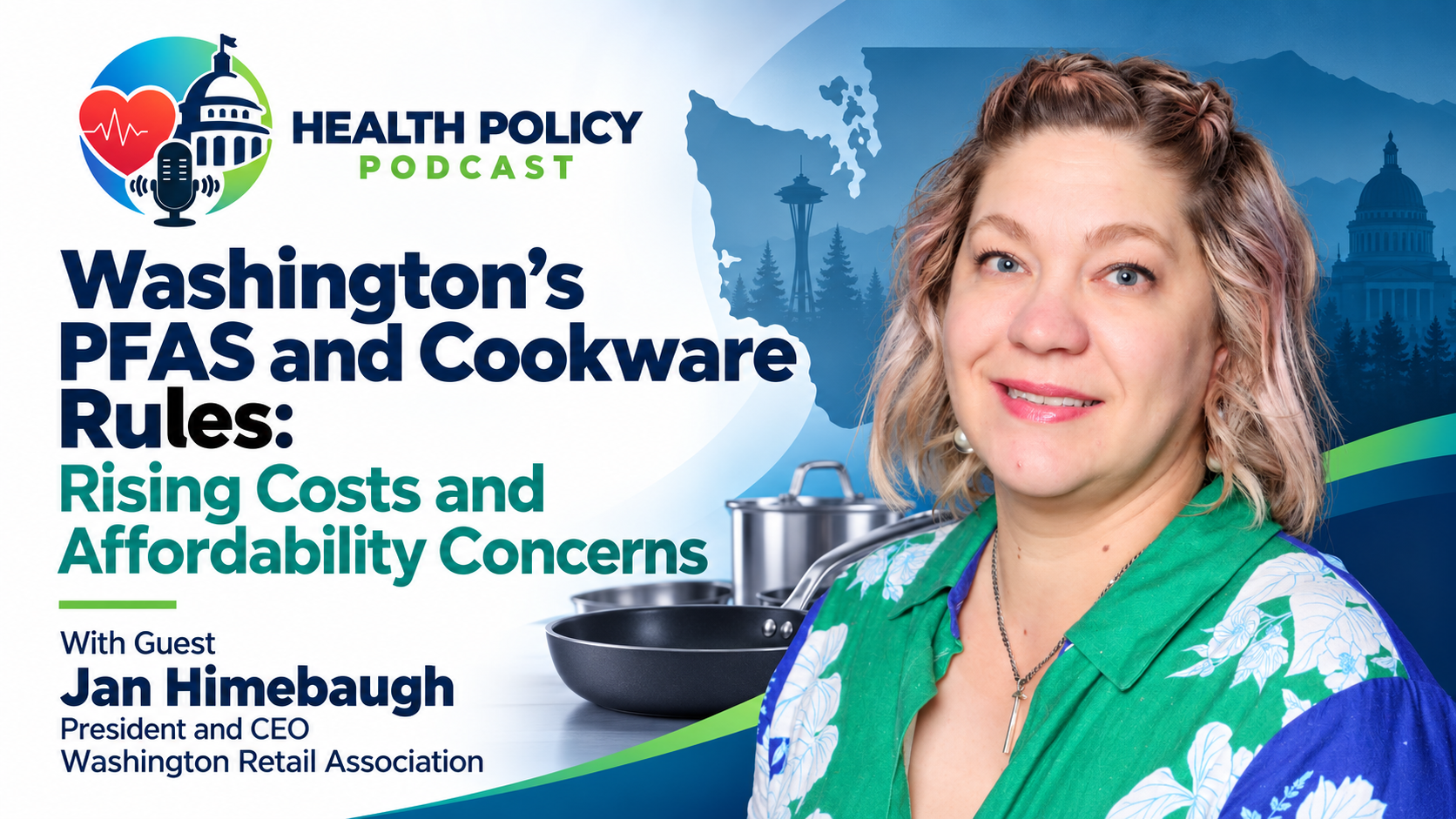
Washington's PFAS and cookware rules: Jan Himebaugh on rising costs and affordability
Jan Himebaugh
Proposed bans on nonstick cookware over "forever chemicals" would raise costs for retailers and consumers, says Jan Himebaugh, president and CEO of the Washington Retail Association. Himebaugh highlights the economic impact on both retailers and consumers, emphasizing that such regulations could lead to higher prices and reduced product choices, ultimately affecting food affordability in Washington State. The episode underscores the need for balanced policy that considers both public health and economic realities.
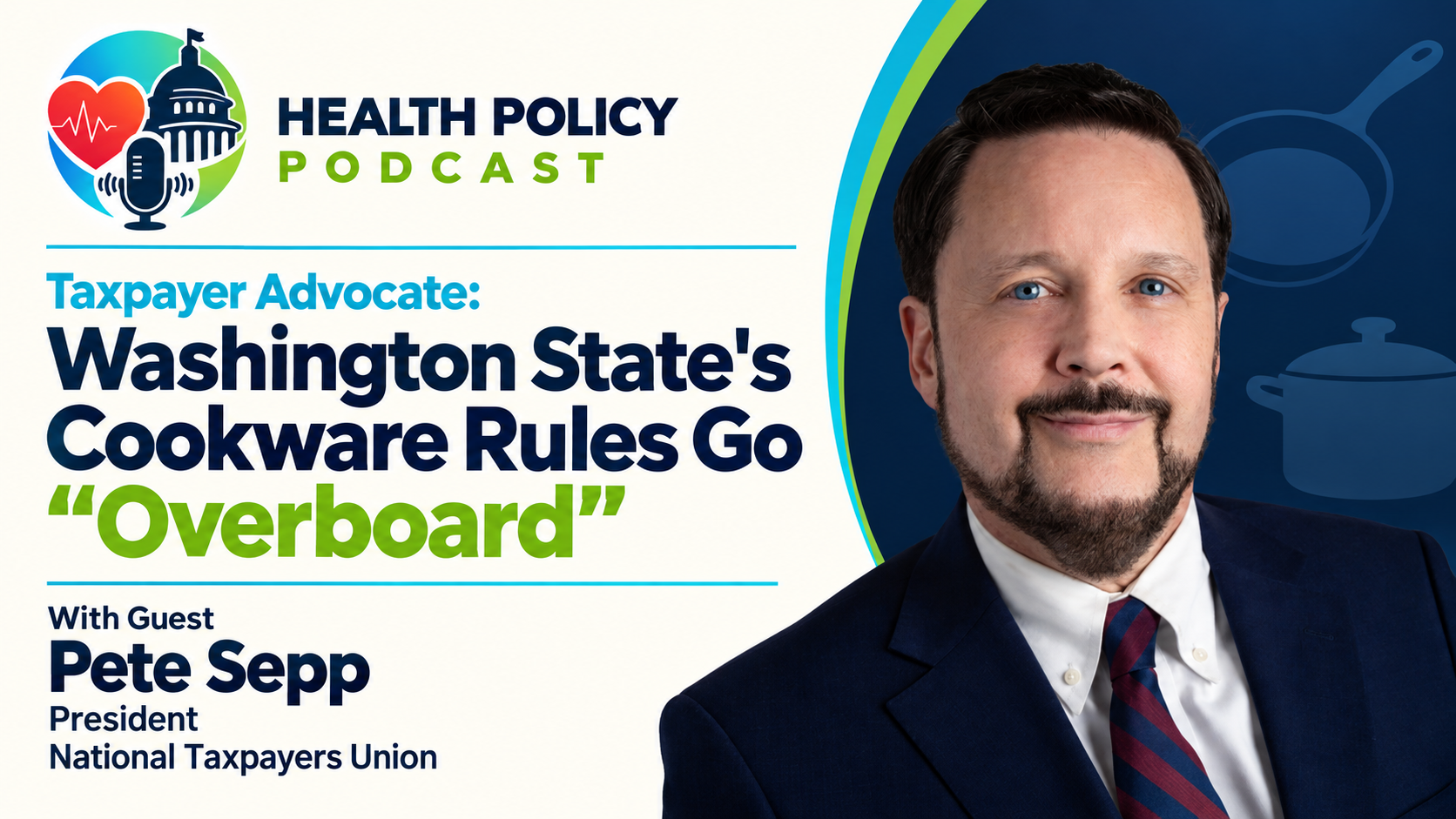
Taxpayer Advocate Pete Sepp: Washington State's Cookware Rules Go "Overboard"
Pete Sepp
Washington State's PFAS regulations, particularly in cookware, may be excessive and could raise costs for taxpayers, says Pete Sepp, president of the National Taxpayers Union. Sepp argues that these regulations may be excessive and could lead to increased costs for taxpayers, as they affect essential products used in healthcare and everyday life. He emphasizes the need for balanced chemical regulation that considers both safety and economic implications.
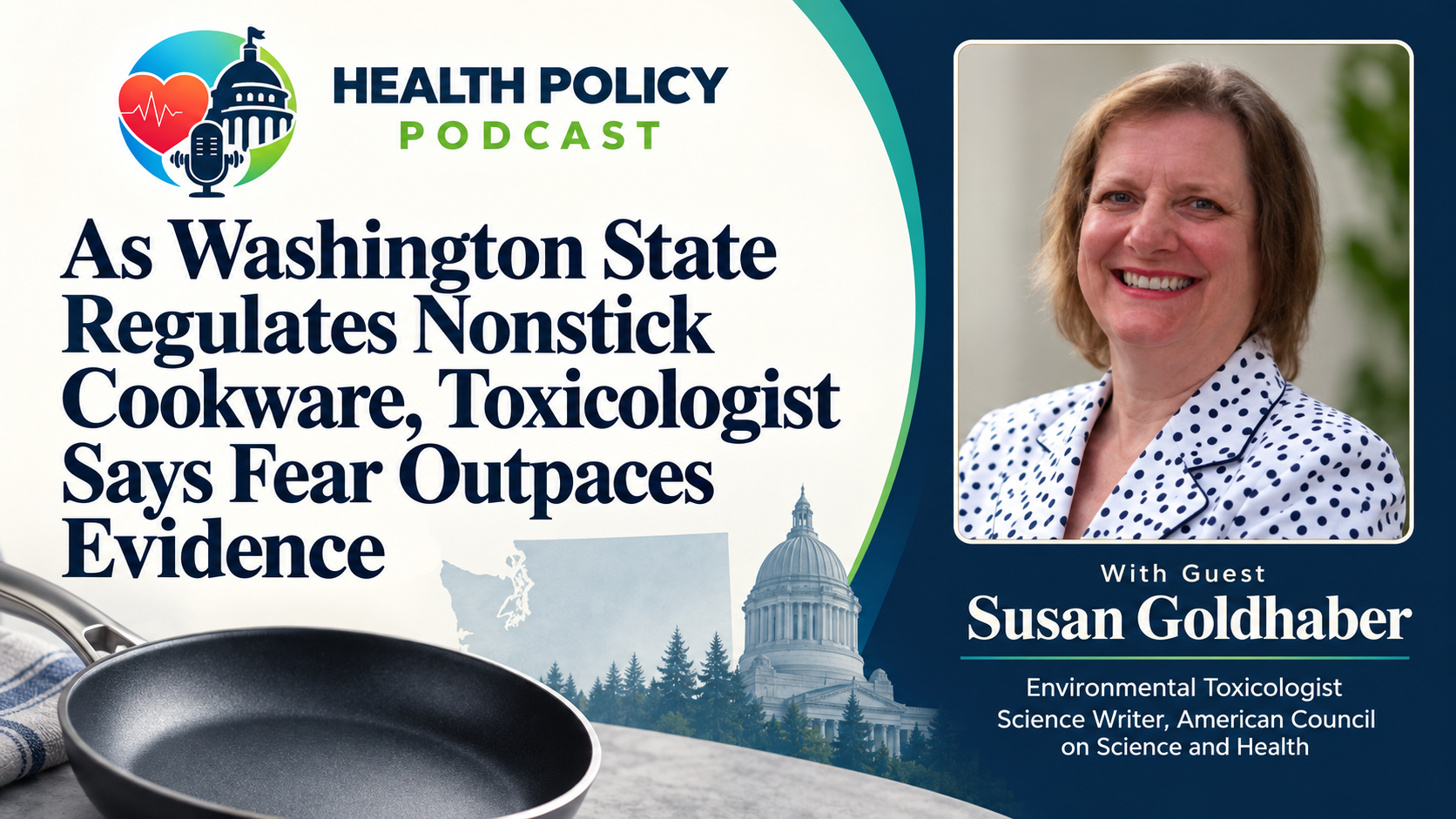
As Washington State Regulates Nonstick Cookware, Toxicologist Says Fear Outpaces Evidence
Susan Goldhaber
Fear is outpacing the evidence in Washington State's regulation of nonstick cookware and PFAS, says environmental toxicologist Susan Goldhaber of the American Council on Science and Health, in a Health Policy Podcast interview with Bryan Hyde. They discuss Washington State's regulatory efforts regarding nonstick cookware and PFAS (per- and polyfluoroalkyl substances), highlighting the complexities of the chemicals involved and the ongoing debate over health risks associated with these substances. Goldhaber emphasizes that while PFAS are often labeled as "forever chemicals," the evidence linking them to serious health issues remains inconclusive.
Washington State's nonstick cookware rule: David Clement on what it means for your kitchen
David Clement
Washington State's Safer Products Rule targeting PFAS in cookware goes further than California, which recently vetoed similar legislation, says David Clement, policy director at the Consumer Choice Center, in a Health Policy Podcast interview with Bryan Hyde. They discuss the implications of Washington State's Safer Products Rule, which targets PFAS chemicals in cookware, and compare it to California's recent veto of similar legislation. The conversation highlights concerns about consumer choice, affordability, and the broader impact of regulations on various industries.
The War on Nonstick Cookware: Why Washington State Regulators Are Targeting Your Cookware
Ross Marchand
Washington State's push against nonstick cookware would raise consumer costs even though existing studies show Teflon is safe for household use, says Ross Marchand, executive director of the Taxpayers Protection Alliance. Marchand discusses the potential impacts of these regulations on consumer costs and safety, arguing that existing studies show Teflon is safe for household use. He warns that if these regulations lead to bans, consumers may face higher prices and fewer options for cookware.
Key quotes
“What you're doing is putting pressure particularly on the most disadvantaged among us because they're now having added pressure to figure out how to prepare food because they can't afford the pot or the pan to make it in.”
“I think forever chemicals is not a scientific term. It's not been proved. It just sort of— and it's a big assumption that these chemicals are imparting anything to a food.”
“Washington State's regulations are really going overboard here. They're simply saying that PTFE, PFAS, they both sound the same. We're going to regulate them the same.”
“The problem comes in when subjective judgments get made, not based on scientific evidence, but on something that many of us call the precautionary principle.”
“The term 'forever chemicals' is not a scientific or regulatory term. It came out in 2018 in a Washington Post editorial, and it was just trying to get people upset.”
“The evidence for an association between cancer and PFAS remains sparse.”
“Whenever you lose a supplier and limit the availability of suppliers, you see prices go up because there's less competition.”
“It becomes very regressive very fast because it's the hardest cost increase for low-income Americans to absorb.”
“The overwhelming array of evidence is that these products are safe for households, and 80% of households across the country use these products.”
“It's deeply unfair and it's unsustainable to hike the prices on all of these products.”